Banner
Synchrotron Could Shed Light On Exotic Dark Photons

There are many hypothetical particles proposed to explain dark matter and one idea to explore how...

The Pain Scale Is Broken But This May Fix It

Chronic pain is reported by over 20 percent of the global population but there is no scientific...
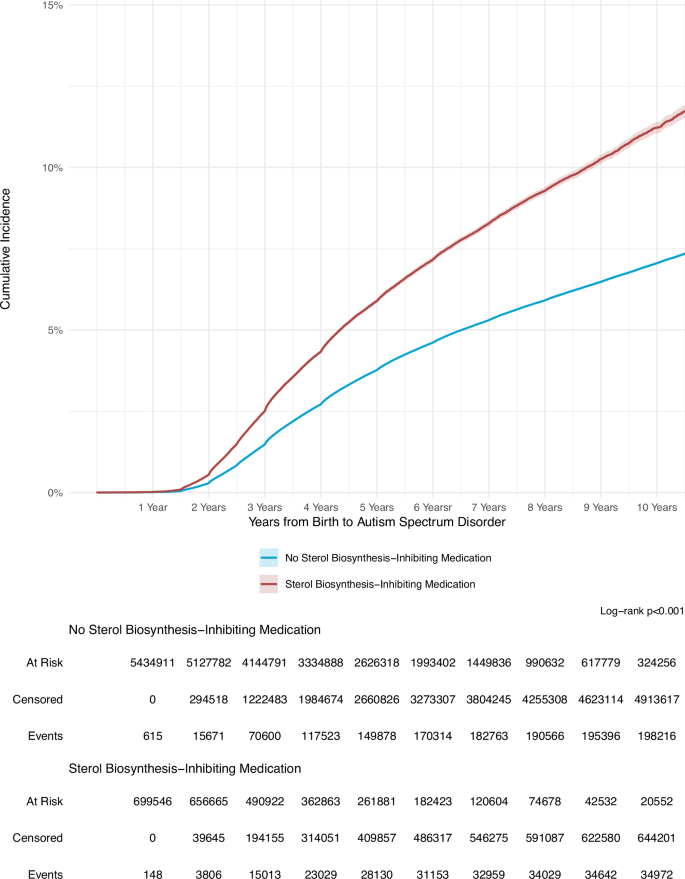
Study Links Antidepressants, Beta-blockers and Statins To Increased Autism Risk

An analysis of 6.14 million maternal-child health records  has linked prescription medications...

Pilot Study: Fibromyalgia Fatigue Improved By TENS Therapy

Fibromyalgia is the term for a poorly-understood condition where people experience pain and fatigue...

User picture.
News StaffRSS Feed of this column.

News Releases From All Over The World, Right To You... Read More »

Blogroll
In 1609, 400 years ago, Galileo revolutionized humankind's understanding of our position in the Universe when he used a telescope for the first time to study the heavens and sketched radical new views of the moon and also discovering the satellites orbiting Jupiter.

To celebrate the International Year of Astronomy (IYA), which marks the anniversary of Galileo's discoveries, a group of astronomers and curators from the Arcetri Observatory and the Institute and Museum of the History of Science, both in Florence, Italy, are recreating the kind of telescope and conditions that led to Galileo's world-changing observations, reports January's Physics World.
To make children happier, we may need to encourage them to develop a strong sense of 'personal worth', according to Dr. Mark Holder, Associate Professor at the University of British Columbia,  Visiting Assistant Professor Dr. Ben Coleman and graduate student Judi Wallace.   Their research says that children who feel that their lives have meaning and value and who develop deep, quality relationships – what they term measures of spirituality – are happier.

But according to their paper in the Journal of Happiness Studies, actual religious practices have little effect on that happiness.
6 newly discovered genes for obesity have a neural effect, according to the international GIANT (Genetic Investigation of Anthropometric Parameters) consortium.

So far, the scientists have analyzed two million DNA variations in 15 genome-wide association studies with a total of more than 32,000 participants and the identified candidate genes were validated in 14 further studies including 59,000 participants.

In addition to the FTO and MC4R genes already known, it was now possible for six more obesity genes to be identified: TMEM18, KCTD15, GNPDA2, SH2B1, MTCH2, and NEGR1.
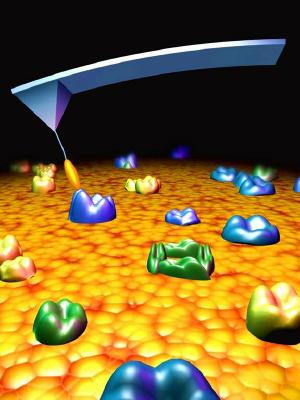
Nanotechnology exploits the properties of materials on a nanometric scale, (a nanometer is one millionth of a millimeter). The ultimate limit for such miniaturization is the development of devices formed by atomic structures created artificially to fulfil a determined purpose. 

The tools that permit the visualization and manipulation of atoms are called proximity microscopes. This includes the Scanning Tunneling Microscope (STM), whose development in 1986 earned G. Binning and H. Rohrer the Novel prize for physics, and more recently the Atomic Force Microscope (AFM). 
The International Year of Astronomy 2009 (IYA2009) is a global celebration of astronomy and its contribution to society and culture, with strong emphasis on education, public participation, and the involvement of young people, and with events at national, regional, and global levels. Many thousands of individuals in over 135 countries around the world are already involved, forming the world's largest ever astronomy network.

IYA2009 portrays astronomy as a peaceful global scientific endeavour that unites astronomers in an international, multicultural family of scientists, working together to find answers to some of the most fundamental questions that humankind has ever asked.
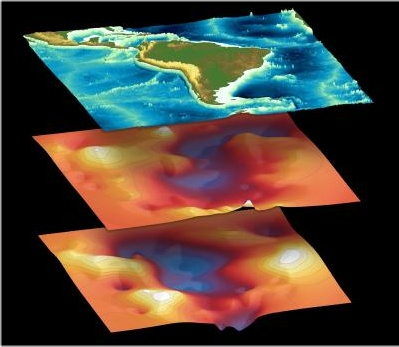
South America is the world’s most species-rich area and there have been many theories as to why, ranging from animals and plants accompanying the continent when it broke loose from Africa to variations in the extent of the rainforests over millions of years creating new species.

A thesis from a Gothenburg University doctoral student proposes a different theory: that the formation of the Andes was a 'species pump' which spread animals and plants across the continent.