Banner
Synchrotron Could Shed Light On Exotic Dark Photons

There are many hypothetical particles proposed to explain dark matter and one idea to explore how...

The Pain Scale Is Broken But This May Fix It

Chronic pain is reported by over 20 percent of the global population but there is no scientific...
Study Links Antidepressants, Beta-blockers and Statins To Increased Autism Risk

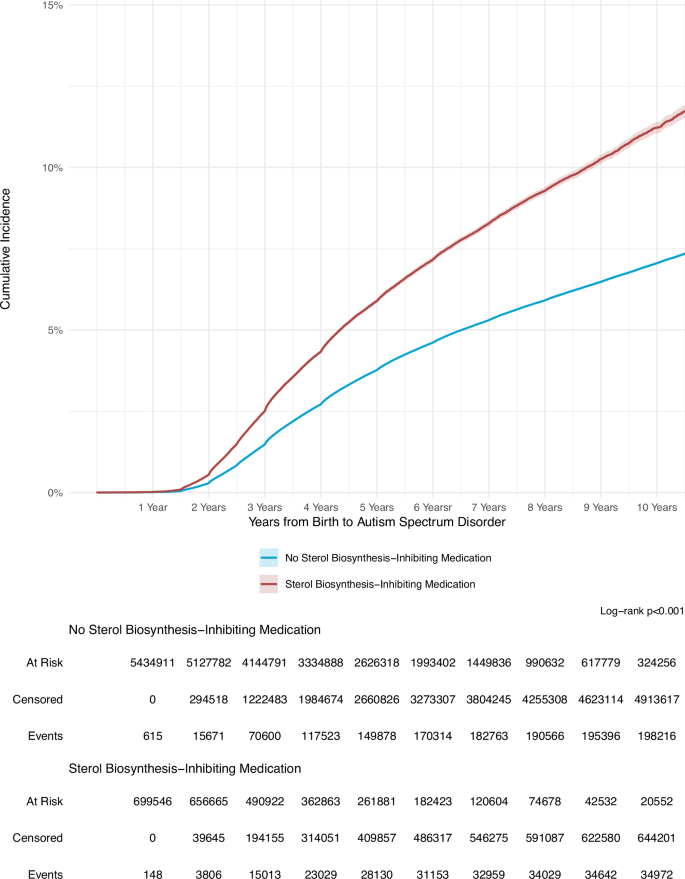
An analysis of 6.14 million maternal-child health records  has linked prescription medications...

Pilot Study: Fibromyalgia Fatigue Improved By TENS Therapy

Fibromyalgia is the term for a poorly-understood condition where people experience pain and fatigue...

User picture.
News StaffRSS Feed of this column.

News Releases From All Over The World, Right To You... Read More »

Blogroll
Astronomers say they may have solved one of those classic chicken-and-egg problems, namely, which came first in the early Universe, galaxies or the supermassive black holes seen at their cores.

Chris Carilli, of the National Radio Astronomy Observatory (NRAO), outlined the conclusions from recent research done by an international team studying conditions in the first billion years of the Universe's history in a lecture presented to the American Astronomical Society's meeting in Long Beach, California.
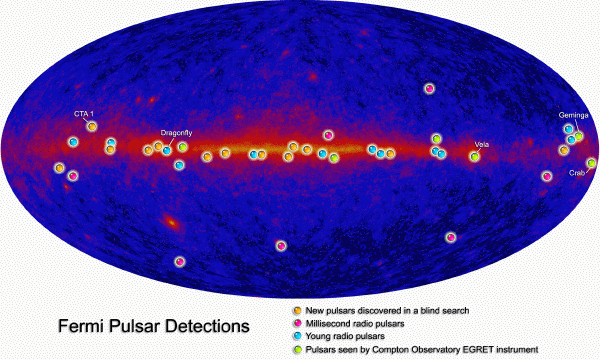
NASA's Fermi Gamma-ray Space Telescope has discovered 12 new gamma-ray-only pulsars and has detected gamma-ray pulses from 18 others. The finds are transforming our understanding of how these stellar cinders work.

"We know of 1,800 pulsars, but until Fermi we saw only little wisps of energy from all but a handful of them," says Roger Romani of Stanford University, Calif. "Now, for dozens of pulsars, we're seeing the actual power of these machines."

A pulsar is a rapidly spinning and highly magnetized neutron star, the crushed core left behind when a massive sun explodes. Most were found through their pulses at radio wavelengths, which are thought to be caused by narrow, lighthouse-like beams emanating from the star's magnetic poles.
People have been making cheese for 8,000 years but it seems we still don't know all there is to know about the bacteria responsible for turning milk into cheese.   An international research team  has identified a new line of bacteria they believe adds flavor to some of the world's most exclusive cheeses.

The team used DNA fingerprinting techniques to identify eight previously undiscovered microbes in the French cheese Reblochon.
There are fossils of all shapes and sizes but we like dinosaurs because they're big and that means they could engage in terrific imaginary battles with other big things, like King Kong.

You don't see natural history museums vying for fossil skeletons of prehistoric kittens, it's the Tyrannosaurus Rex fossils everyone goes after, whereas non-science people tend to go for little  squeaky things they can fit in their laps while they drive and talk on the phone.  Earth's creatures come in all sizes, yet we all sprang from the same single-celled organisms that first populated the planet. So how on Earth did life go from bacteria to the blue whale?

Obstructive sleep apnea decreases blood flow to the brain, elevates blood pressure within the brain and eventually harms the brain's ability to modulate these changes and prevent damage to itself, according to a new study published by The American Physiological Society. The findings may help explain why people with sleep apnea are more likely to suffer strokes and to die in their sleep.

Sleep apnea is the most commonly diagnosed condition amongst sleep-related breathing disorders and can lead to debilitating and sometimes fatal consequences for the 18 million Americans who have been diagnosed with the disorder. This study identifies a mechanism behind stroke in these patients.

Females of all ages are less active than their male peers according to two studies presented today which reveal the gender difference in activity levels among school children and the over 70s. Both studies show males to be more physically active than females.

At least in the United Kingdom.  

The two studies are being presented at the UK Society for Behavioural Medicine annual conference (incorporating the National Prevention Research Initiative conference) at the University of Exeter (UK).