Banner
Synchrotron Could Shed Light On Exotic Dark Photons

There are many hypothetical particles proposed to explain dark matter and one idea to explore how...

The Pain Scale Is Broken But This May Fix It

Chronic pain is reported by over 20 percent of the global population but there is no scientific...
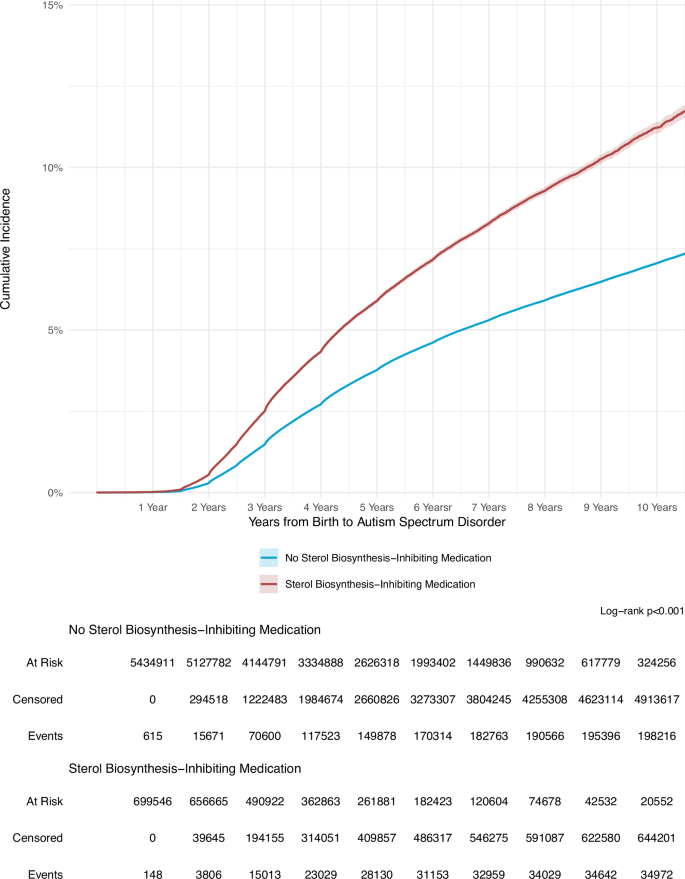
Study Links Antidepressants, Beta-blockers and Statins To Increased Autism Risk

An analysis of 6.14 million maternal-child health records  has linked prescription medications...

Pilot Study: Fibromyalgia Fatigue Improved By TENS Therapy

Fibromyalgia is the term for a poorly-understood condition where people experience pain and fatigue...

User picture.
News StaffRSS Feed of this column.

News Releases From All Over The World, Right To You... Read More »

Blogroll
With cold and flu season in full swing, the fact that viruses and bacteria rapidly 'evolve' is apparent with every sneeze, sniffle, and cough. A new report in The FASEB Journal seeks to explain how humans keep up with microbes by rearranging the genes that make antibodies to foreign invaders. This research fills a significant gap in our understanding of how the immune system helps us survive.
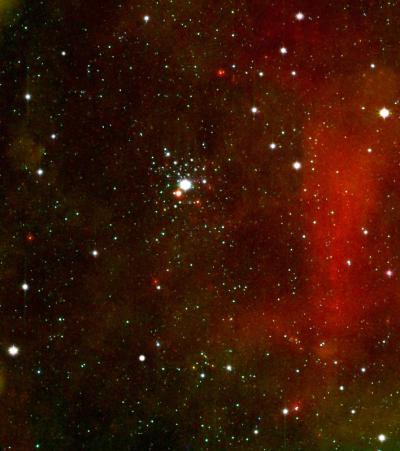
Smithsonian Center for Astrophysics astronomers examined the 5 million-year-old star cluster NGC 2362 with NASA's Spitzer Space Telescope, which can detect the signatures of actively forming planets in infrared light, and found that all stars with the mass of the Sun or greater have lost their protoplanetary (planet-forming) disks.

Only a few stars less massive than the Sun retain their protoplanetary disks. These disks provide the raw material for forming gas giants like Jupiter. Therefore, gas giants have to form in less than 5 million years or they probably won't form at all.

So baby Jupiter had to gain weight quickly. 

Sometimes studies are done that are common sense but, without them, people would say, about things that are common sense, 'no studies actually show that... so that is why we mention a recent study showing that shade trees on the west and south sides of a house in California can reduce a homeowner's summertime electric bill by about $25.00 a year.

The study, conducted last year on 460 single-family homes in Sacramento, is the first large-scale study to use utility billing data to show that trees can reduce energy consumption.

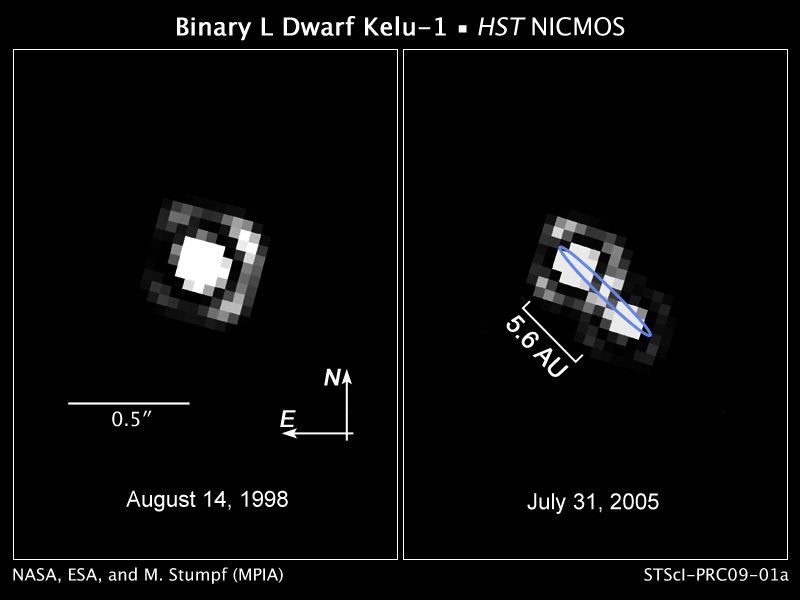
Brown dwarfs, objects that are less massive than stars but larger than planets, just got more elusive, based on a study of 233 nearby multiple-star systems by NASA's Hubble Space Telescope. Hubble found only two brown dwarfs as companions to normal stars. This means the so-called "brown dwarf desert" (the absence of brown dwarfs around solar-type stars) extends to the smallest stars in the universe.

The 233 stars surveyed are part of the RECONS (Research Consortium on Nearby Stars) survey meant to understand the nature of the sun's nearest stellar neighbors, both individually and as a population. The current primary goals are to discover and characterize "missing" members of the sample of stars within 32.6 light-years (10 parsecs) of Earth.
Big volcanic eruptions over the past 450 years have temporarily cooled weather in the tropics but suggest that such effects may have been masked in the 20th century by rising global temperatures, say researchers. The  paper, which shows that higher latitudes can be even more sensitive to volcanism, appears in the current issue of Nature Geoscience
Researchers at the Salk Institute for Biological Studies say they have developed a new mouse model of glioblastoma, the most common and deadly brain cancer in humans, that more closely resembles the development and progression of human brain tumors that arise in people. 

Trying to mimic randomly occurring mutations that lie at the heart of all tumors, the Salk researchers used modified viruses to shuttle cancer-causing oncogenes into a handful of cells in adult mice. Their strategy, described in Nature Medicine, could prove a useful method to faithfully reproduce different types of tumors.