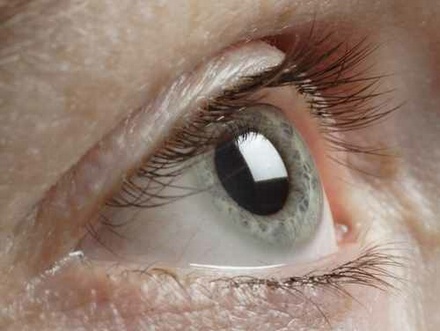
A team of Johns Hopkins neuroscientists has worked out how some newly discovered light sensors in the eye detect light and communicate with the brain. The report appears online this week in Nature.
These light sensors are a small number of nerve cells in the retina that contain melanopsin molecules. Unlike conventional light-sensing cells in the retina—rods and cones—melanopsin-containing cells are not used for seeing images; instead, they monitor light levels to adjust the body's clock and control constriction of the pupils in the eye, among other functions.
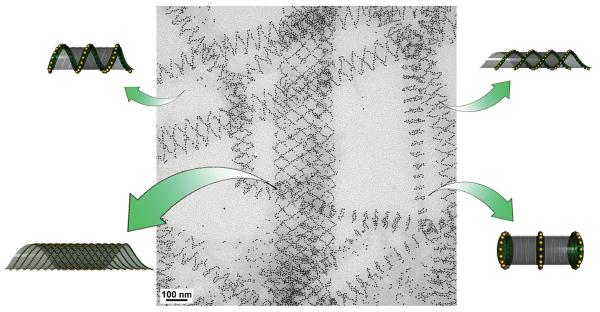
The future of the nanotechnology field depends on our ability to reliably and reproducibly assemble nanoparticles into 3D structures we can use to develop new technologies. According to Hao Yan and Yan Liu at Arizona State University, the greatest challenges in this burgeoning field include control over nanoscale 3D structure and imaging these tiny materials.
"The ability to build predicted structures and provide experimental feedback to current theories is critical to the nanotechnology field," said Yan.
One approach to production of nanoscale architecture is creation of nanoparticles that assemble themselves into the desired structure. DNA molecules are an elegant biological example of small particles that self-assemble to form higher order 3D structures.
Abundant tiny particles of diamond dust exist in sediments dating to 12,900 years ago at six North American sites, adding strong evidence for Earth’s impact with a rare swarm of carbon-and-water-rich comets or carbonaceous chondrites, reports a nine-member scientific team.
These nanodiamonds, which are produced under high-temperature, high-pressure conditions created by cosmic impacts and have been found in meteorites, are concentrated in similarly aged sediments at Murray Springs, Ariz., Bull Creek, Okla., Gainey, Mich., and Topper, S.C., as well as Lake Hind, Manitoba, and Chobot, Alberta, in Canada. Nanodiamonds can be produced on Earth, but only through high-explosive detonations or chemical vaporization.
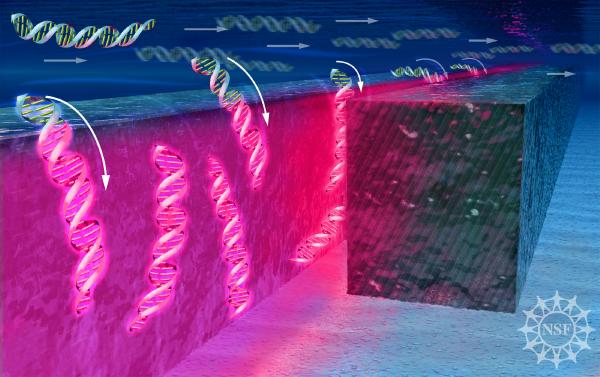
Using a beam of light shunted through a tiny silicon channel, researchers have created a nanoscale trap that can stop free floating DNA molecules and nanoparticles in their tracks. By holding the nanoscale material steady while the fluid around it flows freely, the trap may allow researchers to boost the accuracy of biological sensors and create a range of new 'lab on a chip' diagnostic tools.
Light has been used to manipulate cells and even nanoscale objects before, but the new technique allows researchers to manipulate the particles more precisely and over longer distances.
Did you make a resolution? Most people do, consciously or not. The end of one year and the beginning of a new one is a built-in time for reflection. You may resolve to go to the gym or learn a musical instrument but often something will come up that interrupts the routine, progress is lost and the resolution loses its ... resolve.
John O’Neill, LCSW, LCDC, CSAT, director of Addiction Services for The Menninger Clinic in Houston, says all is not lost if you plan your resolution, including planning for setbacks. And his 5-step program is not just for New Years, you can resolve to make positive changes at any time.
New computer visualization technology developed by the Harvard Initiative in Innovative Computing has helped astrophysicists understand that gravity plays a larger role than previously thought in deep space's vast, star-forming molecular clouds.
The insight is being illustrated in Nature's online version through new three-dimensional Portable Document Format (PDF) technology that will allow readers to view the article's key graphics using free PDF software already commonly found on computers.


 Synchrotron Could Shed Light On Exotic Dark Photons
 The Pain Scale Is Broken But This May Fix It
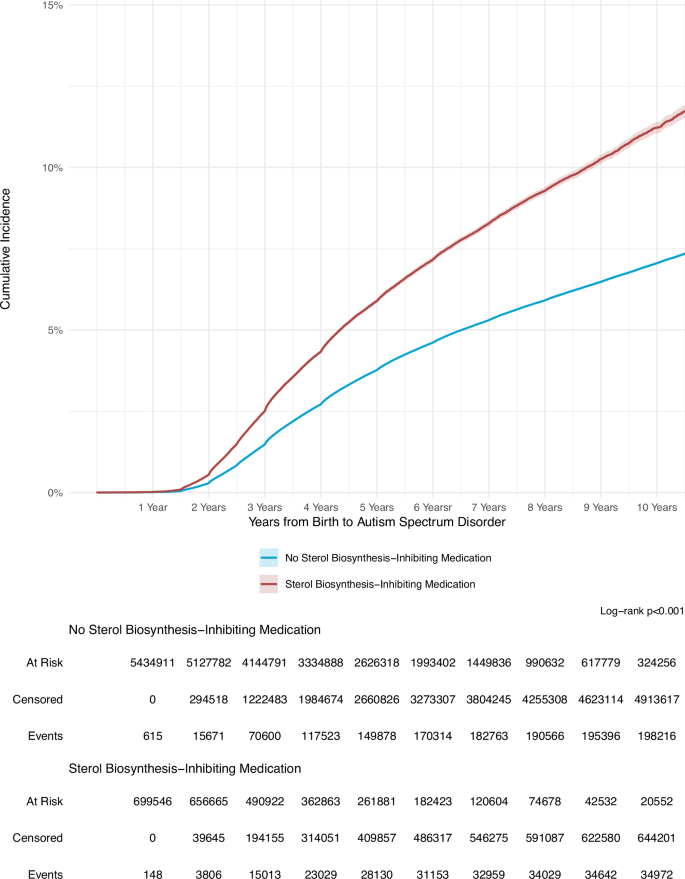 Study Links Antidepressants, Beta-blockers and Statins To Increased Autism Risk
 Pilot Study: Fibromyalgia Fatigue Improved By TENS Therapy