Banner
Synchrotron Could Shed Light On Exotic Dark Photons

There are many hypothetical particles proposed to explain dark matter and one idea to explore how...

The Pain Scale Is Broken But This May Fix It

Chronic pain is reported by over 20 percent of the global population but there is no scientific...
Study Links Antidepressants, Beta-blockers and Statins To Increased Autism Risk

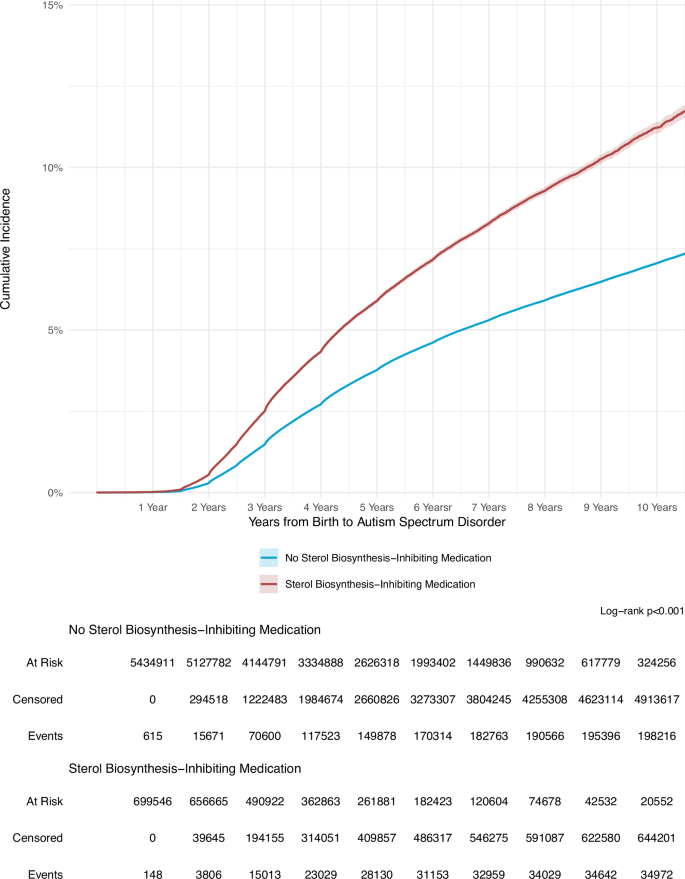
An analysis of 6.14 million maternal-child health records  has linked prescription medications...

Pilot Study: Fibromyalgia Fatigue Improved By TENS Therapy

Fibromyalgia is the term for a poorly-understood condition where people experience pain and fatigue...

User picture.
News StaffRSS Feed of this column.

News Releases From All Over The World, Right To You... Read More »

Blogroll
Lockheed Martin rolled out a conventional takeoff and landing (CTOL) variant of the F-35 Lightning II fighter, called F-35AF-1, which joins three weight-optimized F-35B short takeoff/vertical landing variants currently undergoing testing. The aircraft are structurally identical to the F-35s that will be delivered to armed services beginning in 2010.

The first F-35A, known as AA-1, has completed 69 flights, and has a production-representative external shape and internal systems. Unlike AF-1 and the other F-35 test aircraft, AA-1's internal structure was designed before a 2004 weight-savings program resulted in structural revisions to all three F-35 variants.
Researchers at The Ohio State University Comprehensive Cancer Center have discovered that a molecule implicated in leukemia and lung cancer is also important in muscle repair and in a muscle cancer that strikes mainly children. 

The study shows that immature muscle cells require the molecule, called miR-29, to become mature, and that the molecule is nearly missing in cells from rhabdomyosarcoma, a cancer caused by the proliferation of immature muscle cells. 

Cells from human rhabdomyosarcoma tumors showed levels of the molecule that were 10 percent or less of those in normal muscle cells. Artificially raising the level of the molecule in the cancer cells cut their growth by half and caused them to begin maturing, slowing down tumor growth.

America is slightly schizophrenic when it comes to weight.   If you open a newspaper you can simultaneously read that the five skinny women left must need counselling and society is to blame for that but anorexia is genetic even though that gene seems to only be present in middle-class white girls, all while we are the fattest country in the world.  It can be confusing to people outside the US and anyone with a clue.

If you put 'genomics' on the end of a word, you can gain instant credibility, so it makes sense that someone would come up with 'nutrigenomics' and say they can make a diet that corresponds to your genetic profile.

It's tough to know what they mean by 'genetic profile' though obviously some people have a different metabolism than other so they can eat more.   A customized diet consisting of 'eat fewer calories' wouldn't seem to require genomics.   But 'nutrigenomics', they say, is something better because it aims to identify the genetic factors that influence the body's response to diet and studies how the bioactive constituents of food affect gene expression.

In a recently conducted study, a multidisciplinary French-American research team reported that Neanderthal extinction was principally a result of competition with Cro-Magnon populations, rather than the consequences of climate change. 
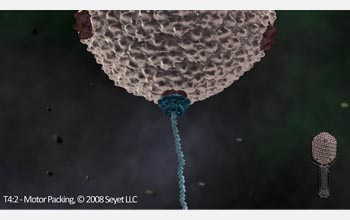
Peering at structures only atoms across, researchers writing in Cell have identified the clockwork that drives a powerful virus nanomotor.   Bonus:  Because of the motor's strength - to scale, it is twice that of an automobile - the new findings could also inspire engineers designing sophisticated nanomachines.

But back on viruses, because a number of virus types may possess a similar motor, including the virus that causes herpes, the results may also assist pharmaceutical companies developing methods to sabotage virus machinery.