Nicolaus Copernicus's 1543 book, "On the Revolutions of the Heavenly Spheres", moved Earth from being the center of the Universe to just another planet orbiting the Sun. Since then, astronomers have extended the idea and formed the Copernican Principle, which says that our place in the Universe as a whole is completely ordinary, completely random and kind of a downer. Although the Copernican Principle is a pillar of modern cosmology, finding conclusive evidence that our neighborhood of the Universe really isn't special has proven difficult.
That's right, it's darn hard for Nihilists out there but University of British Columbia researchers are trying to help.
Researchers at The University of British Columbia have discovered why the brain loses its capacity to re-grow connections and repair itself, knowledge that could lead to therapeutics that “rejuvenate” the brain.
The study, published today in The EMBO Journal, identified a set of proteins - calpain and cortactin - which regulate and control the sprouting of neurons, a mechanism known as neural plasticity.
Neurons, or nerve cells, process and transmit information by electrochemical signalling and are the core components of the brain and spinal cord. During development, growing neurons are relatively plastic and can sprout new connections, however their plasticity levels drop rapidly as they mature and become integrated into neuronal networks.
A study published today in Anticancer Research demonstrates that an ingredient used in a common cough suppressant may be useful in treating advanced prostate cancer. Researchers found that noscapine, which has been used in cough medication for nearly 50 years, reduced tumor growth in mice by 60% and limited the spread of tumors by 65% without causing harmful side effects.
For the first time, researchers at the UCLA Henry Samueli School of Engineering and Applied Science have successfully pushed nature beyond its limits by genetically modifying Escherichia coli, a bacterium often associated with food poisoning, to produce unusually long-chain alcohols essential in the creation of biofuels.
"Previously, we were able to synthesize long-chain alcohols containing five carbon atoms," said James Liao, UCLA professor of chemical and biomolecular engineering. "We stopped at five carbons at the time because that was what could be naturally achieved. Alcohols were never synthesized beyond five carbons. Now, we've figured out a way to engineer proteins for a whole new pathway in E. coli to produce longer-chain alcohols with up to eight carbon atoms."
New research in Science suggests that some meat-eating dinosaurs were super dads - three types of dinosaurs were sole care givers for their mate's eggs. They also may have had multiple mates and watched all their eggs at once.
The dinosaurs in the study were close ancestors of birds, and their fossils were found on top of unusually large clutches, said David Varricchio, a Montana State Universitypaleontologist and lead author of the paper. It's possible, he said, that the males mated with several females who laid their eggs in one large clutch. When the females left, the males incubated and protected the eggs on their own.
If you're man, and you give to charity at all, it is more likely to go to a needy person in your neighborhood but if you're a woman you are more likely to be charitable and you will also give to someone local or someone in a foreign country, says new research by Texas A&M University marketing professor Karen Winterich .
Winterich, who teaches marketing at Texas A&M's Mays Business School, says she can predict charitable behavior to different groups by an individual based on just two factors: gender and moral identity. (Moral identity does not measure how moral a person actually is, but rather how important it is to that person to be caring, kind, fair, honest, etc.)


 Synchrotron Could Shed Light On Exotic Dark Photons
 The Pain Scale Is Broken But This May Fix It
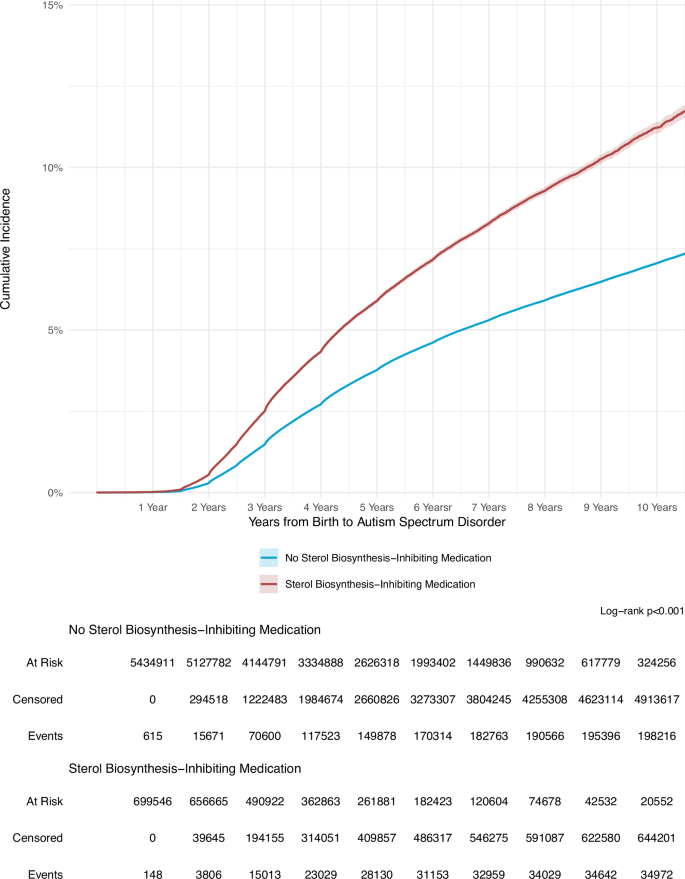 Study Links Antidepressants, Beta-blockers and Statins To Increased Autism Risk
 Pilot Study: Fibromyalgia Fatigue Improved By TENS Therapy