Would you insist someone change if they are left-handed? 90% of the world is right-handed. Short? That's relative but the average height for an American man is under 5'10". Genes do a lot of things, and a new study from the Abramson Cancer Center and Department of Psychiatry in the University of Pennsylvania School of Medicine says that smokers who carry a particular version of a gene for an enzyme that regulates dopamine in the brain may suffer from concentration problems and other cognitive deficits when abstaining from nicotine – a problem that puts them at risk for relapse during attempts to quit smoking.
Public confidence in the honesty of scientists is being harmed by a small minority of researchers who behave badly, heard attendees of a meeting in Madrid on 17-18 November that was organized by the newly formed Research Integrity Forum of the European Science Foundation (ESF) in collaboration with the Spanish National Research Council (CSIC). The European research organizations agreed to work more closely to tackle the problem of fraud and other misconduct in science.
Fraud in science includes inventing data (fabrication), manipulating data to produce an unjustified result (falsification) or presenting the work of other researchers as one's own (plagiarism).
It is widely accepted that Upper Paleolithic early modern humans spread westward across Europe about 42,000 years ago, variably displacing and absorbing Neandertal (alt. spelling Neanderthal) populations in the process. However, Middle Paleolithic assemblages persisted for another 8,000 years in Iberia, presumably made by Neandertals. It has been unclear whether these late Middle Paleolithic Iberian assemblages were made by Neandertals, and what the nature of those humans might have been.
New research, published Dec. 8 in the Proceedings of the National Academy of Sciences, is now shedding some light on what were probably the last Neandertals.
A preliminary study suggests that economic incentives appear to be effective for achieving short-term weight loss, according to a report in the December 10 issue of JAMA.
New research at the Faculty of Life Sciences (LIFE) at the University of Copenhagen – shows that dark chocolate is far more filling than milk chocolate, lessening our craving for sweet, salty and fatty foods. In other words, eating dark chocolate may be an efficient way to keep your weight down over Christmas.
We have known for a long time that it is healthier to eat dark chocolate, but now scientists at the Department of Human Nutrition at LIFE, University of Copenhagen, have found that dark chocolate also gives more of a feeling of satiety than milk chocolate.
Chocolate experiment
Two common diabetes drugs — rosiglitazone and pioglitazone — are linked to higher fracture rates in women, according to a meta-analysis in CMAJ by a team of researchers from the University of East Anglia in the United Kingdom and Wake Forest University in the United States.
The drugs, called
thiazolidinediones, help improve glycemic control and decrease insulin resistance in patients with diabetes.


 Synchrotron Could Shed Light On Exotic Dark Photons
 The Pain Scale Is Broken But This May Fix It
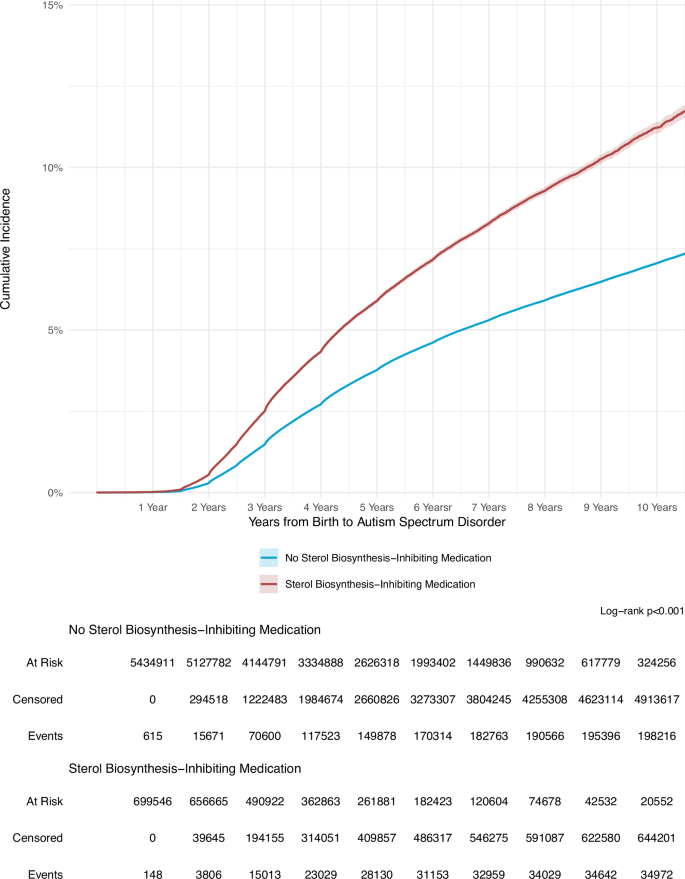 Study Links Antidepressants, Beta-blockers and Statins To Increased Autism Risk
 Pilot Study: Fibromyalgia Fatigue Improved By TENS Therapy