

Banner
Synchrotron Could Shed Light On Exotic Dark Photons

There are many hypothetical particles proposed to explain dark matter and one idea to explore how...

The Pain Scale Is Broken But This May Fix It

Chronic pain is reported by over 20 percent of the global population but there is no scientific...
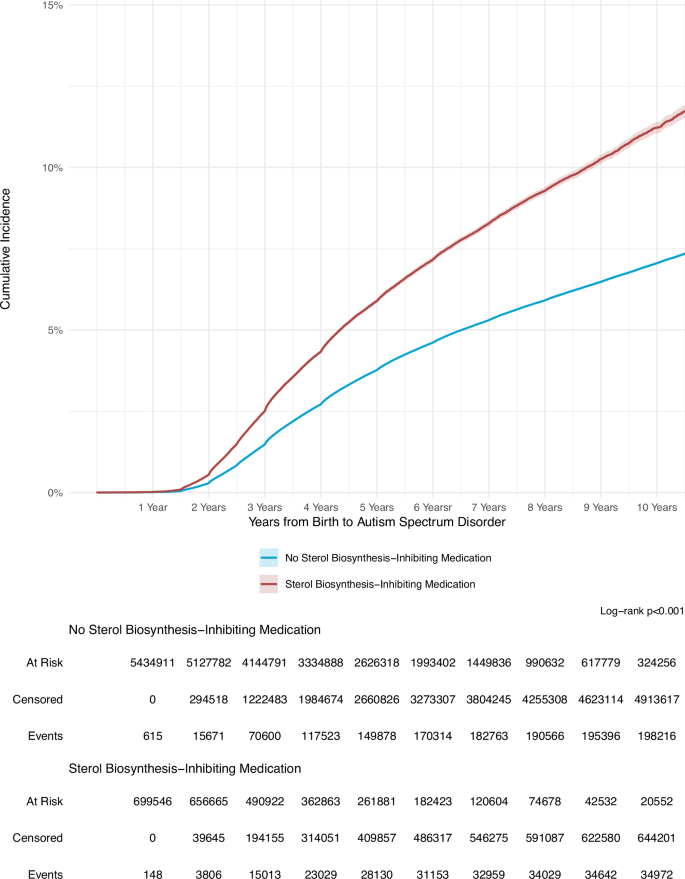
Study Links Antidepressants, Beta-blockers and Statins To Increased Autism Risk

An analysis of 6.14 million maternal-child health records  has linked prescription medications...

Pilot Study: Fibromyalgia Fatigue Improved By TENS Therapy

Fibromyalgia is the term for a poorly-understood condition where people experience pain and fatigue...

User picture.
News StaffRSS Feed of this column.

News Releases From All Over The World, Right To You... Read More »

Blogroll
Can radiation from cell phones affect memory?

The debate continues but in rat experiments done at the Division of Neurosurgery, Lund University, in Sweden, Henrietta Nittby studied rats that were exposed to mobile phone radiation for two hours a week for more than a year and says these rats had poorer results on a memory test than rats that had not been exposed to radiation.

The memory test consisted of releasing the rats in a box with four objects mounted in it. These objects were different on the two occasions, and the placement of the objects was different from one time to the other.
No one really feels left out if they don't have an iPod.  An MP3 player is nice to have but not essential to the human condition.   But Spanish researchers who have carried out a study looking into the potential future impact of robots on society say that the enormous automation capacity of robots and their ability to interact with humans will cause a technological imbalance over the next 12 years - between those who have them and those who do not.

The Center for International Forestry Research (CIFOR) today released a comprehensive analysis clarifying major challenges and offering an assortment of options that could help negotiators reach a global agreement on reducing carbon emissions tied to forest destruction and degradation.

The report, Moving ahead with REDD: Issues, options and implications, is set to be released as officials from around the world have gathered here under the auspices of the UN Framework Convention on Climate Change (UNFCCC). Negotiators are seeking to outline a new global agreement for reducing greenhouse gases, which will set the stage for final decisions scheduled for 2009 in Copenhagen.

If you're happy and you know it, thank your friends—and their friends. And while you're at it, their friends' friends. But if you're sad, hold the blame. Researchers from Harvard Medical School and the University of California, San Diego have found that "happiness" is not the result solely of a cloistered journey filled with individually tailored self-help techniques. Happiness is also a collective phenomenon that spreads through social networks like an emotional contagion. 
The decline of the Roman and Byzantine Empires in the Eastern Mediterranean more than 1,400 years ago may have been driven by unfavorable climate changes.

Based on chemical signatures in a piece of calcite from a cave near Jerusalem, a team of American and Israeli geologists pieced together a detailed record of the area's climate from roughly 200 B.C. to 1100 A.D. Their analysis, to be reported in an upcoming issue of the journal Quaternary Research, reveals increasingly dry weather from 100 A.D. to 700 A.D. that coincided with the fall of both Roman and Byzantine rule in the region. 
How a bacterium overcomes a tomato plant's defenses and causes disease, by sneakily disabling the plant's intruder detection systems, is revealed in new research published in the December issue of Current Biology.

The new study focuses on a pathogen which causes bacterial speck disease in tomato plants. This bacterial invasion causes black lesions on leaves and fruit. Severe infection can cause extensive and costly damage to tomato crops, and researchers believe that understanding more about how this microbe works could lead to new ways of tackling it, and other plant diseases, without the need for pesticides.




