Banner
Synchrotron Could Shed Light On Exotic Dark Photons

There are many hypothetical particles proposed to explain dark matter and one idea to explore how...

The Pain Scale Is Broken But This May Fix It

Chronic pain is reported by over 20 percent of the global population but there is no scientific...
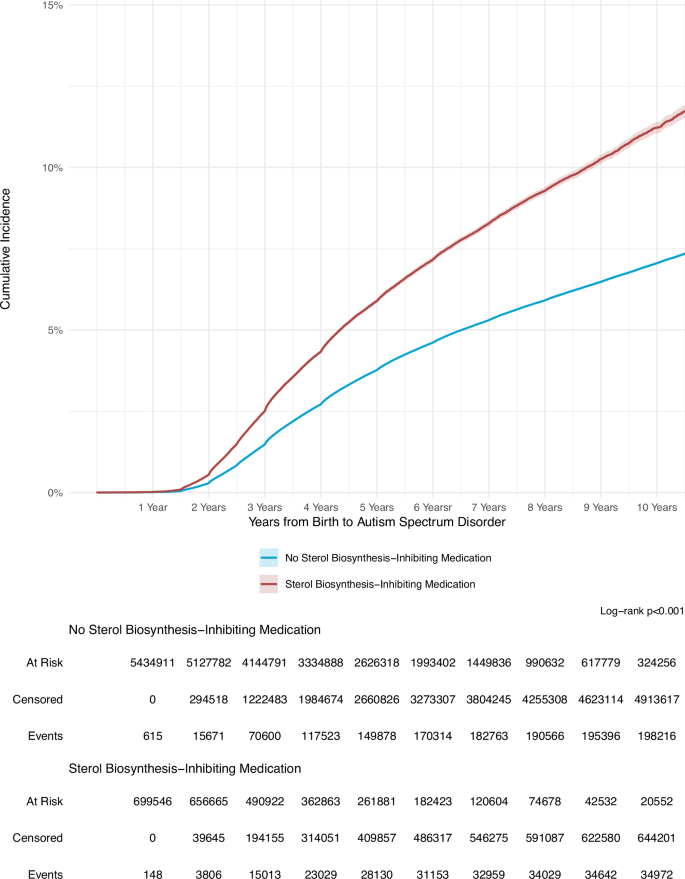
Study Links Antidepressants, Beta-blockers and Statins To Increased Autism Risk

An analysis of 6.14 million maternal-child health records  has linked prescription medications...

Pilot Study: Fibromyalgia Fatigue Improved By TENS Therapy

Fibromyalgia is the term for a poorly-understood condition where people experience pain and fatigue...

User picture.
News StaffRSS Feed of this column.

News Releases From All Over The World, Right To You... Read More »

Blogroll
Defective calcium metabolism in nerve cells may play a major role in a fatal genetic neurological disorder that resembles Huntington’s disease, researchers at UT Southwestern Medical Center have found in a mouse study.
Each year, coal-burning power plants, steel factories and similar facilities in the United States produce more than 125 million tons of waste, much of it fly ash and bottom ash left over from combustion. Mulalo Doyoyo has plans for that material.

An assistant professor in Georgia Tech’s School of Civil and Environmental Engineering, Doyoyo has developed a new structural material based on these leftovers from coal burning. Known as Cenocell™, the material offers attributes that include high strength and light weight – without the use of cement, an essential ingredient of conventional concrete. 
Older people who spent at least 14 hours a week taking care of a disabled spouse lived longer than others. That is the unexpected finding of a University of Michigan study forthcoming in Psychological Science, a journal of the Association for Psychological Science.

The study supports earlier research showing that in terms of health and longevity, it really is better to give than to receive.
When a pregnant woman goes into early labor, her obstetrician may give her drugs to quiet the woman's uterus and prevent premature birth.

New research shows, however, that one popular drug works no better than a placebo at maintaining pregnancy after the initial bout of preterm labor is halted, say scientists at the Stanford University School of Medicine, Lucile Packard Children's Hospital and Santa Clara Valley Medical Center. The new trial is the first-ever placebo-controlled test of nifedipine, a muscle relaxant originally developed to lower blood pressure, and its effect on premature delivery with prolonged treatment.
Science fiction writers have long envisioned sailing a spacecraft by the optical force of the sun’s light. But, the forces of sunlight are too weak to fill even the oversized sails that have been tried. Now a team led by researchers at the Yale School of Engineering&Applied Science has shown that the force of light indeed can be harnessed to drive machines — when the process is scaled to nano-proportions. 
 
Their work opens the door to a new class of semiconductor devices that are operated by the force of light. They envision a future where this process powers quantum information processing and sensing devices, as well as telecommunications that run at ultra-high speed and consume little power.
 
As you gorge on food this Thanksgiving and throughout the holiday season, you might not want to think about the fat content of all the goodies you've indulged in. Nevertheless, your brain will be keeping tabs directly, suggests a report in the issue of Cell. 

Researchers have discovered in studies of rats that one type of lipid produced in the gut rises after eating fatty foods. Those so called N-acylphosphatidylethanolamines or NAPEs enter the bloodstream and go straight to the brain, where they concentrate in a brain region that controls food intake and energy expenditure.