Banner
Synchrotron Could Shed Light On Exotic Dark Photons

There are many hypothetical particles proposed to explain dark matter and one idea to explore how...

The Pain Scale Is Broken But This May Fix It

Chronic pain is reported by over 20 percent of the global population but there is no scientific...
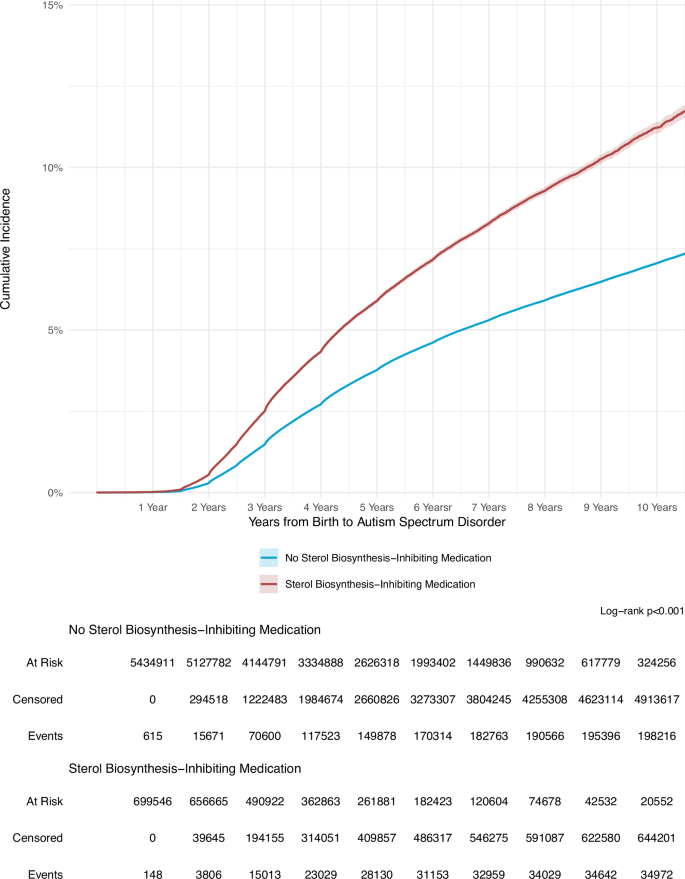
Study Links Antidepressants, Beta-blockers and Statins To Increased Autism Risk

An analysis of 6.14 million maternal-child health records  has linked prescription medications...

Pilot Study: Fibromyalgia Fatigue Improved By TENS Therapy

Fibromyalgia is the term for a poorly-understood condition where people experience pain and fatigue...

User picture.
News StaffRSS Feed of this column.

News Releases From All Over The World, Right To You... Read More »

Blogroll
A new study by researchers at the Bradley Hasbro Children's Research Center suggests that the incidence of heterosexual anal sex is increasing among teens and young adults – particularly those who have recently had unprotected vaginal sex. These findings mirror recent data that show anal sex rates among adults doubled between the years 1995 and 2004.

The study, published online by the American Journal of Public Health, is among the first to report on the little-known factors associated with heterosexual anal intercourse among adolescents and young adults.

by Diane Banegas, National Science Foundation

Researchers at the University of Minnesota-Twin Cities are studying a remarkable species of bacteria, Geobacter sulfurreducens, that produces electric current when attached to a graphite electrode or other conductive surface.

Geobacter's current capability already has been harnessed in so-called "microbial fuel cells" that use bacteria to convert wastewater organic compounds into electricity. Daniel Bond, a microbiologist at the University of Minnesota-Twin Cities, and his team have demonstrated the same phenomenon can be harnessed for use in batteries and biosensors. 
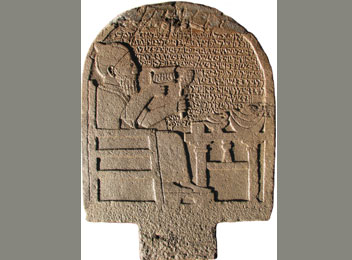
Archaeologists in southeastern Turkey have discovered an Iron Age chiseled stone slab that provides the first written evidence in the region that people believed the soul was separate from the body.  University of Chicago researchers will describe the discovery, a testimony created by an Iron Age official that includes an incised image of the man, on Nov. 22-23 at conferences of biblical and Middle Eastern archaeological scholars in Boston.

The Neubauer Expedition of the Oriental Institute at the University of Chicago found the 800-pound basalt stele, 3 feet tall and 2 feet wide, at Zincirli (pronounced "Zin-jeer-lee"), the site of the ancient city of Sam'al. Once the capital of a prosperous kingdom, it is now one of the most important Iron Age sites under excavation. 
A review of previously published studies suggests that rates of adverse outcomes for mothers or pregnant women and newborn babies, such as gestational diabetes and low birth weight, may be lower after bariatric surgery compared with pregnant women who are obese, according to an article in the November 19 issue of JAMA.

That's right, women who have their stomachs stapled have healthier babies.
New research has traced elevated levels of a specific compound in the brain called kynurenic acid to problem-solving deficits in patients with schizophrenia.

The finding suggests that drugs used to suppress the compound  might be an important supplement to antipsychotic medicines, as these adjuncts could be used to treat the disorder's most resistant symptoms – cognitive impairments. 
The powerful black holes at the center of massive galaxies and galaxy clusters act as hearts to the systems, pumping energy out at regular intervals to regulate the growth of the black holes themselves, as well as star formation, according to new data from NASA's Chandra X-Ray Observatory. 

Scientists from the University of Michigan, the Max-Planck Institute for Extraterrestrial Physics in Germany, the University of Maryland, Baltimore County (UMBC), the Harvard-Smithsonian Center for Astrophysics and Jacobs University in Germany contributed to the results.