A little bit of stress apparently lasts a long time, say neuroscientists from the University of Washington. They have found that a single exposure to uncontrollable stress impairs decision making in rats for several days, making them unable to reliably seek out the larger of two rewards.
The research was presented at a press conference on "Our Stressed Out Brains" during the Society for Neuroscience's annual meeting by Lauren Jones, a UW psychology doctoral student.
Jones, working with Jeansok Kim, a UW associate professor of psychology, found that stressed rats took significantly longer to respond to a change in rewards given to them in a maze and their performances never matched those of other rats not exposed to stress.
Great athletes know that it takes more than physical ability to do well - it takes brain power in the form of speed and efficiency in decision-making as well. Two researchers from the School of Optometry, Professor Jocelyn Faubert and postdoctoral student David Tinjust, of the Université de Montréal say they have discovered how to train the brain of athletes to improve their overall athletic performance.
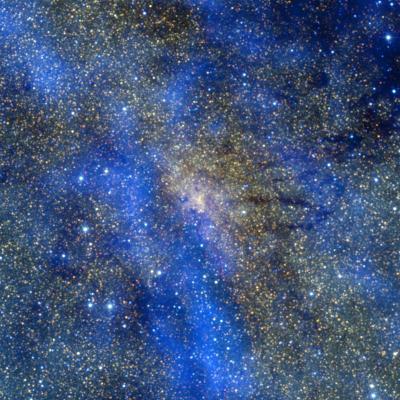
The team of European and US astronomers used ESO's Very Large Telescope (VLT) and the Atacama Pathfinder Experiment (APEX) telescope, both in Chile, to study light from Sagittarius A* at near-infrared wavelengths and the longer submillimetre wavelengths respectively. This is the first time that astronomers have caught a flare with these telescopes simultaneously. The telescopes' location in the southern hemisphere provides the best vantage point for studying the Galactic Centre.
"Observations like this, over a range of wavelengths, are really the only way to understand what's going on close to the black hole," says Andreas Eckart of the University of Cologne, who led the team.
Engineers and entrepreneurs are rushing to explore alternative sources of efficient and renewable energy in New Jersey and elsewhere in the country. A Rutgers School of Business—Camden professor has strong words of caution as projects involving wind farms and photovoltaic cells proliferate.
With the electric-power industry poised for its most dramatic changes in decades, too little thought is being devoted to coordinating these piecemeal initiatives, warns Richard Michelfelder in a recent edition of The Electricity Journal, the leading policy journal for the electric industry.
The consequence, he fears, might well be a disastrous overload of the nation's electrical grid.
During the presidential campaign, Barack Obama suggested his economic plan would create 5 million jobs in environmental industries - easy enough to do when taxpayers are subsidizing even more federal workers but will these so-called "green collar" jobs present the next frontier for U.S. manufacturing? A new report led by a sociologist from Duke University is backing up Obama's claim.
Their report, "Manufacturing Climate Solutions," provides a detailed look at the manufacturing jobs that already exist and would be created when the U.S. takes action to limit global-warming pollution. A copy of the study is available at http://www.cggc.duke.edu/environment/climatesolutions/.
All of us have experienced being in a new place and feeling certain that we have been there before. This mysterious feeling, commonly known as déjà vu, occurs when we feel that a new situation is familiar, even if there is evidence that the situation could not have occurred previously. For a long time, this eerie sensation has been attributed to everything from paranormal disturbances to neurological disorders. However, in recent years, as more scientists began studying this phenomenon, a number of theories about déjà vu have emerged, suggesting that it is not merely a glitch in our brain’s memory system. A new report by Colorado State University psychologist Anne M.


 Synchrotron Could Shed Light On Exotic Dark Photons
 The Pain Scale Is Broken But This May Fix It
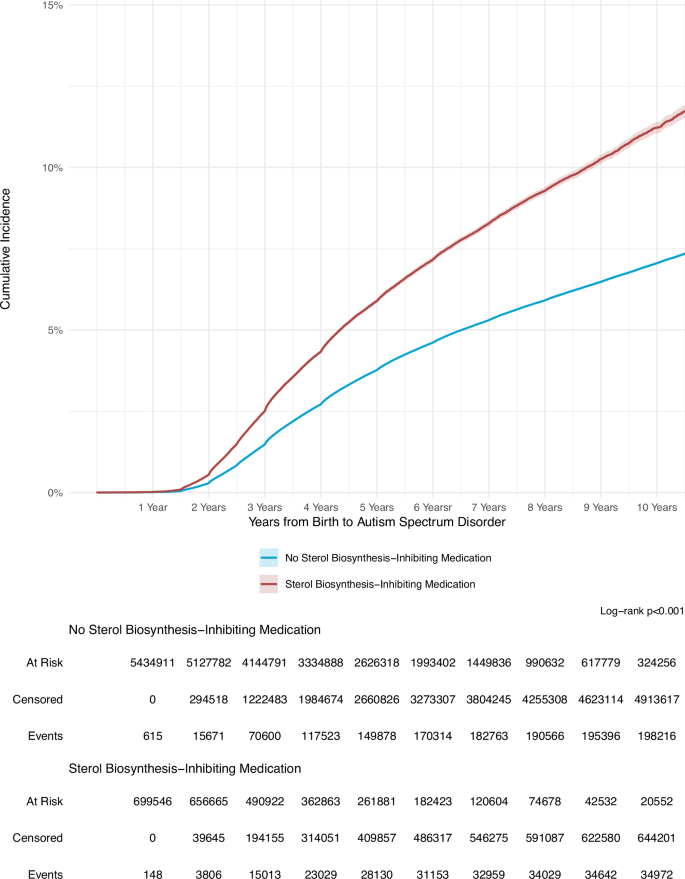 Study Links Antidepressants, Beta-blockers and Statins To Increased Autism Risk
 Pilot Study: Fibromyalgia Fatigue Improved By TENS Therapy