A new study by sociologists at the University of Maryland concludes that unhappy people watch more TV, while people who describe themselves as very happy spend more time reading and socializing. The study appears in the December issue of the journal “Social Indicators Research.”
Analyzing 30-years worth of national data from time-use studies and a continuing series of social attitude surveys, the Maryland researchers report that spending time watching television may contribute to viewers’ happiness in the moment, with less positive effects in the long run.
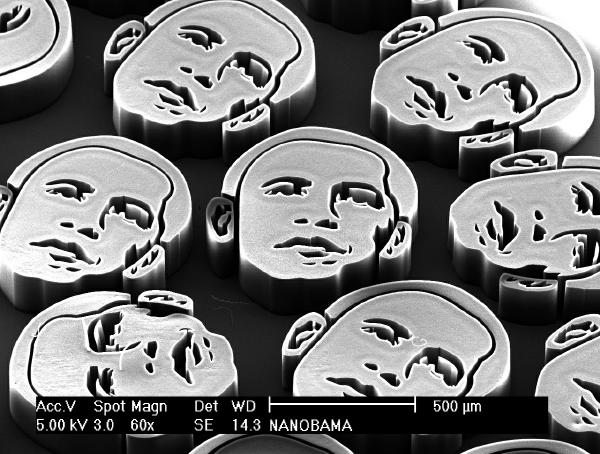
A University of Michigan professor has created 3-D portraits of the president-elect that are smaller than a grain of salt. He calls them "nanobamas."
John Hart, an assistant professor in the Department of Mechanical Engineering, made the mini-Barack Obama 'Nanobama' likenesses with his colleagues to raise awareness of nanotechnology and science. Plus, Obama flowed much nicer with 'nano' than McCain would have. And Hart voted for Obama, not that you didn't think so already.
Each one contains about 150 million carbon nanotubes stacked vertically like trees in a forest. A carbon nanotube is an extraordinarily strong hollow cylinder about 1/50,000th the width of a human hair.
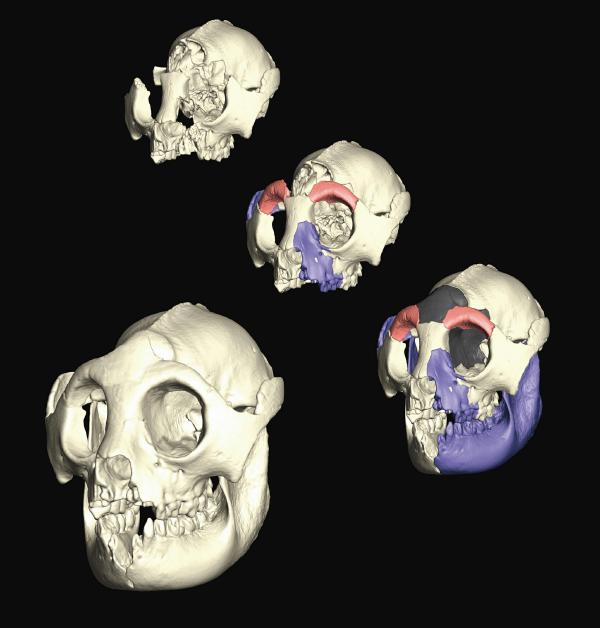
Scientists in Madagascar, at the American Museum of Natural History in New York and the Vienna Natural History Museum and at the University of Massachusetts Amherst now have a nearly complete skeleton of a rare species of extinct lemur to study thanks to a century-long discovery and reconstruction effort. Laurie R. Godfrey, professor of anthropology at UMass Amherst and lemur expert, played a key role in the process in which contemporary researchers were able to match newly found bones with those discovered in a cave in Madagascar in 1899 to construct much of the skeleton of a rare species of extinct lemur.
“It’s remarkable that we were able to reunite bits of the original skeleton,” Godfrey says. “This is a very big gift to science from many people.”
An article published electronically in the scientific journal Acta Paediatrica describes how heart rate and sleep in boys are affected by violent video games. Researchers from Stockholm University, Uppsala University and Karolinska Institutet in Sweden have worked together with this study.
A recently discovered female pelvis is changing minds about the head size of an ancient human ancestor, Homo erectus, and consequently revising notions about how smart they may have been. The Pleistocene adult female Homo erectus pelvis was from the Busidima Formation of Gona, Afar, Ethiopia., not far from the site that yielded the 3.2 million year old remains of the famed Australopithecus afarensi "Lucy," and the pelvis indicates that Homo erectus, which lived in Africa roughly 2 million years ago, had a larger birth canal than originally suspected and could have given birth to babies with bigger brains.
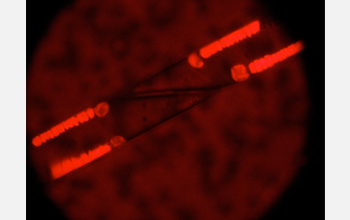
An unusual microorganism discovered in the open ocean may force scientists to rethink their understanding of how carbon and nitrogen cycle through ocean ecosystems.
A research team led by Jonathan Zehr, a marine scientist at the University of California, Santa Cruz, characterized the new microbe by analyzing its genetic material, even though researchers have not been able to grow it in the laboratory. Zehr said the newly described organism seems to be an atypical member of the cyanobacteria, a group of photosynthetic bacteria formerly known as blue-green algae.


 Synchrotron Could Shed Light On Exotic Dark Photons
 The Pain Scale Is Broken But This May Fix It
 Study Links Antidepressants, Beta-blockers and Statins To Increased Autism Risk
 Pilot Study: Fibromyalgia Fatigue Improved By TENS Therapy