
Banner
How To Overcome Leadership Battles

In times of social rancor and strife, most will fight each other, but societies are saved by those...
Thousands Of Unpublished Studies Show Why Conservation Efforts Miss The Mark

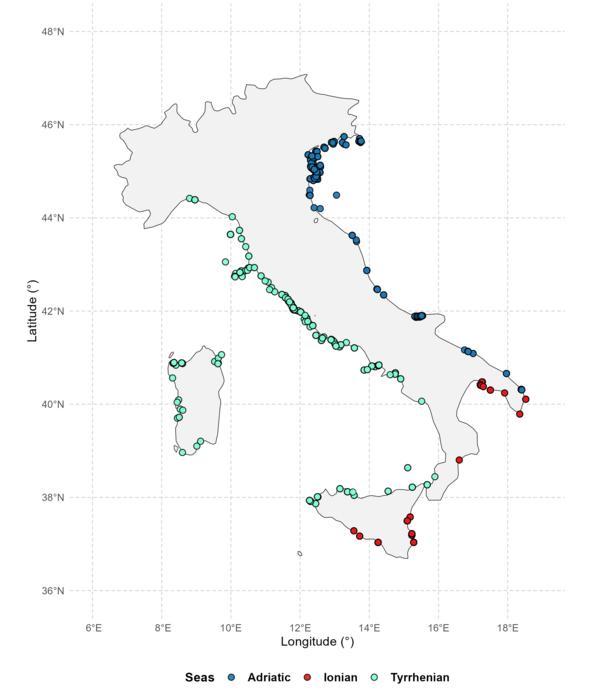
Europe alone has so much unpublished, un-catalogued biological data that it is challenging to take...

Why Antarctic Sea Ice Stopped Growing In 2015

Though numerical models and popular films like An Inconvenient Truth projected Arctic ice...

Wealth Correlated To Loneliness

You may have read that Asian cultures respect the elderly more than Europe but Asian senior citizens...

User picture.
News StaffRSS Feed of this column.

News Releases From All Over The World, Right To You... Read More »

Blogroll

EAST LANSING, Mich. -- Fathers play a surprisingly large role in their children's development, from language and cognitive growth in toddlerhood to social skills in fifth grade, according to new findings from Michigan State University scholars.

The research provides some of the most conclusive evidence to date of fathers' importance to children's outcomes and reinforces the idea that early childhood programs such as Head Start should focus on the whole family, including mother and father alike. The findings are published online in two academic journals, Early Childhood Research Quarterly and Infant and Child Development.

It is common knowledge that salt consists of the cation sodium and the anion chloride. However, the substance used to season food has been a cause of great concern to farmers for some time now: In times of climate change, more and more agricultural areas have to be irrigated. This inevitably leads to the increasing salinisation of soils, that is the accumulation of sodium and chloride ions.

Unlike classical crystals, quasicrystals do not comprise periodic units, even though they do have a superordinate structure. The formation of the fascinating mosaics that they produce is barely understood. In the context of an international collaborative effort, researchers at the Technical University of Munich (TUM) have now presented a methodology that allows the production of two-dimensional quasicrystals from metal-organic networks, opening the door to the development of promising new materials.

Johns Hopkins University researchers are the first to glimpse the human brain making a purely voluntary decision to act.

Unlike most brain studies where scientists watch as people respond to cues or commands, Johns Hopkins researchers found a way to observe people's brain activity as they made choices entirely on their own. The findings, which pinpoint the parts of the brain involved in decision-making and action, are now online, and due to appear in a special October issue of the journal Attention, Perception, & Psychophysics.

The very first bony fish on Earth was susceptible to arthritis, according to a USC-led discovery that may fast-track therapeutic research in preventing or easing the nation's most common cause of disability.

The finding contradicts the widely held belief that lubricated joints enabling mobility -- called synovial joints -- evolved as vertebrates ventured onto land. For example, human knees and hips have synovial joints, which are highly susceptible to osteoarthritis.

Pixar's Dory, zebrafish and other ray-finned fish have synovial joints that can get creaky. Thus, these fish are susceptible to arthritis.

Researchers at Hokkaido University have developed a new kind of hydrogel that bonds spontaneously and strongly to defected bones, suggesting potential use in the treatments of joint injuries.

When soft supporting human tissues--including cartilage and ligaments, which are joined firmly to bones--are damaged, they cannot spontaneously repair inside the body. The use of artificial supporting tissues has the potential to significantly ameliorate damage to soft tissues. Progress has hitherto been hampered by the lack of materials that are strong, yet soft and pliant, for adhering to bone.

