Banner
Pilot Study: Fibromyalgia Fatigue Improved By TENS Therapy

Fibromyalgia is the term for a poorly-understood condition where people experience pain and fatigue...

High Meat Consumption Linked To Lower Dementia Risk

Older people who eat large amounts of meat have a lower risk of dementia and cognitive decline...

Long Before The Inca Colonized Peru, Natives Had A Thriving Trade Network

A new DNA analysis reveals that long before the Incan Empire took over Peru, animals were...

Mesolithic People Had Meals With More Tradition Than You Thought

The common imagery of prehistoric people is either rooting through dirt for grubs and picking berries...

User picture.
News StaffRSS Feed of this column.

News Releases From All Over The World, Right To You... Read More »

Blogroll

Research by the University at Albany shows that information conveyed by a kiss can have profound consequences for romantic relationships, and can even be a major factor in ending one.

In a recently published article, Susan M. Hughes, Marissa A. Harrison, and Gordon G. Gallup, Jr. reveal that many college students have found themselves attracted to someone, only to discover after they kissed them for the first time that they were no longer interested.

"In other words," said Gallup, an evolutionary psychologist, "While many forces lead two people to connect romantically, the kiss, particularly the first kiss, can be a deal breaker."

How does the Great Barrier Reef work, and coral worldwide? Why do they bleach and die and how will they respond to climate change?

Scientists at the ARC Centre of Excellence for Coral Reef Studies, James Cook University and the University of Queensland have compiled the world’s first detailed gene expression library for Symbiodinium, the microscopic algae that feed the corals – and so provide the primary energy source for the entire Reef.

“Symbiodinium uses sunlight to convert CO2 into carbohydrates for the corals to feed on. At the same time there’s evidence the corals control its output, suggesting that they are farming their captive plants” Professor David Yellowlees explains.

The Spallation Neutron Source, the Department of Energy's $1.4 billion research facility at Oak Ridge National Laboratory, has established a new record as the world's most powerful accelerator based source of neutrons for scientific research.

The SNS surpassed the previous record for beam power 160 kilowatts, held by the United Kingdom's ISIS facility, while operating at 183 kilowatts. As the SNS ramps up toward an eventual 1.4 megawatts of power, the beams will produce up to 10 times more neutrons than any existing pulsed neutron source.

A trio of Tennessee lawmakers -- Sen. Lamar Alexander (R-Maryville), Rep. Bart Gordon (D-Murfreesboro) and Rep.

How much more would you pay to be near people like you? What about education?

Using restricted-access Census data, a new study examines a quarter-million households on a block-by-block basis to yield new results about the correlation between household attributes and school quality. The researchers find that, conditional on income, households prefer to self-segregate on the basis of both race and education.

“Economists have long been interested in estimating household preferences for school and neighborhood attributes, given their relevance to many central issues in applied economics,” write Patrick Bayer (Duke University and NBER), Fernando Ferreira (University of Pennsylvania), and Robert McMillan (University of Toronto and NBER) in the Journal of Political Economy.

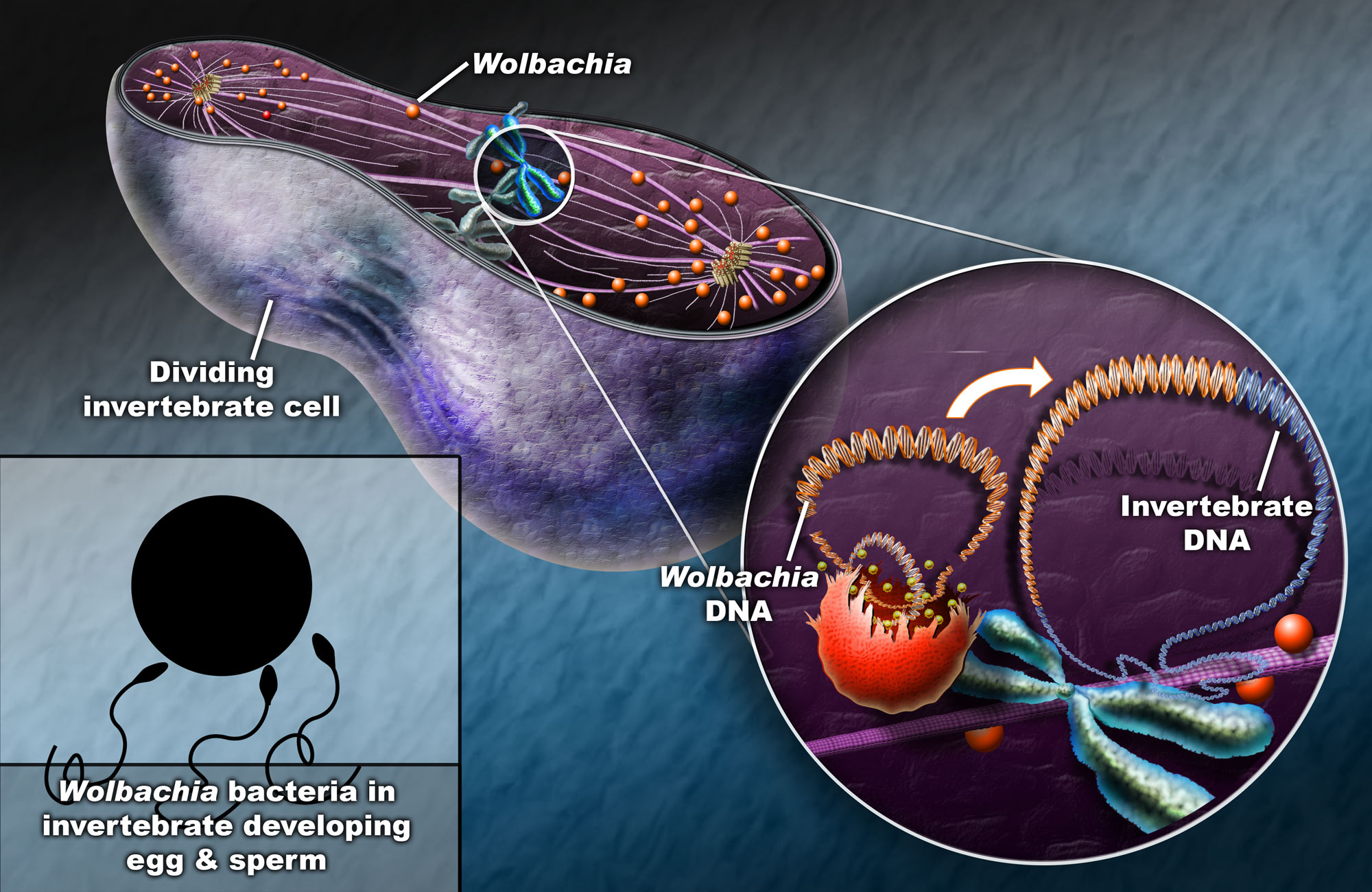
Bacterial parasites are a lot more creative than we thought. It turns out one species, Wolbachia, can insert almost its entire genome into the genomes of members of one host species (a fly called Drosophila ananassae), and can insert parts of its genome into the genomes of members of several other host species.

"We've found at least one species where the parasite's entire or nearly entire genome has been absorbed and integrated into the host's," says Jack Werren of the University of Rochester, principle investigator of the study and a world-leading authority on the Wolbachia parasite.

Scientists for the first time have observed elusive oscillations in the sun's corona, known as Alfvén waves, that transport energy outward from the surface of the sun. The discovery may give researchers more insight into solar magnetic fields, eventually leading to a better understanding of how the sun affects Earth's atmosphere and the entire solar system.

By tracking the speed and direction of the waves, researchers will be able to infer basic properties of the solar atmosphere, such as the density and direction of magnetic fields.