Banner
Pilot Study: Fibromyalgia Fatigue Improved By TENS Therapy

Fibromyalgia is the term for a poorly-understood condition where people experience pain and fatigue...

High Meat Consumption Linked To Lower Dementia Risk

Older people who eat large amounts of meat have a lower risk of dementia and cognitive decline...

Long Before The Inca Colonized Peru, Natives Had A Thriving Trade Network

A new DNA analysis reveals that long before the Incan Empire took over Peru, animals were...

Mesolithic People Had Meals With More Tradition Than You Thought

The common imagery of prehistoric people is either rooting through dirt for grubs and picking berries...

User picture.
News StaffRSS Feed of this column.

News Releases From All Over The World, Right To You... Read More »

Blogroll

Researchers have made synthetic lipids called pseudoceramides that are involved in skin cell growth and could be used in treating skin diseases in which skin cells grow abnormally.

Ceramides are lipids found in the outermost skin layer called the stratum corneum, which is made of dead skin cells and mainly serves as a physical barrier. Ceramides' main biological function is to control how skin cells grow and differentiate - a process through which skin cells become specialized.

In obese individuals, fat cells are bloated and inflamed because they receive too many nutrients, including lipids. In these cells, various components cannot work properly anymore and, instead, they activate new proteins to cope with the situation. One of the most challenged organelles in obese fat cells is a maze-like compartment called the endoplasmic reticulum (ER) that makes proteins and lipid droplets and senses the amount of nutrients that enter the cell.

Margaret F. Gregor and Gokhan S. Hotamisligil review current knowledge about how the ER works in fat cells and is modified in obesity. They show that when a fat cell receives too many nutrients, the ER is overwhelmed and triggers a process called the unfolded protein response (UPR).

Scientists have discovered that a lipid known to protect the heart from inflammation and to cause skin allergic reactions also reduces inflammation of the kidneys. The discovery could help devise new ways of treating inflammatory kidney diseases.

The lipid, called sphingosylphosphorylcholine (SPC), has been shown to cause an increase in urine production in the kidneys and an abnormal accumulation of salt in the urine. But how SPC works in the kidneys is not completely understood.

Andrea Huwiler and colleagues examined the various proteins activated by SPC in kidney cells and showed for the first time that SPC triggers proteins known to reduce inflammation.

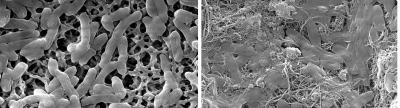
Single-walled carbon nanotubes (SWCNTs) can kill bacteria like the common pathogen E. coli by severely damaging their cell walls, according to a recent report from Yale researchers in the American Chemical Society (ACS) journal Langmuir.

“We began the study out of concerns for the possible toxicity of nanotubes in aquatic environments and their presence in the food chain,” said Menachem Elimelech, professor and chair of chemical and environmental engineering at Yale and senior author on the paper.

Engineers at the University of Washington are working with Harborview doctors to create new emergency treatments right out of Star Trek: a tricorder type device using high-intensity focused ultrasound rays. This summer, researchers published the first experiment using ultrasound to seal punctured lungs.

"No one has ever looked at treating lungs with ultrasound," said Shahram Vaezy, a UW associate professor of bioengineering. Physicists were skeptical it would work because a lung is essentially a collection of air sacs, and air blocks transmission of ultrasound. But the new experiments show that punctures on the lung's surface, where injuries usually occur, heal with ultrasound therapy.

"The results are really impressive," Vaezy said.

A drug that shuts down a critical cell-signaling pathway in the most common and aggressive type of adult brain cancer successfully kills cancer stem cells thought to fuel tumor growth and help cancers evade drug and radiation therapy, a Johns Hopkins study shows.

In a series of laboratory and animal experiments, Johns Hopkins scientists blocked the signaling system, known as Hedgehog, with an experimental compound called cyclopamine to explore the blockade’s effect on cancer stem cells that populate glioblastoma multiforme. Cyclopamine has long been known to inhibit Hedgehog signaling.