Banner
Pilot Study: Fibromyalgia Fatigue Improved By TENS Therapy

Fibromyalgia is the term for a poorly-understood condition where people experience pain and fatigue...

High Meat Consumption Linked To Lower Dementia Risk

Older people who eat large amounts of meat have a lower risk of dementia and cognitive decline...

Long Before The Inca Colonized Peru, Natives Had A Thriving Trade Network

A new DNA analysis reveals that long before the Incan Empire took over Peru, animals were...

Mesolithic People Had Meals With More Tradition Than You Thought

The common imagery of prehistoric people is either rooting through dirt for grubs and picking berries...

User picture.
News StaffRSS Feed of this column.

News Releases From All Over The World, Right To You... Read More »

Blogroll

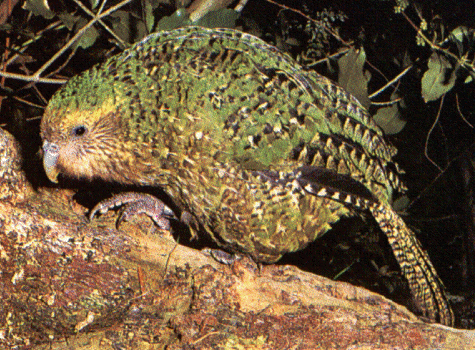
One of the strangest and most endangered birds in the world, the kakapo, is being brought back from the brink of extinction with the help of scientists from the University of Glasgow.

The largest of all parrot species, flightless, nocturnal and plant-eating, the kakapo used to be found all over New Zealand. But ecological changes, habitat clearance and the introduction of predatory mammals combined to cause a catastrophic decline in numbers to only 51 in 1995.

Another factor in their near extinction is that kakapo breed infrequently. This is because they rear their young on the fruits of native trees. These trees - pink pine and rimu – only fruit every 2-6 years and kakapo only breed on those occasions.

A new interpretation of data from NASA’s Viking landers indicates that 0.1% of the Martian soil tested could have a biological origin.

Dr Joop Houtkooper of the University of Giessen, Germany, believes that the subfreezing, arid Martian surface could be home to organisms whose cells are filled with a mixture of hydrogen peroxide and water. Dr Houtkooper described how he has used data from the Gas Exchange (GEx) experiment, carried by NASA’s Viking landers, to estimate the biomass in the Martian soil.


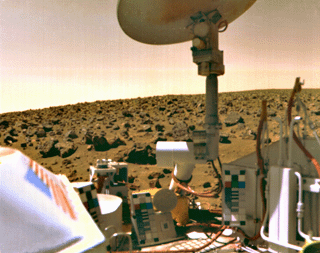
Viking 2 lander image looking back across the craft. Dark boulders are prominent against the reddish soil. The landing site, Utopia Plantia, is a region of fractured plains.

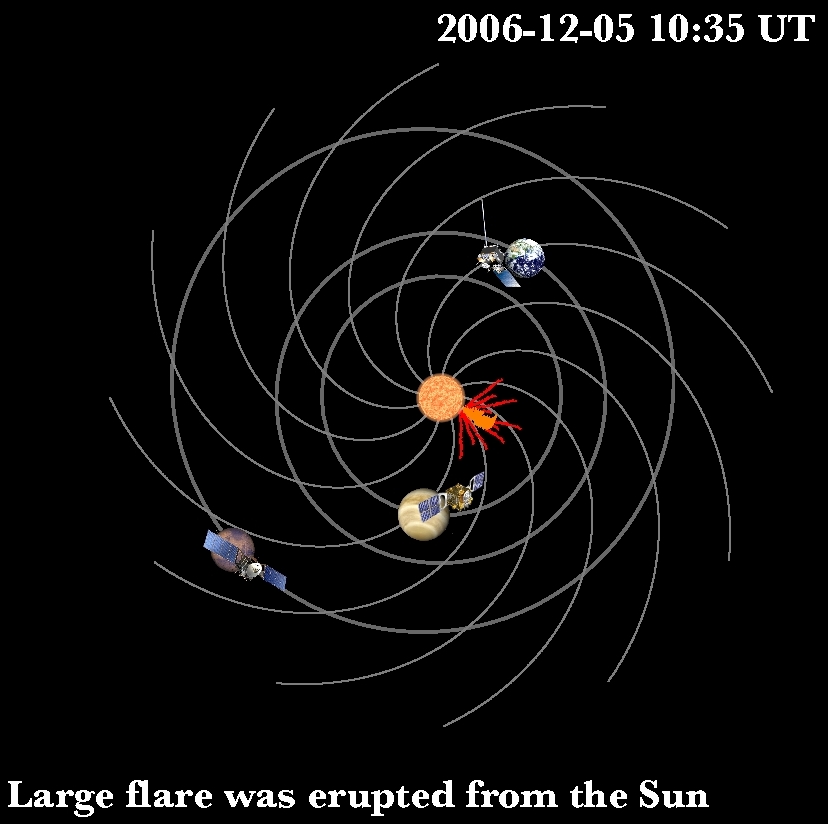
Observations of solar flares by spacecraft at Mars, Venus and the Earth show that eruptions on the far side of the Sun may affect our “space weather” back on Earth.

In December 2006, a series of solar flares produced in a single active region were observed from three different points, each approximately 120 degrees apart.

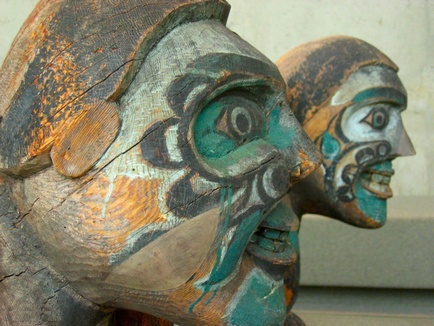
Opponents of gay marriage in the United States state that nuclear families have always been the standard household form. Turns out this may not be true. While gay marriage itself may not have happened in medieval times there is evidence that homosexual civil unions did and that could lend important historical insight to the debate.

Allan A.

Katherine Franz, an assistant chemistry professor at Duke University, says the key to battling neurological diseases like Parkinson's and Alzheimer's diseases may lie in binding up iron and then separating the good from the bad.

Her approach, with graduate student Louise Charkoudian, is to formulate sensitive chemical sentinels they call "pro-chelators." Those are metal-binding agents wrapped in chemical "cages" so they can enter the brain and wait in reserve until they encounter a site of potential damage.

Such a site contains both iron and the molecule hydrogen peroxide. The reaction between these two players -- known as a "Fenton reaction" -- can lead to the production of a highly reactive oxygen-containing chemical group called a hydroxyl radical, Franz said.

The research group of Prof. Dr. Magdalena Götz at the Institute of Stem Cell Research of the GSF – National Research Centre for Environment and Health, and the Ludwig Maximilians University, Munich, has achieved an additional step for the potential replacement of damaged brain cells after injury or disease: functional nerve cells can be generated from astroglia, a type of supportive cells in the brain by means of special regulator proteins.

The majority of cells in the human brain are not nerve cells but star-shaped glia cells, the “astroglia”. "Glia means 'glue'," explains Götz. "As befits their name, until now these cells have been regarded merely as a kind of 'putty' keeping the nerve cells together."