Banner
Pilot Study: Fibromyalgia Fatigue Improved By TENS Therapy

Fibromyalgia is the term for a poorly-understood condition where people experience pain and fatigue...

High Meat Consumption Linked To Lower Dementia Risk

Older people who eat large amounts of meat have a lower risk of dementia and cognitive decline...

Long Before The Inca Colonized Peru, Natives Had A Thriving Trade Network

A new DNA analysis reveals that long before the Incan Empire took over Peru, animals were...

Mesolithic People Had Meals With More Tradition Than You Thought

The common imagery of prehistoric people is either rooting through dirt for grubs and picking berries...

User picture.
News StaffRSS Feed of this column.

News Releases From All Over The World, Right To You... Read More »

Blogroll

Are too many people now diagnosed as having depression? Two experts give their views.

Professor Gordon Parker, a psychiatrist from Australia says the current threshold for what is considered to be ‘clinical depression’ is too low. He fears it could lead to a diagnosis of depression becoming less credible.

It is, he says, normal to be depressed and points to his own cohort study which followed 242 teachers. Fifteen years into the study, 79% of respondents had already met the symptom and duration criteria for major, minor or sub-syndromal depression.

The biggest problem for controlling hypertension (high blood pressure) is compliance with treatment, states an editorial in this week’s Lancet.

“Despite very effective and cost-effective treatments, target blood pressure levels are very rarely reached, even in countries where cost of medication is not an issue. Many patients still believe that hypertension is a disease that can be cured, and stop or reduce medication when blood pressure levels fall.”

The risk of becoming hypertensive for a person in a developed country exceeds a “staggering” 90%, and the increasingly common combination and interaction of hypertension with obesity, diabetes and hyperlipidaemia, if left untreated for too long, leads to cardiovascular disease, stroke, renal failure and death.

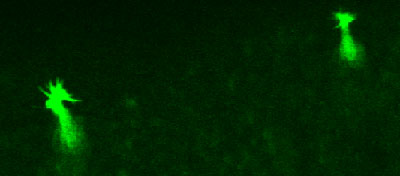
For mice, carbon dioxide often means danger — too many animals breathing in too small a space or a hungry predator exhaling nearby. Mice have a way of detecting carbon dioxide, and new research from Rockefeller University shows that a special set of olfactory neurons is involved, a finding that may have implications for how predicted increases in atmospheric carbon dioxide may affect animal behavior.

Most olfactory sensory neurons express odorant receptor molecules that detect odors and reside within the lining of the nasal cavity. But a small subset express an enzyme called guanylyl cyclase-D (GC-D). Peter Mombaerts, professor and head of the Laboratory of Developmental Biology and Neurogenetics at Rockefeller, and Andreas Walz, a research associate in Mombaerts’s CO2 detector.

Astronomers have discovered a chaotic scene unlike any witnessed before in a cosmic “train wreck” between giant galaxy clusters. NASA’s Chandra X-ray Observatory and optical telescopes revealed a dark matter core that was mostly devoid of galaxies, which may pose problems for current theories of dark matter behavior.

"These results challenge our understanding of the way clusters merge," said Dr. Andisheh Mahdavi of the University of Victoria, British Columbia.

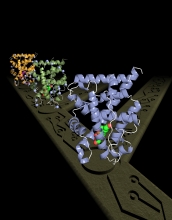
Scientists have determined for the first time the atomic structure of an ancient protein, revealing in unprecedented detail how genes evolved their functions.

"Never before have we seen so clearly, so far back in time," said project leader Joe Thornton, an evolutionary biologist at the University of Oregon. "We were able to see the precise mechanisms by which evolution molded a tiny molecular machine at the atomic level, and to reconstruct the order of events by which history unfolded."

A detailed understanding of how proteins – the workhorses of every cell – have evolved has long eluded evolutionary biologists, in large part because ancient proteins have not been available for direct study.

Wastewater treatment plants are designed primarily to eliminate nutrients. However, attention is increasingly being focused on micropollutants, since even low concentrations of these substances can have adverse impacts on aquatic ecosystems. Ozonation of wastewater appears to be a promising option for removing micropollutants at treatment plants.

Ozone, which consists of three oxygen atoms, is a reactive gas. It is a powerful oxidizing agent and forms hydroxyl radicals in contact with water. While ozone itself only oxidizes certain substances, the hydroxyl radicals attack a wide range of substances. Ozonation thus leads to the breakdown of various complex compounds, making substances much more susceptible to subsequent biological degradation.