Banner
Pilot Study: Fibromyalgia Fatigue Improved By TENS Therapy

Fibromyalgia is the term for a poorly-understood condition where people experience pain and fatigue...

High Meat Consumption Linked To Lower Dementia Risk

Older people who eat large amounts of meat have a lower risk of dementia and cognitive decline...

Long Before The Inca Colonized Peru, Natives Had A Thriving Trade Network

A new DNA analysis reveals that long before the Incan Empire took over Peru, animals were...

Mesolithic People Had Meals With More Tradition Than You Thought

The common imagery of prehistoric people is either rooting through dirt for grubs and picking berries...

User picture.
News StaffRSS Feed of this column.

News Releases From All Over The World, Right To You... Read More »

Blogroll

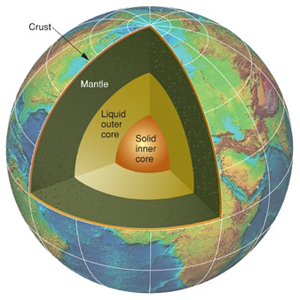
Pressures and temperatures at the Earth’s core are stupendous – more than 3.5 Mbar and 7000K – and currently it is impossible to recreate these conditions in the laboratory. Our information about the core comes from observing the way that seismic waves travel through the core, extrapolating from experimental studies and studying iron rich meteorites.

As a result we know that the core is mostly iron, but that it also must contain some light impurities such as oxygen, silicon, sulphur, hydrogen and magnesium (because the density of the core is too low to be pure iron). The most significant impurity is thought to be nickel, which makes up between 5 and 15% of the composition.

Most studies on the Earth’s core have approximated the composition to be pure iron.

Prof. Yadin Dudai, Head of the Weizmann Institute’s Neurobiology Department, and his colleagues recently discovered that the process of storing long-term memories is much more dynamic than previously thought, involving a miniature molecular machine that must run constantly to keep memories going. They also found that jamming the machine briefly can erase long-term memories. Their findings may pave the way to future treatments for memory problems.

Dudai and research student Reut Shema, together with Todd Sacktor of the SUNY Downstate Medical Center, trained rats to avoid certain tastes. They then injected a drug to block a specific protein into the taste cortex – an area of the brain associated with taste memory.

Most modern attempts to decipher how portions of genetic code are translated into physical characteristics are akin to a first-grader trying to sound out a word letter by letter — or, in this case, base pair by base pair.

But University of Florida researchers have developed a computational method that’s more like reading whole words at a time.

In a world where science’s ability to transcribe an organism’s genetic code is growing faster every day, the technique could offer much needed efficiency in translating the seemingly endless string of characters into information that can cure disease or create new crops.

Natural selection has driven two closely related species of fish in Lake Malawi down different evolutionary paths - even though they live side by side.

An international team of scientists from Canada (Université Laval), the U.K. (University of Hull, Cardiff University) and Spain (Doòana Biological Station), have discovered that a pair of closely related species of East African cichlid fishes – a group of fish whose diversity comprising hundreds of species has puzzled evolutionary biologists for decades – evolved divergent immune gene adaptations which might explain why they do not interbreed, despite their closeness.

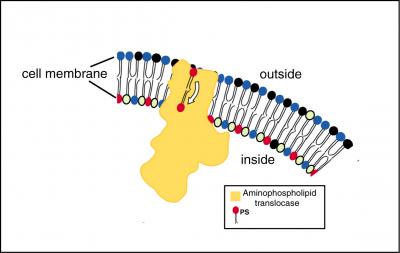
A team of researchers investigating cholesterol and lipid transport has performed experiments that cast serious doubt on the dominant hypothesis of how the body rids its cells of "bad" cholesterol (LDL) and increases "good" cholesterol (HDL).

A protein called ABCA1 is critical for producing "good" cholesterol: patients who lack the gene for this protein produce no HDL, and as a result, suffer from heart attacks at an early age. An important question is what ABCA1 does that is so important for producing HDL.

The most popular hypothesis was put forth in 2000 by Giovanna Chimini, Group Leader of a laboratory in the Centre d'Immunologie Marseille-Luminy in France, and colleagues.

Most people understand how liquids freeze as solid crystals when temperatures become cold enough, like water droplets crystallizing into snowflakes or molten glass hardening into solid glass.

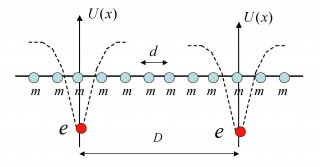
Latter 20th-century physicists realized that at low enough temperatures, most liquids that exist in nature become energetically unstable as they solidify. Scientists discovered solids that don't have the commonly known, regular crystalline and glass phases - things like liquid crystals, quasi-crystals and charge-density waves. Charge-density waves are systems that display interesting physics, such as metals becoming insulators.