Banner
Pilot Study: Fibromyalgia Fatigue Improved By TENS Therapy

Fibromyalgia is the term for a poorly-understood condition where people experience pain and fatigue...

High Meat Consumption Linked To Lower Dementia Risk

Older people who eat large amounts of meat have a lower risk of dementia and cognitive decline...

Long Before The Inca Colonized Peru, Natives Had A Thriving Trade Network

A new DNA analysis reveals that long before the Incan Empire took over Peru, animals were...

Mesolithic People Had Meals With More Tradition Than You Thought

The common imagery of prehistoric people is either rooting through dirt for grubs and picking berries...

User picture.
News StaffRSS Feed of this column.

News Releases From All Over The World, Right To You... Read More »

Blogroll

Research from The University of Nottingham sheds new light on a fascinating phenomenon of the natural world — the ability of some species to reproduce sexually without a partner.

Scientists have been trying to determine how individuals of a key fungus, Aspergillus nidulans, are able to have sex without the need for a partner.

In new findings they reveal that the fungus has evolved to incorporate the two different sexes into the same individual.

In their search for the cellular and molecular causes of multiple sclerosis, an Italian-German research team has identified a subgroup of protective immune cells (suppressor cells) which are strikingly reduced in number in patients with this nervous system disorder.

These suppressor cells are characterized by a specific surface marker, called CD39, and degrade ATP, an energy carrier released from damaged tissues. By this means, suppressor cells appear to be able to curb inflammation occurring in the central nervous system in the course of the disease.

With CD39, Dr. Giovanna Borsellino (Laboratory for Neuroimmunology of the Fondazione Santa Lucia in Rome, Italy) in collaboration with Dr. Olaf Rötzschke and Dr.

By using pulses of light to dramatically accelerate quantum computers, University of Michigan researchers have made strides in technology that could foil national and personal security threats.

It's a leap, they say, that could lead to tougher protections of information and quicker deciphering of hackers' encryption codes.

A new paper on the results of this research, "Coherent Optical Spectroscopy of a Strongly Driven Quantum Dot," appears in the Aug. 17 issue of Science. Duncan Steel, the Robert J. Hiller Professor at Michigan Engineering's Department of Electrical Engineering and Computer Science and the Department of Physics, is one of the lead authors of the paper.

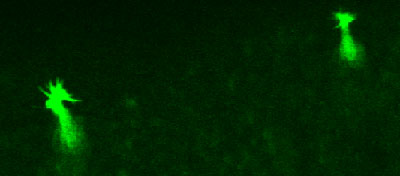
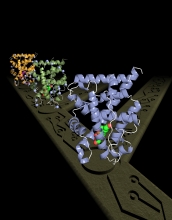
Scientists have discovered a new protein that may offer fresh insights into brain function in mad cow disease. “Our team has defined a second prion protein called ‘Shadoo’, that exists in addition to the well-known prion protein called ‘PrP’ ” said Professor David Westaway, director of the Centre for Prions and Protein Folding Diseases at the University of Alberta.

“For decades we believed PrP was a unique nerve protein that folded into an abnormal shape and caused prion disease: end of story. This view is no longer accurate,” Westaway adds.

The study was conducted jointly by the University of Toronto, University of Alberta, Case Western Reserve University (Ohio) and the McLaughlin Research Institute (Montana).

All bad jokes aside, their research represents a step forward in computers reaching the capability of a human mind.

"This work has a relationship to 'Sociable Computing,'" says Larry Mazlack. "Currently, computers are often difficult to communicate with, to use and to apply to solving problems that are informally stated.

“The ‘robot’ is just a software program that still needs a lot of work,” says researcher Julia Taylor. “The idea is to be able to recognize jokes that are based on phonological similarity of words.”

Brain imaging has revealed a breakdown in normal patterns of emotional processing that impairs the ability of people with clinical depression to suppress negative emotional states. Efforts by depressed patients to suppress their feelings when viewing emotionally negative images enhanced activity in several brain areas, including the amygdala, known to play a role in generating emotion.

“Identifying areas in the nervous system that correlate to pathological mood states is one of the pressing questions in mental illness today,” says Carol Tamminga, MD, of the University of Texas Southwest Medical Center. Tamminga was not involved in the study.