Banner
How To Overcome Leadership Battles

In times of social rancor and strife, most will fight each other, but societies are saved by those...
Thousands Of Unpublished Studies Show Why Conservation Efforts Miss The Mark

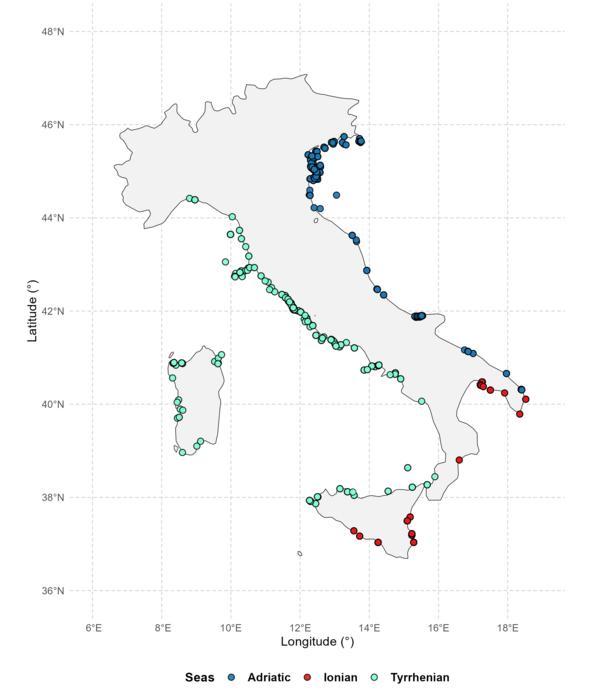
Europe alone has so much unpublished, un-catalogued biological data that it is challenging to take...

Why Antarctic Sea Ice Stopped Growing In 2015

Though numerical models and popular films like An Inconvenient Truth projected Arctic ice...
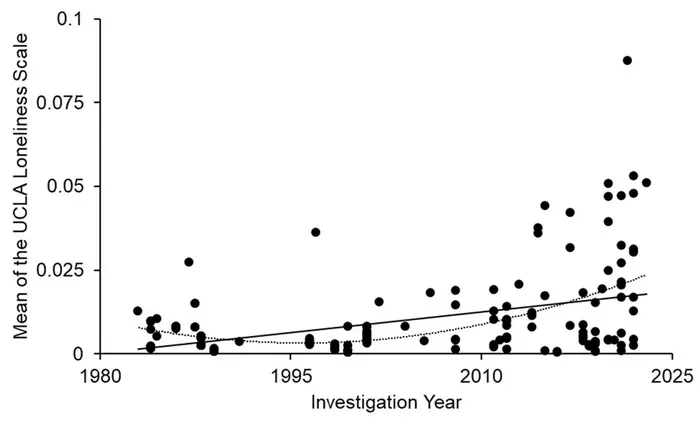
Wealth Correlated To Loneliness

You may have read that Asian cultures respect the elderly more than Europe but Asian senior citizens...

User picture.
News StaffRSS Feed of this column.

News Releases From All Over The World, Right To You... Read More »

Blogroll

Most continental rocks on Earth align their magnetic moments with the current magnetic field – they are said to have ‘induced’ magnetism. “I consider induced rocks to have ‘Alzheimers’. These are the rocks that forgot where they were born and how to get home,” explains Suzanne McEnroe from the Geological Survey of Norway at a European Science Foundation (ESF), EuroMinScI conference near Nice, France this year.

However, not all of Earth’s continental rocks have an induced magnetization. Some rocks stubbornly refuse to swing with the latest magnetic field, and instead keep hold of the direction they were born with. These rocks are said to have a remanent magnetization.

Concentrated chemicals derived from green tea dramatically boosted production of a group of key detoxification enzymes in people with low levels of these beneficial proteins, according to researchers at Arizona Cancer Center.

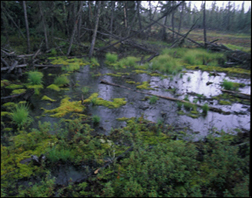
Permafrost, the perpetually frozen foundation of the north, serves like a platform underneath vast expanses of northern forests and wetlands that are rooted in many northern ecosystems. But rising atmospheric temperatures are accelerating rates of permafrost thaw in northern regions, says MSU researcher Merritt Turetsky.

“The loss of permafrost usually means the loss of terra firma in an otherwise often boggy landscape,” Turetsky said. “Roads, buildings and whole communities will have to cope with this aspect of climate change.

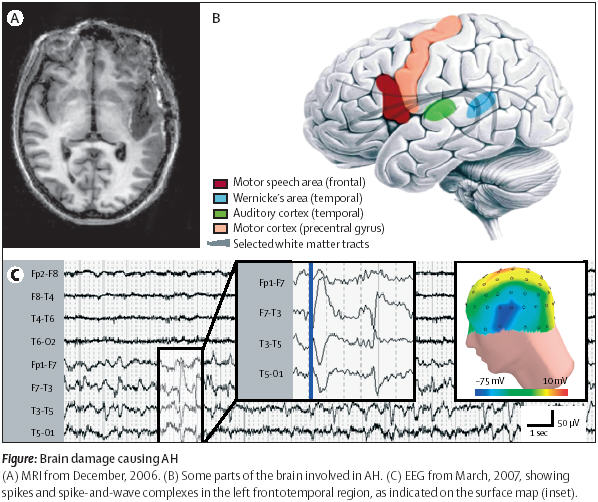
The unusual case of a woman who heard voices with her own speech impairments in her head after a bicycle accident is examined in a Case Report in this week’s edition of The Lancet. The woman was treated by Dr Daniela Hubl, University Hospital of Psychiatry, Bern, Switzerland, and colleagues, who authored the Case Report.

It was in August 2006 that the 63-year-old woman, with no previous medical history, was brought to the hospital after falling from her bicycle and hitting her head and having a brain bleed, causing her to lose consciousness. Tests showed she had brain damage covering several lobes and an aneurysm, which was clipped, and she underwent a decompressive craniotomy.

Using selective plant breeding and genetic engineering could be used to reduce the incidence of iron deficiency worldwide by improving the quality of dietary iron, conclude authors of a Seminar in this week’s edition of The Lancet.

Dr Michael Zimmerman, Laboratory for Human Nutrition, Swiss Federal Institute of Technology, Zurich, and colleagues have reviewed published literature worldwide, mainly from the last five years, to prepare the Seminar, which looks at the issue of nutritional iron deficiency in both industrialised and developing countries.

The authors say: “Iron deficiency is one of the leading risk factors for disability and death worldwide, affecting an estimated 2 billion people…the high prevalence of iron deficiency in the developing world has substantial health and eco

It is not just what’s in your genes, it’s how you turn them on that accounts for the difference between species — at least in yeast — according to a report by Yale researchers in this week’s issue of Science.

“We’ve known for a while that the protein coding genes of humans and chimpanzees are about 99 percent the same,” said senior author Michael Snyder, the Cullman Professor of Molecular Cellular and Developmental Biology at Yale. “The challenge for biologists is accounting for what causes the substantial difference between the person and the chimp.”

Conventional wisdom has been that if the difference is not the gene content, the difference must be in the way regulation of genes produces their protein products.