
Banner
How To Overcome Leadership Battles

In times of social rancor and strife, most will fight each other, but societies are saved by those...
Thousands Of Unpublished Studies Show Why Conservation Efforts Miss The Mark

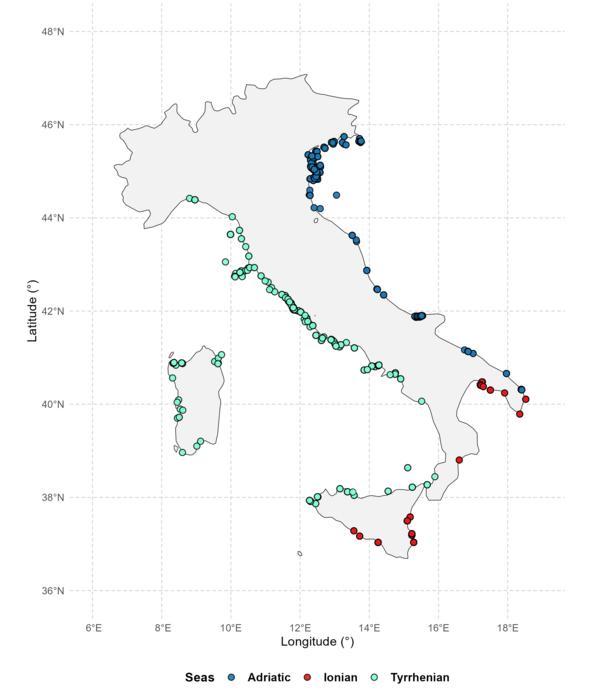
Europe alone has so much unpublished, un-catalogued biological data that it is challenging to take...

Why Antarctic Sea Ice Stopped Growing In 2015

Though numerical models and popular films like An Inconvenient Truth projected Arctic ice...

Wealth Correlated To Loneliness

You may have read that Asian cultures respect the elderly more than Europe but Asian senior citizens...

User picture.
News StaffRSS Feed of this column.

News Releases From All Over The World, Right To You... Read More »

Blogroll

Sodium-based batteries have drawn considerable attention as a prospective alternative to lithium-based batteries due to the abundance and low price of sodium element. However, finding a suitable anode material has been a long-standing critical task before the commercialization of sodium-based batteries. As the size of sodium atom is much larger than that of lithium atom, many anode materials widely used in lithium-based batteries show poor performance in sodium-based batteries, most of which suffering from low intercalation utility, slow kinetics and sever volume expansion.

Coral cannot survive on its own for long. It needs to create a symbiotic relationship with algae to survive. Algae provides approximately 90 percent of the energy coral needs, which means that their partnership must be preserved in order to keep the coral healthy. In order to protect coral, algae, and the marine species that live in reef environments, scientists need to know more about how the symbiotic relationship between coral and algae begins. In collaboration with Amin Mohamed and Prof. David Miller at James Cook University, Prof. Noriyuki Satoh and Dr. Chuya Shinzato of the Okinawa Institute of Science and Technology Graduate University (OIST), found changes in coral gene expression when introduced to algae. They have recently published their results in Molecular Ecology.

All life on the planet relies, in one way or another, on a process called carbon fixation: the ability of plants, algae and certain bacteria to "pump" carbon dioxide (CO2) from the environment, add solar or other energy and turn it into the sugars that are the required starting point needed for life processes. At the top of the food chain are different organisms (some of which think, mistakenly, that they are "more advanced") that use the opposite means of survival: they eat sugars (made by photosynthetic plants and microorganisms) and then release carbon dioxide into the atmosphere.

Eukaryotic microalgae are increasingly important for the sustainable production of environmental friendly, renewable biochemicals and biofuels. Recent technological advances in genomics and physiology of algae to produce industrially relevant products combined with advanced tools for genetic manipulation have enabled bioengineering of new strains of algae that heretofore had been impossible. The complexity of the eukaryotic genome (having nuclear, chloroplastic and mitochondrial genomes) provides challenges but opportunities that are not possible in prokaryotic systems.

The new stem cell-containing bio ink allows 3D printing of living tissue, known as bio-printing.

The new bio-ink contains two different polymer components: a natural polymer extracted from seaweed, and a sacrificial synthetic polymer used in the medical industry, and both had a role to play.

The synthetic polymer causes the bio-ink to change from liquid to solid when the temperature is raised, and the seaweed polymer provides structural support when the cell nutrients are introduced.

Plant development includes the initiation of structure patterning, and maturation as plants grow via cell division, elongation, and differentiation. Unlike animals that form all their body parts early in their life, plants constantly generate new structures from meristems in the apex, vascular, and cork cambium tissues throughout their lives. This process is regulated by interactions of endogenous genetic mechanisms and environmental stimuli. When reaching certain developmental stage, plants can sense environmental changes, which stimulate reproductive development from the vegetative phase to generate new individual plants or offspring via sexual or asexual reproduction.

