
Banner
How To Overcome Leadership Battles

In times of social rancor and strife, most will fight each other, but societies are saved by those...
Thousands Of Unpublished Studies Show Why Conservation Efforts Miss The Mark

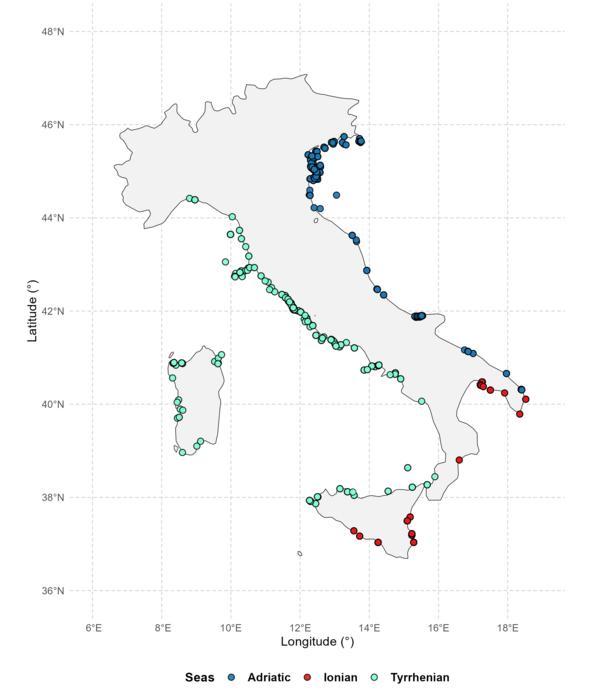
Europe alone has so much unpublished, un-catalogued biological data that it is challenging to take...

Why Antarctic Sea Ice Stopped Growing In 2015

Though numerical models and popular films like An Inconvenient Truth projected Arctic ice...
Wealth Correlated To Loneliness

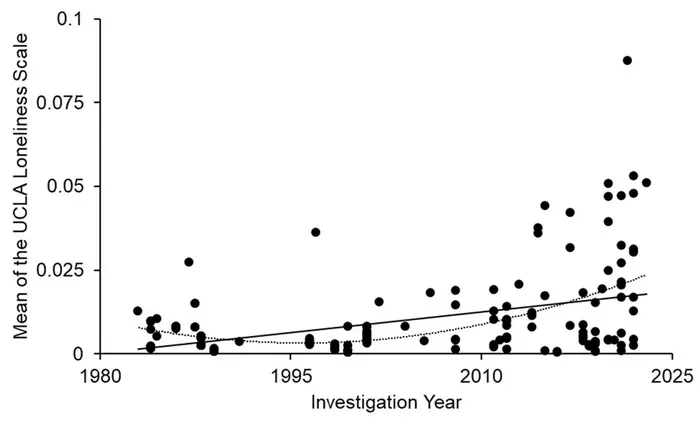
You may have read that Asian cultures respect the elderly more than Europe but Asian senior citizens...

User picture.
News StaffRSS Feed of this column.

News Releases From All Over The World, Right To You... Read More »

Blogroll

By the 2080s, as many as 3,331 people could die every year from exposure to heat during the summer months in New York City. The high estimate by Columbia University scientists is based on a new model--the first to account for variability in future population size, greenhouse gas trajectories, and the extent to which residents adapt to heat through interventions like air conditioning and public cooling centers. Results appear online in the journal Environmental Health Perspectives.

Researchers project that as many as 1,779 annual heat-related deaths could be avoided if the climate adheres to the more moderate of two greenhouse gas trajectories--known as representative concentration pathways 4.5 and 8.5. High levels of adaptation could save an additional 1,198 lives.

Researchers have improved the integration of disparate sources and types of data which will advance scientists' understanding of disease using Wikipathways. This study, published in PLOS Computational Biology, will help other scientists better utilize open data and will aid the discovery of new therapeutic targets for disease.

WASHINGTON -- Researchers from the Massachusetts Institute of Technology (MIT) and Australian National University have developed new technology that aims to make the Advanced Laser Interferometer Gravitational-Wave Observatory (LIGO) even more sensitive to faint ripples in space-time called gravitational waves.

Scientists at Advanced LIGO announced the first-ever observation of gravitational waves earlier this year, a century after Albert Einstein predicted their existence in his general theory of relativity. Studying gravitational waves can reveal important information about cataclysmic astrophysical events involving black holes and neutron stars.

When it comes to autonomous cars, people generally approve of cars programmed to sacrifice their passengers to save others, but these same people are not enthusiastic about riding in such "utilitarian" vehicles themselves, a new survey reveals.

Offering insights into a long-standing and mysterious bias in biology, a new study reveals how and why mitochondria are only passed on through a mother's egg - and not the father's sperm. What's more, experiments from the study show that when paternal mitochondria persist for longer than they should during development, the embryo is at greater risk of lethality. Harbored inside the cells of nearly all multicellular animals, plants and fungi are mitochondria, organelles that play an important role in generating the energy that cells need to survive. Shortly after a sperm penetrates an egg during fertilization, the sperm's mitochondria are degraded while the egg's mitochondria persist. To gain more insights into this highly specific degradation pattern, Qinghua Zhou et al.

Expression of a single gene can convert cells lining the seminal vesicle in the pelvis into prostate cells, a new study shows. The results provide a better understanding of the molecular mechanisms controlling the development of seminal vesicle and prostate tissues, which could provide valuable insights as to why cancer arises frequently in the latter but only rarely in seminal vesicles. Previous studies have found that loss of the gene Nkx3.1 results in impaired prostate differentiation in mice, prompting Aditya Dutta et al. to study the gene in greater detail. First, they confirmed that lack of Nkx3.1 in prostate cells results in reduced expression of a number of genes associated with prostate differentiation.

