
Banner
How To Overcome Leadership Battles

In times of social rancor and strife, most will fight each other, but societies are saved by those...
Thousands Of Unpublished Studies Show Why Conservation Efforts Miss The Mark

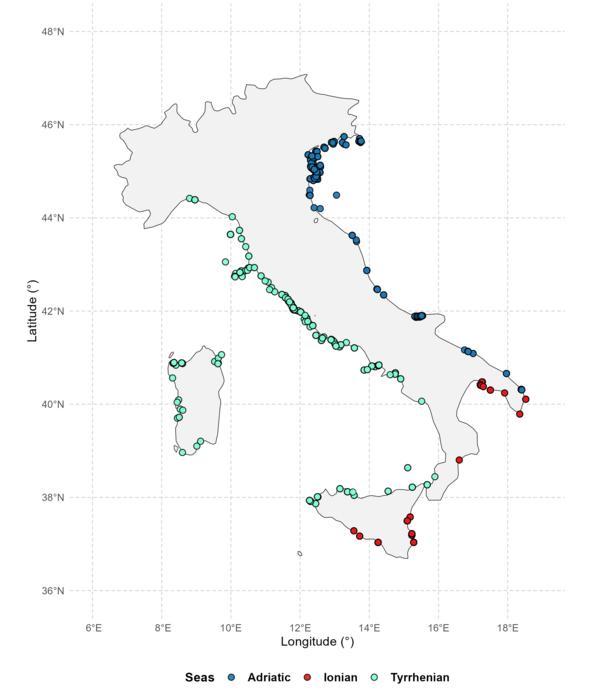
Europe alone has so much unpublished, un-catalogued biological data that it is challenging to take...

Why Antarctic Sea Ice Stopped Growing In 2015

Though numerical models and popular films like An Inconvenient Truth projected Arctic ice...

Wealth Correlated To Loneliness

You may have read that Asian cultures respect the elderly more than Europe but Asian senior citizens...

User picture.
News StaffRSS Feed of this column.

News Releases From All Over The World, Right To You... Read More »

Blogroll

Drug treatments for breast cancer patients might soon be designed based on the unique genetic autograph of their tumor.

Certain oncogenes drive solid tumor growth in some breast cancer patients but are just passenger genes in others--expressed but not essential for growth. As a result, tumors in different breast cancer patients may respond differently to the same treatment depending on which oncogenes are active and which are just along for the ride. Identifying the panel of active genes in a patient's tumor--called the functional oncogene signature--could help an oncologist select therapies that target its growth, according to Stephen P. Ethier, Ph.D., Interim Director of the Center for Genomic Medicine at MUSC and senior author on the study.

Racial discrimination, whether it's derogatory language or unequal treatment, impacts communities and individuals in different ways. For children, the effects are sometimes emotional scars, and as a University of Houston researcher discovered, even thoughts of death.

UH psychology professor Rheeda Walker was the lead researcher on the study "A Longitudinal Study of Racial Discrimination and Risk for Death Ideation in African-American Youth." It soon will be published in the journal Suicide and Life-Threatening Behavior and can be viewed online.

Toxic arsenic initially accumulates in the nuclei of plants' cells. This has been revealed by an X-ray examination of the aquatic plant rigid hornwort (Ceratophyllum demersum) using DESY's X-ray source PETRA III. Even at comparatively low concentrations, the arsenic also floods the vacuole, a liquid-filled cavity which takes up most of the cell. Researchers surrounding Hendrik Küpper of the Czech Academy of Sciences, who is a professor at the University of South Bohemia in Ceske Budejovice (Czech Republic), have made this discovery in the course of a project that was set up in Küpper's group by Seema Mishra (now at the National Botanical Research Institute in Lucknow, India). The scientists report their findings in the Journal of Experimental Botany.

As more coal-fired power plants are retired, industry workers are left without many options. There is a light at the end of the tunnel, though.

In a new study published in Energy Economics, researchers from Michigan Technological University and Oregon State University offer hope for coal workers for high-quality employment in the rapidly expanding solar photovoltaic industry.

Joshua Pearce, who holds a dual appointment in materials science and engineering as well as electrical and computer engineering at Michigan Tech, helped assess what it would take to retrain workers for a different energy field.

Researchers from North Carolina State University have developed a new tool for detecting and measuring the polarization of light based on a single spatial sampling of the light, rather than the multiple samples required by previous technologies. The new device makes use of the unique properties of organic polymers, rather than traditional silicon, for polarization detection and measurement.

Light consists of an electric field. That electric field oscillates, and the direction in which that field oscillates is the light's polarization. If the field oscillates randomly, it's referred to as unpolarized light. The polarization of light can be affected in predictable ways when light bounces off, or is scattered by, physical objects.

Physicians have been mystified by chronic fatigue syndrome, a condition where normal exertion leads to debilitating fatigue that isn't alleviated by rest. There are no known triggers, and diagnosis requires lengthy tests administered by an expert.

Now, for the first time, Cornell University researchers report they have identified biological markers of the disease in gut bacteria and inflammatory microbial agents in the blood.

In a study published June 23 in the journal Microbiome, the team describes how they correctly diagnosed myalgic encephalomyeletis/chronic fatigue syndrome (ME/CFS) in 83 percent of patients through stool samples and blood work, offering a noninvasive diagnosis and a step toward understanding the cause of the disease.

