
Banner
How To Overcome Leadership Battles

In times of social rancor and strife, most will fight each other, but societies are saved by those...
Thousands Of Unpublished Studies Show Why Conservation Efforts Miss The Mark

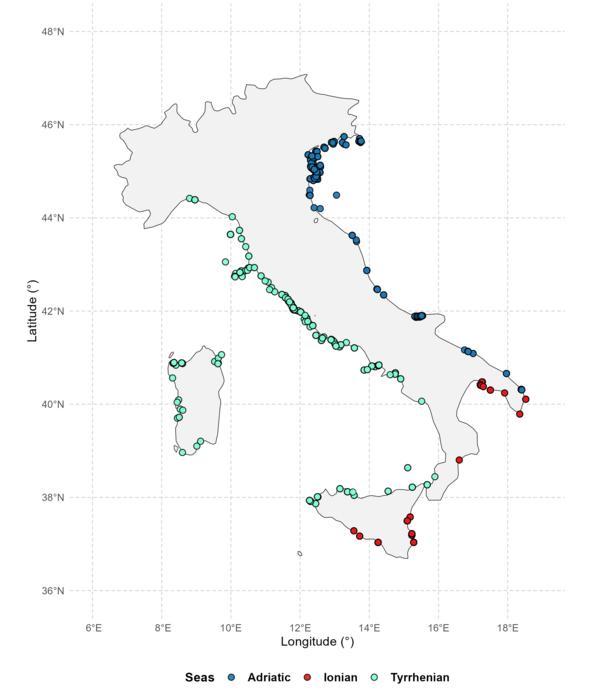
Europe alone has so much unpublished, un-catalogued biological data that it is challenging to take...

Why Antarctic Sea Ice Stopped Growing In 2015

Though numerical models and popular films like An Inconvenient Truth projected Arctic ice...
Wealth Correlated To Loneliness

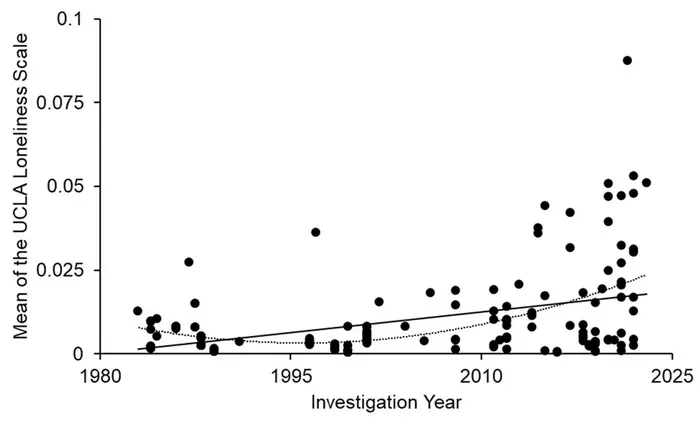
You may have read that Asian cultures respect the elderly more than Europe but Asian senior citizens...

User picture.
News StaffRSS Feed of this column.

News Releases From All Over The World, Right To You... Read More »

Blogroll

From the deepest seafloor to the highest mountain, from the hottest region to the cold Antarctic plateau, environments labelled as extreme are numerous on Earth and they present a wide variety of features and characteristics. Investigating life processes in extreme environments not only can provide hints on how life first appeared and survived on Earth (as early earth was an extreme environment) but it can also give indication for the search for life on other planets.

Insects make up more than half of the known animal species on our planet and they can be found in all kinds of habitat and feed on all kinds of nutrients. They can even be used in evidence in court cases. So we are talking about forensic entomology.

The work of the Forensic Entomology Service in the Department of Zoology and Animal Cell Biology at the University of the Basque Country (UPV-EHU) involves drawing up a census of insect species of forensic interest.

These are basically necrophagous diptera, i.e. flies that live on dead tissue, cadavers. Such flies detect a dead body in a question of minutes and at times at a distance of several kilometres. They colonise the cadaver and lay their eggs there.

A gene that is strongly associated with a risk of developing childhood onset asthma was identified by an international team of scientists, whose findings are published today in the journal Nature.

In a genetic study of more than 2,000 children, scientists from the University of Michigan and colleagues from London, France and Germany found genetic markers that dramatically increase a child's risk for asthma. These markers are located on chromosome 17, and children with this marker had higher levels of a new gene called ORMDL3 in their blood, which occurs in higher amounts in children with asthma. The presence of the disease-associated version of ORMDL3 increases the risk of asthma by 60-70 percent, the study suggests.

A team of biomedical engineers at Virginia Tech and the University of California at Berkeley has developed a new minimally invasive method of treating cancer, and they anticipate clinical trials on individuals with prostate cancer will begin soon.

The process, called irreversible electroporation (IRE), was invented by two engineers, Rafael V. Davalos, a faculty member of the Virginia Tech–Wake Forest University School of Biomedical Engineering and Science (SBES), and Boris Rubinsky, a bioengineering professor at the University of California, Berkeley.

Seriously.

You buy more salad dressing from Paul Newman under his own label than you would if he were in commercials for someone else, research says.

Endorsements by the rich and famous have long been a staple of the advertising industry. They can give otherwise mundane products, like razors or carpet cleaners, new cachet. Market research has shown repeatedly that celebrities can "instantly" add personality and appeal to even unknown products and make or break recognized brands.






