Banner
How To Overcome Leadership Battles

In times of social rancor and strife, most will fight each other, but societies are saved by those...
Thousands Of Unpublished Studies Show Why Conservation Efforts Miss The Mark

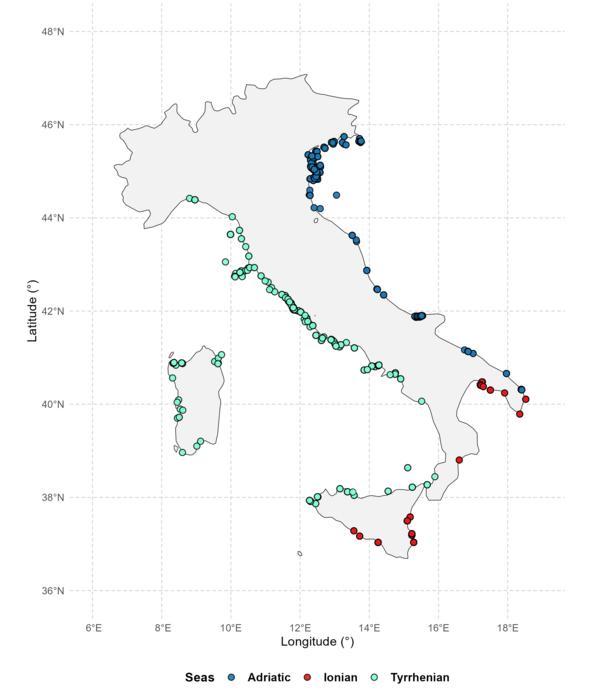
Europe alone has so much unpublished, un-catalogued biological data that it is challenging to take...

Why Antarctic Sea Ice Stopped Growing In 2015

Though numerical models and popular films like An Inconvenient Truth projected Arctic ice...

Wealth Correlated To Loneliness

You may have read that Asian cultures respect the elderly more than Europe but Asian senior citizens...

User picture.
News StaffRSS Feed of this column.

News Releases From All Over The World, Right To You... Read More »

Blogroll

NASA's Tropical Composition, Cloud and Climate Coupling (TC4) field campaign will begin this summer in San Jose, Costa Rica, with an investigation into how chemical compounds in the air are transported vertically into the stratosphere and how that transport affects cloud formation and climate.

The study will begin the week of July 16 with coordinated observations from satellites, high-flying NASA research aircraft, balloons and ground-based radar. The targets of these measurements are the gases, aerosols and ice crystals that flow from the top of the strong storm systems that form over the warm tropical ocean.

Chemists from UCLA and the University of Florence in Italy may have solved an important mystery about a protein that plays a key role in a particular form of amyotrophic lateral sclerosis (ALS), also known as Lou Gehrig’s disease, a progressive, fatal neurodegenerative disorder that strikes without warning.

Joan Selverstone Valentine, UCLA professor of chemistry and biochemistry, has studied the protein — copper-zinc superoxide dismutase — since the 1970s, long before it was implicated in ALS in 1993. Since the link was discovered, Valentine’s laboratory has made more than two dozen mutant, ALS-causing enzymes, most of which have only one wrong amino acid out of 153, to try to understand their properties and learn what makes them toxic.

To understand the meaning of a conversation, kids automatically do what adults do —besides processing the meaning of words, they unconsciously “read” the expression on a person’s face and listen to their tone of voice, then integrate that information with the context at hand to discern meaning, be it humor, anger, irony or straightforwardness.

Individuals with autism typically don’t do this. They often miss the subtle meanings conveyed by a person’s face and tone of voice, and thus have trouble determining the communicative intent of others.

Exercise has a similar effect to antidepressants on depression. This has been shown by previous research. Now Astrid Bjørnebekk at Karolinska Institutet has explained how this can happen: exercise stimulates the production of new brain cells.

In a series of scientific reports, she has searched for the underlying biological mechanisms that explain why exercise can be a form of therapy for depression and has also compared it with pharmacological treatment with an SSRI drug.

The drug most commonly used to arrest preterm labor, magnesium sulfate, is more likely than another common treatment to cause mild to serious side effects in pregnant women, according to a study from researchers at Lucile Packard Children's Hospital and Stanford University School of Medicine. Their findings suggest that, since the effectiveness of the two drugs appears similar, physicians should consider side effects more strongly when choosing which drug to prescribe.

Toddlers learn their first words better from people than from Teletubbies, according to new research at Wake Forest University.

The study was published in the June 21 issue of Media Psychology.

Children younger than 22 months may be entertained, but they do not learn words from the television program, said Marina Krcmar, associate professor of communication at Wake Forest and author of the study.