
Banner
How To Overcome Leadership Battles

In times of social rancor and strife, most will fight each other, but societies are saved by those...

Thousands Of Unpublished Studies Show Why Conservation Efforts Miss The Mark

Europe alone has so much unpublished, un-catalogued biological data that it is challenging to take...

Why Antarctic Sea Ice Stopped Growing In 2015

Though numerical models and popular films like An Inconvenient Truth projected Arctic ice...
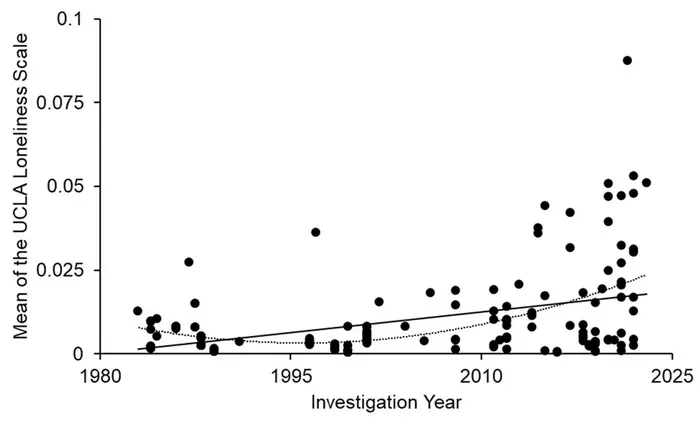
Wealth Correlated To Loneliness

You may have read that Asian cultures respect the elderly more than Europe but Asian senior citizens...

User picture.
News StaffRSS Feed of this column.

News Releases From All Over The World, Right To You... Read More »

Blogroll

If asked to list problems that bad gut bacteria can cause, most would likely name digestive issues: constipation, excessive gas, or diarrhea.

Researchers are now saying bad gut bacteria - or an insufficient amount of good bacteria - may have a direct link to multiple sclerosis as well.

"Every human carries trillions of bacteria in their gut (gut microbiome) and recent advances in research indicate that these tiny passengers play an important role in our overall health maintenance," says Ashutosh Mangalam, PhD, assistant professor of pathology at the University of Iowa Carver College of Medicine.

INDIANAPOLIS - Many testicular cancer survivors experience hearing loss after cisplatin-based chemotherapy, according to researchers at Indiana University.

The researchers, led by Lois B. Travis, M.D., Sc.D., the Lawrence D. Einhorn Professor of Cancer Research at the IU School of Medicine and a researcher at the Indiana University Melvin and Bren Simon Cancer Center, studied for the first time the cumulative effects of cisplatin-based chemotherapy on hearing levels in testicular cancer survivors through comprehensive audiometry measurements. They found that increasing doses of cisplatin were associated with increased hearing loss at most of the tested frequencies, involving 4, 6, 8, 10, and 12 kHz.

Researchers at Hospital for Special Surgery (HSS) have uncovered a potential genetic trigger of systemic autoimmune disease. The study, the culmination of more than 10 years of research and published online in the journal Arthritis & Rheumatology in June, discovered virus-like elements within the human genome linked to the development of two autoimmune diseases: lupus and Sjogren's syndrome.

An autoimmune disorder occurs when the body's immune system malfunctions. Instead of protecting the body, it attacks and destroys healthy organs. More than 80 types of autoimmune disorders, including rheumatoid arthritis, lupus and Sjogren's syndrome, affect up to 22 million people in the United States, according to the National Institutes of Health.

A team of New York-based researchers has compared the effects of two disease-causing mutations, potentially explaining why patients with the rare genetic disorder keratitis-ichthyosis-deafness (KID) syndrome can experience different sets of symptoms. The study, "Syndromic deafness mutations at Asn 14 differentially alter open stability of Cx26 hemichannels," will be published online June 27, 2016 in The Journal of General Physiology.

Bumble bees have discriminating palettes when it comes to their pollen meals, according to researchers at Penn State. The researchers found that bumble bees can detect the nutritional quality of pollen, and that this ability helps them selectively forage among plant species to optimize their diets.

"Populations of many bee species are in decline across the world, and poor nutrition is thought to be a major factor causing these declines," said Christina Grozinger, director of the Center for Pollinator Research, Penn State. "Our studies can help identify plant species and stocks that provide high-quality nutrition for bumble bees and potentially other bee species, which will help in the development of pollinator-friendly gardens and planting strips."

The era of quantum computers is one step closer as a result of research published in the current issue of the journal Science. The research team has devised and demonstrated a new way to pack a lot more quantum computing power into a much smaller space and with much greater control than ever before. The research advance, using a 3-dimensional array of atoms in quantum states called quantum bits -- or qubits -- was made by David S. Weiss, professor of physics at Penn State University, and three students on his lab team.

