Banner
How To Overcome Leadership Battles

In times of social rancor and strife, most will fight each other, but societies are saved by those...
Thousands Of Unpublished Studies Show Why Conservation Efforts Miss The Mark

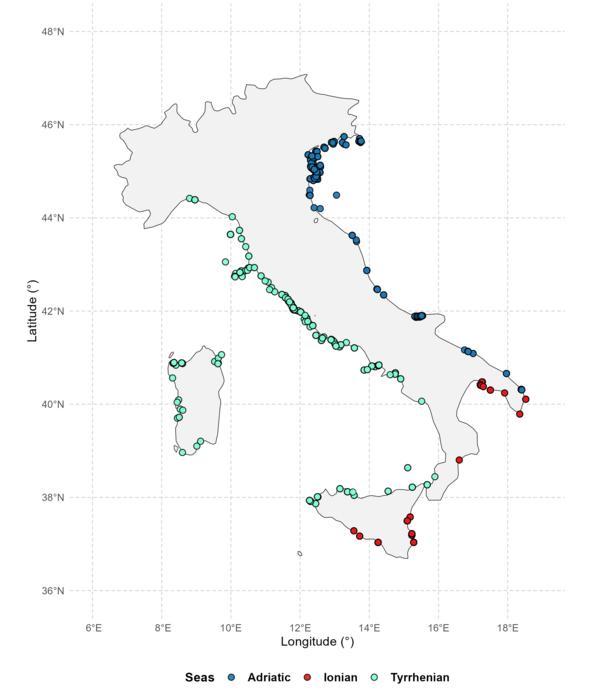
Europe alone has so much unpublished, un-catalogued biological data that it is challenging to take...

Why Antarctic Sea Ice Stopped Growing In 2015

Though numerical models and popular films like An Inconvenient Truth projected Arctic ice...
Wealth Correlated To Loneliness

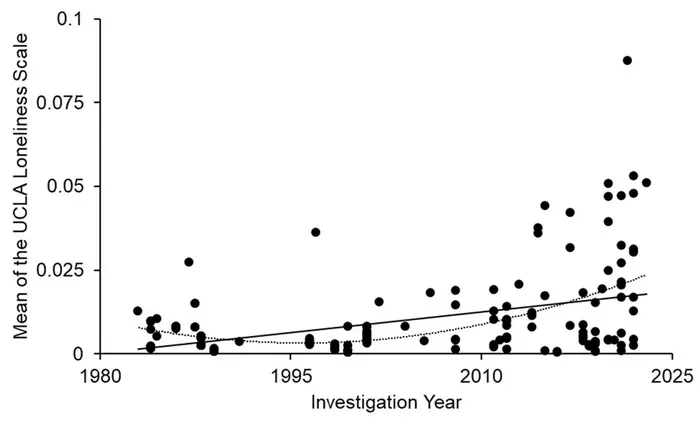
You may have read that Asian cultures respect the elderly more than Europe but Asian senior citizens...

User picture.
News StaffRSS Feed of this column.

News Releases From All Over The World, Right To You... Read More »

Blogroll

It's long been thought that humans hunted woolly mammoths to extinction. Anthropogenic global hunting, as it were. Or that a cataclysmic event did the trick.

It may be neither of those and just simple genetics.

DNA lifted from the bones, teeth, and tusks of the extinct mammoths revealed a “genetic signature” of a range expansion after the last interglacial period. After the mammoths’ migration, the population apparently leveled off, and one of two lineages died out.


They don't think these guys did it any more

A year-long clinical trial by Penn State researchers shows that diets focusing on foods that are low in calorie density - high in water and low in fat, like fruits, vegetables, soup, lean meat, and low-fat dairy products - can promote healthy weight loss while helping people to control hunger.

Genetically modified (GM) crops may contribute to increased productivity in sustainable agriculture, according to a new study which analyzes, for the first time, environmental impact data from field experiments all over the world, involving corn and cotton plants with a Bt gene inserted for its insecticidal properties.

The research was conducted by scientists at the National Center for Ecological Analysis and Synthesis (NCEAS) at the University of California, Santa Barbara, The Nature Conservancy, and Santa Clara University. The study is accompanied by a searchable global database for agricultural and environmental scientists studying the effects of genetically engineered crops.

It seems chimps can have a common culture yet also their own local traditions. Does this mean chimpanzees in Asia would learn to use chopsticks?

Yes, says a study released today, if they saw other groups doing it.

The study confirms captive chimpanzees have the capacity to sustain the same kind of multiple-tradition cultures many researchers believe exist in the wild, providing further evidence chimpanzees and humans shared a common ancestor five to six million years ago who had a similar level of cultural complexity.

MIT researchers were recently able to light a 60W light bulb from a power source seven feet away; there was no physical connection between the source and the appliance.

The MIT team refers to its concept as “WiTricity” (as in wireless electricity). Various methods of transmitting power wirelessly have been known for centuries and perhaps the best known example is radio waves. While such that sort of electromagnetic radiation is excellent for wireless transmission of information, it is not feasible to use it for power transmission.


Wireless power transfer over two-meter distance, from the coil on the left to the coil on the right, where it powers a 60W light bulb.

Think you know how to solve global warming? You'll soon get a chance to find out.

A new Web-enhanced version of the most commonly used climate modeling system will allow scientists, students or anyone else to test their theories about the planet's climate. The Community Climate System Model is already used by thousands of scientists, and the results from their models often make headlines around the world.