Banner
How To Overcome Leadership Battles

In times of social rancor and strife, most will fight each other, but societies are saved by those...

Thousands Of Unpublished Studies Show Why Conservation Efforts Miss The Mark

Europe alone has so much unpublished, un-catalogued biological data that it is challenging to take...

Why Antarctic Sea Ice Stopped Growing In 2015

Though numerical models and popular films like An Inconvenient Truth projected Arctic ice...

Wealth Correlated To Loneliness

You may have read that Asian cultures respect the elderly more than Europe but Asian senior citizens...

User picture.
News StaffRSS Feed of this column.

News Releases From All Over The World, Right To You... Read More »

Blogroll

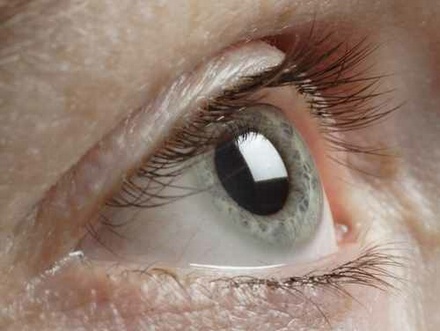
Tears protect and lubricate the cornea and conjunctiva of the eye and help provide a clear medium through which we see. When human tears break up too quickly, eyes feel gritty, hot and scratchy -- even eyesight can become blurry. For many people the solution has been to use artificial tears, but they're expensive and they don't last as long the real thing.

Associate Professor Millar, from the School of Natural Sciences, says the interaction between the liquid tear and air holds the key to slowing the 'break-up time' of tears.

A fascinating new paper from the June issue of Current Anthropology explores ancient multiple graves and raises the possibility that hunter gatherers in what is now Europe may have practiced ritual human sacrifice.

This practice – well-known in large, stratified societies – supports data emerging from different lines of research that the level of social complexity reached in the distant past by groups of hunter gatherers was well beyond that of many more recent small bands of modern foragers.

A recent paper highlights experimental research in evolution and artificial selection, providing insight into how organisms adapt to changing environmental conditions and fluctuations.

In this month's Physiological and Biochemical Zoology, Bradley S. Hughes, Alistair J. Cullum, and Albert F. Bennett (University of California, Irvine) explore the effect on E. coli of fluctuating acidity, an especially important environmental factor for the bacteria.

A scientific indicator of how easily distracted you are has been designed by a University College London psychologist. It could be used as another assessment tool during the recruitment process and would have particular benefits in fields where employee distraction could lead to fatal errors.

All anxiety is not created equal, and a research team at the University of Illinois now has the data to prove it. The team has found compelling evidence that differing patterns of brain activity are associated with each of two types of anxiety: anxious apprehension (verbal rumination, worry) and anxious arousal (intense fear, panic, or both).

Sharks are known to have a keen sense of smell, which in many species is critical for finding food. However, according to new research from Boston University marine biologists, sharks can not use just their noses to locate prey; they also need their skin – specifically a location called the lateral line.