
Banner
How To Overcome Leadership Battles

In times of social rancor and strife, most will fight each other, but societies are saved by those...
Thousands Of Unpublished Studies Show Why Conservation Efforts Miss The Mark

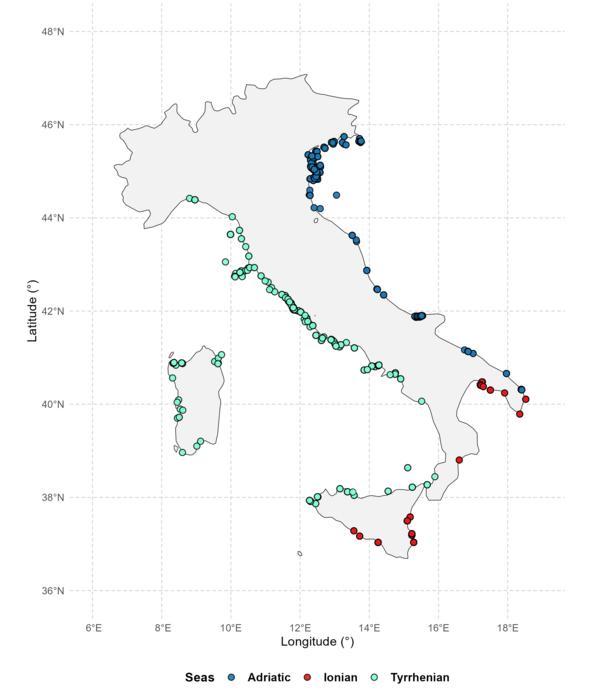
Europe alone has so much unpublished, un-catalogued biological data that it is challenging to take...

Why Antarctic Sea Ice Stopped Growing In 2015

Though numerical models and popular films like An Inconvenient Truth projected Arctic ice...

Wealth Correlated To Loneliness

You may have read that Asian cultures respect the elderly more than Europe but Asian senior citizens...

User picture.
News StaffRSS Feed of this column.

News Releases From All Over The World, Right To You... Read More »

Blogroll

University of Iowa researchers have learned more about a genetic mutation that contributes to autism. The mutation occurred in sperm cells of a father, who does not have autism, but passed the condition on to two of his children.

Solar powered mobility scooters could soon be on the streets thanks to the work of a student at The University of Nottingham. Matt Alvey, who is studying Architecture and Environmental Design, says the photovoltaic (solar electric) recharging system will turn the mobility vehicles truly green.

Save the World Air Inc. makes Zero Emission Fuel Saver (ZEFS) technology that is intended to reduce tailpipe pollutants and increase fuel efficiency in gasoline and diesel-powered vehicles.

RAND Corporation has been conducted independent tests and cannot confirm the benefits. "RAND's analysis of laboratory testing data provided by Save the World Air that deals with the performance of the ZEFS device installed in vehicles found at best mixed results from the tests and therefore could not confirm the effectiveness of the technology in actual use," said Michael Toman, director of the Environment Energy and Economic Development program at RAND, which carried out the study.

Addressing a current issue in neuroscience, Aldo Faisal and Simon Laughlin from Cambridge University investigate the reliability of thin axons for transmitting information. They show that noise effects in ion channels in the brain are much larger than previously assumed – meaning the fidelity of transmission is compromised.

Cellular survival relies crucially on the ability to receive and communicate signals from and to the outside world. A major part of this regulation and communication is performed by proteins within the membrane of a cell. How these proteins work is an important topic in biology, and one which these scientists have excellently clarified by computational techniques.

Tristan Ursell and colleagues have examined the elasticity of the membrane, which changes thickness to accommodate the proteins embedded within it. Proteins respond to stimuli by altering their shape to perform specific tasks, such as channel proteins, which allow the flow of ions in only one formation.

Regular as clockwork, the flu arrives every year. And, according to the national Centers for Disease Control and Prevention, 5 to 20 percent of the U.S. population on average will come down with it. About 36,000 people will die.

But among health experts, a bigger concern than the seasonal flu is an outright flu pandemic, such as a human strain of avian flu. And officials say it is not a question of if such a health crisis will come but when. Are we prepared? In a word, say three UCLA researchers, no.







