
Banner
How To Overcome Leadership Battles

In times of social rancor and strife, most will fight each other, but societies are saved by those...
Thousands Of Unpublished Studies Show Why Conservation Efforts Miss The Mark

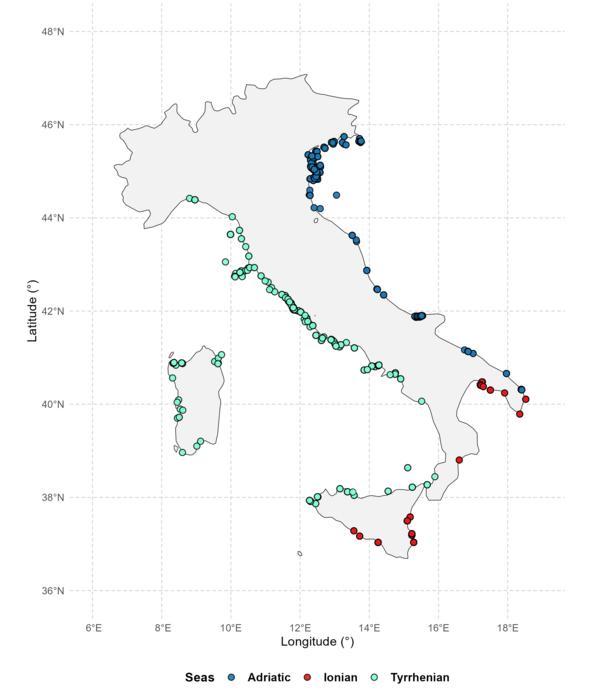
Europe alone has so much unpublished, un-catalogued biological data that it is challenging to take...

Why Antarctic Sea Ice Stopped Growing In 2015

Though numerical models and popular films like An Inconvenient Truth projected Arctic ice...

Wealth Correlated To Loneliness

You may have read that Asian cultures respect the elderly more than Europe but Asian senior citizens...

User picture.
News StaffRSS Feed of this column.

News Releases From All Over The World, Right To You... Read More »

Blogroll

Just because someone decides not to participate in a research project doesn't necessarily mean that they fundamentally object to taking part, a study published online in BMC Health Services Research suggests. Misunderstandings about the nature and process of a study often contribute to expressions of non-consent, a factor that should be incorporated in the design of future studies.

Despite the potential for conflict of interest, virtually all practicing physicians in the U.S. have some form of relationship with pharmaceutical manufacturers but the nature and extent of those relationships vary, depending on the kind of practice, medical specialty, patient mix, and professional activities, reports a study in the April 26 issue of the New England Journal of Medicine.

A Georgia Tech research team has discovered that water exhibits very different properties when it is confined to channels less than two nanometers wide – behaving much like a viscous fluid with a viscosity approaching that of molasses. Determining the properties of water on the nanoscale may prove important for biological and pharmaceutical research as well as nanotechnology. The research appears in the March 15 issue of the journal Physical Review B.


Georgia Tech physicists have discovered that water behaves differently when its compressed in nano-sized channel. In these small spaces water behaves much like a solid, exhibiting high viscosity and organizing itself into layers.

Lizards gave rise to legless snakes. Cave fishes don’t have eyeballs. In evolution, complicated structures often get lost. Dollo’s Law states that complicated structures can't be re-evolved because the genes that code for them were lost or have mutated. A group of sea snails breaks Dollo’s law, Rachel Collin, Staff Scientist at the Smithsonian Tropical Research Institute and colleagues from two Chilean universities announce in the April, 2007, Biological Bulletin.


Smaller males on top of larger females. The eggs are brooded under the shell and so are not visible. Credit: Rachel Collin, STRI Staff Scientist

Astronomers have discovered the most Earth-like planet outside our Solar System to date, an exoplanet with a radius only 50% larger than the Earth and capable of having liquid water. Using the ESO 3.6-m telescope, a team of Swiss, French and Portuguese scientists discovered a super-Earth about 5 times the mass of the Earth that orbits a red dwarf, already known to harbour a Neptune-mass planet. The astronomers have also strong evidence for the presence of a third planet with a mass about 8 Earth masses.


Artist's impression of the system of three planets surrounding the red dwarf Gliese 581.

Parents-to-be might soon don 3-D glasses in the ultrasound lab to see their developing fetuses in the womb "in living 3-D, just like at the IMAX movies," according to researchers at Duke University's Pratt School of Engineering.

The same Duke team that first developed real-time, three-dimensional ultrasound imaging says it has now modified the commercial version of the scanner to produce an even more realistic perception of depth. Paired images seem to pop out of the screen when viewed with the special glasses.




