Banner
How To Overcome Leadership Battles

In times of social rancor and strife, most will fight each other, but societies are saved by those...

Thousands Of Unpublished Studies Show Why Conservation Efforts Miss The Mark

Europe alone has so much unpublished, un-catalogued biological data that it is challenging to take...

Why Antarctic Sea Ice Stopped Growing In 2015

Though numerical models and popular films like An Inconvenient Truth projected Arctic ice...
Wealth Correlated To Loneliness

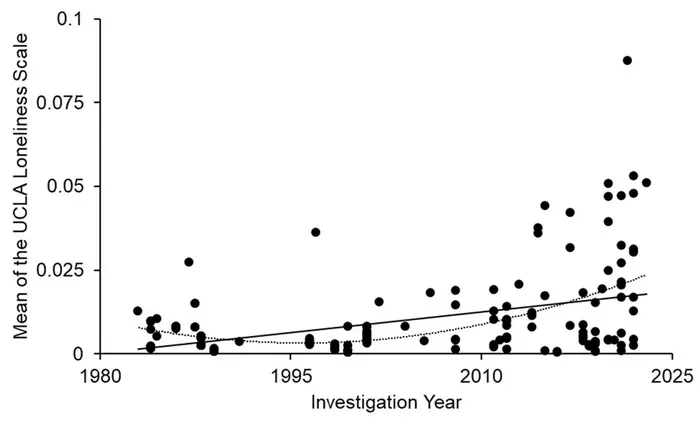
You may have read that Asian cultures respect the elderly more than Europe but Asian senior citizens...

User picture.
News StaffRSS Feed of this column.

News Releases From All Over The World, Right To You... Read More »

Blogroll

Researchers have successfully applied X-ray scattering techniques to determine how dissolved metal ions interact in solution.

These findings will help researchers better understand how metal ions, such as those found in nuclear waste and other industrial processes, behave in the environment.


Researchers at the Department of Energy's Argonne National Laboratory and the University of Notre Dame have successfully applied X-ray scattering techniques to determine how dissolved metal ions interact in solution. Credit: Argonne National Laboratory

A new theoretical thermometer built from heavy-duty mathematics and computer code suggests that the surfaces of certain neutron stars run significantly hotter than previously expected. Hot enough, in fact, to at least partially answer an open question in astrophysics -- how to explain the observed frequency of ultra-violent explosions known as superbursts that sometimes ignite on such stars' surfaces?


Neutron star accreting matter from a red giant star. The red giant (on the upper right) is expanding and dumping material onto the neutron star. This material forms a disk and then finally falls to the neutron star surface. Credit: Tony Piro, U.C. Berkeley

Human bone marrow has been used to create early-stage sperm cells for the first time, a scientific step forward that will help researchers understand more about how sperm cells are created.

The research published in the academic journal Reproduction: Gamete Biology, was carried out in Germany* by a team of scientists led by Professor Karim Nayernia, formerly of the University of Göttingen but now of the North-east England Stem Cell Institute (NESCI), based at the Centre for Life in Newcastle upon Tyne.


How Prof Nayernia and his team cultured from human bone marrow. Credit: Newcastle University, England

Dutch researcher Laura Brandán Briones, that's who.

She improved both the tests and the method to determine the reliability of the tests. This means, for example, that washing machines and coffee machines can be tested far better before they are launched on the market.

In a new study that will be published this year in Employee Responsibilities and Rights Journal, Dr. Debbie Knapp, Kent State assistant professor of management and information systems, examines the efficacy of the “Don’t Ask, Don’t Tell, Don’t Pursue” policy. She finds that homosexuals are no more disruptive to military life than their heterosexual counterparts.

Approximately 60,000 gays are active in the U.S. military today, according to the Center for the Study of Sexual Minorities in the Military.

Small, clever process technology is essential for the future, but is it possible? Dutch-sponsored researcher Fernando Benito López investigated the possibilities of the so-called lab-on-a-chip: microreactor chips in which chemical reactions can take place under (high) pressure. The results were very promising. The reaction rate increased compared to conventional equipment, the measurements were accurate and safety was not a problem. Moreover it was possible to follow and regulate the reaction during the process.