Banner
How To Overcome Leadership Battles

In times of social rancor and strife, most will fight each other, but societies are saved by those...
Thousands Of Unpublished Studies Show Why Conservation Efforts Miss The Mark

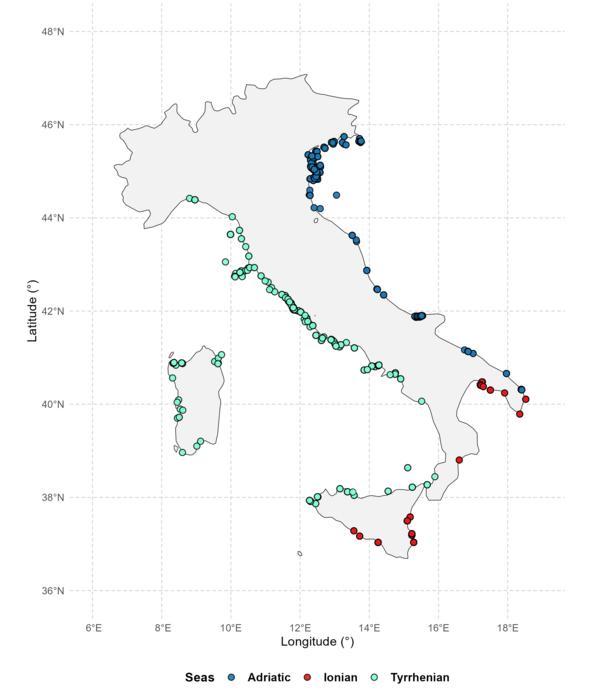
Europe alone has so much unpublished, un-catalogued biological data that it is challenging to take...

Why Antarctic Sea Ice Stopped Growing In 2015

Though numerical models and popular films like An Inconvenient Truth projected Arctic ice...

Wealth Correlated To Loneliness

You may have read that Asian cultures respect the elderly more than Europe but Asian senior citizens...

User picture.
News StaffRSS Feed of this column.

News Releases From All Over The World, Right To You... Read More »

Blogroll

ESA's Darwin mission aims to discover extrasolar planets and examine their atmospheres for signs of life, particularly for the presence of certain life-related chemicals such as oxygen and carbon dioxide. The major technical challenge lies in distinguishing, or resolving, the light from an extrasolar planet from the hugely overwhelming radiation emitted by the planet's nearby star.


Darwin will combine light from four or five telescopes and send it down to Earth. Credits: ESA

Cluster is providing new insights into the working of a ‘space tsunami’ that plays a role in disrupting the calm and beautiful aurora, or northern lights, creating patterns of auroral dances in the sky.


The image to the left is the typical appearance of the aurora before a magnetic substorm. During a substorm, the single auroral ribbon may split into several ribbons (centre) or even break into clusters that race north and south (right). Credits: Jan Curtis

Stretching a carbon nanotube composite like taffy, researchers at the National Institute of Standards and Technology (NIST) and the Rochester Institute of Technology (RIT) have made some of the first measurements* of how single-walled carbon nanotubes (SWNTs) both scatter and absorb polarized light, a key optical and electronic property.


Biomedical applications could exploit the natural fluorescence of the carbon nanotubes. When light is polarized along a single-walled carbon nanotube (left), this fluorescent emission is strong. Credit: NIST

While the government spends billions of dollars on educational and prevention programs to persuade teens not to do things like smoke, drink or do drugs, a Temple University psychologist suggests that competing systems within the brain make adolescents more susceptible to engaging in risky or dangerous behavior, and that educational interventions alone are unlikely to be effective.

Laurence Steinberg, Distinguished University Professor and the Laura H. Carnell Professor of Psychology at Temple, outlines his argument in, "Risk Taking in Adolescence: New Perspectives from Brain and Behavioral Science," in the April issue of Current Directions in Psychological Science.

The results of a new study suggest that bacteria that cause diseases like bubonic plague and serious gastric illness can turn the genes that make them infectious on or off.

Knowing how disease-causing bacteria, like Yersinia pestis and E. coli, do this may one day help scientists create drugs that control the expression of these genes, thereby making the bacteria harmless, said Vladimir Svetlov, a study co-author and a research associate in microbiology at Ohio State University. The findings appear in the April 13 issue of the journal Molecular Cell.

Remnants from a cave embedded in a limestone quarry southwest of Chicago have yielded a fossil trove that may influence the known history of north central Illinois some 310 million years ago.

"What's really valuable about the cave is the level of preservation of the material," said Fabien Kenig, associate professor of earth and environmental sciences at UIC. "We see charcoal that preserves biological features at the cellular level. Charcoal is an indication of fire burning ancient trees. The cave also beautifully preserved molecular indicators of these fires."