Banner
How To Overcome Leadership Battles

In times of social rancor and strife, most will fight each other, but societies are saved by those...
Thousands Of Unpublished Studies Show Why Conservation Efforts Miss The Mark

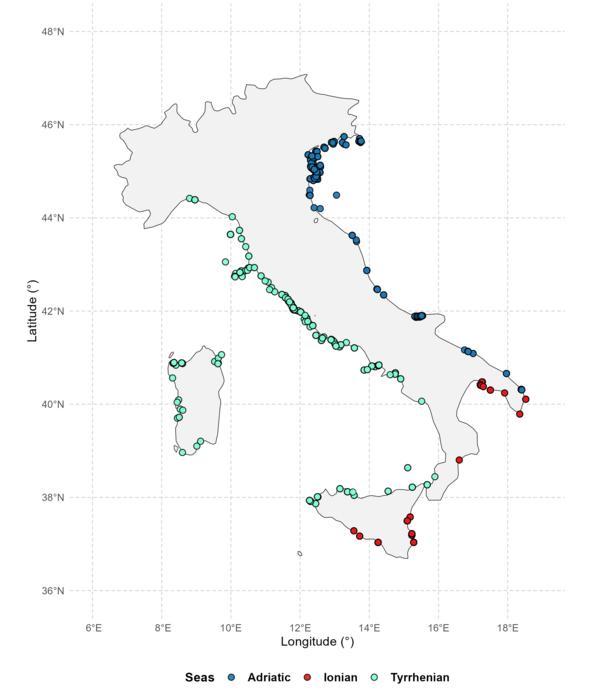
Europe alone has so much unpublished, un-catalogued biological data that it is challenging to take...

Why Antarctic Sea Ice Stopped Growing In 2015

Though numerical models and popular films like An Inconvenient Truth projected Arctic ice...
Wealth Correlated To Loneliness

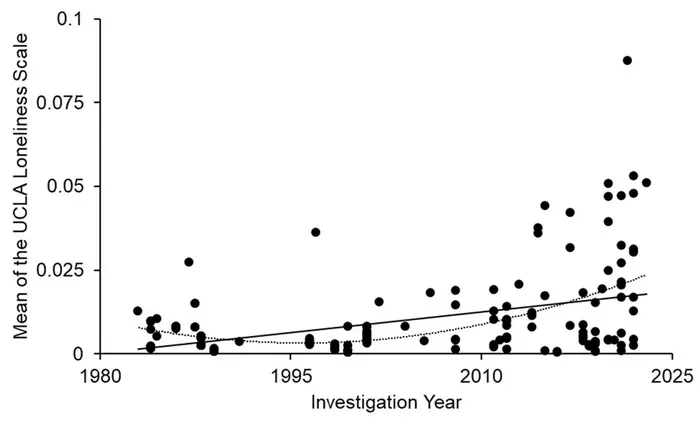
You may have read that Asian cultures respect the elderly more than Europe but Asian senior citizens...

User picture.
News StaffRSS Feed of this column.

News Releases From All Over The World, Right To You... Read More »

Blogroll

Two of the world's worst natural disasters in recent years stemmed from different causes on opposite sides of the globe, but actually had much in common, according to researchers who are part of a large National Science Foundation-funded research initiative that has been studying both the Indian Ocean Tsunami of 2004 and the Hurricane Katrina of 2005.


As a storm surge recedes, the sudden decrease in downward pressure on the saturated soil causes the sand to liquefy and to flow out like a heavy slurry. This can result in giant potholes like this 6 foot-deep one on the coastal highway. Credit: Princeton University School of Engineering and Applied Science

Scientists from the Universities of Liverpool and Glasgow have completed work on the inner heart of an experiment which seeks to find out what has happened to all the antimatter created at the start of the Universe. Matter and antimatter were created in equal amounts in the Big Bang but somehow the antimatter disappeared resulting in the Universe, and everything in it, including ourselves, being made of the remaining matter.

Some believe it is just a figment of overactive imaginations. But evidence is growing that the so-called "axis of evil" – a pattern apparently imprinted on the radiation left behind by the big bang – may be real, posing a threat to standard cosmology.

According to the standard model, the universe is isotropic, or much the same everywhere. The first sign that this might not be the case came in 2005, when Kate Land and João Magueijo of Imperial College London noticed a curious pattern in the map of the cosmic microwave background (CMB) created by NASA’s WMAP satellite. It seemed to show that some hot and cold spots in the CMB are not distributed randomly, as expected, but are aligned along what Magueijo dubbed the axis of evil.

Studies of human tumor cells implanted in mice have shown that the abnormal activation of four genes drives the spread of breast cancer to the lungs. The new studies by Howard Hughes Medical Institute researchers reveal that the aberrant genes work together to promote the growth of primary breast tumors. Cooperation among the four genes also enables cancerous cells to escape into the bloodstream and penetrate through blood vessels into lung tissues.

The rich don't get richer -- at least not in laboratory games. According to a new study of behavioral economics, published in the April 12, 2007 issue of Nature, people will spend their own money to make the rich less rich and the poor less poor. They do so without any hope of personal gain, acting, it seems, out of a taste for equality and sense of fair play.

Earth's polar regions. These clouds have grown brighter and more prevalent in recent years and some scientists suggest that changes in these clouds may be the result of climate change.

The first opportunity for launch is on Wednesday, April 25 from Vandenberg Air Force Base, Calif., aboard a Pegasus launch vehicle.