Banner
How To Overcome Leadership Battles

In times of social rancor and strife, most will fight each other, but societies are saved by those...
Thousands Of Unpublished Studies Show Why Conservation Efforts Miss The Mark

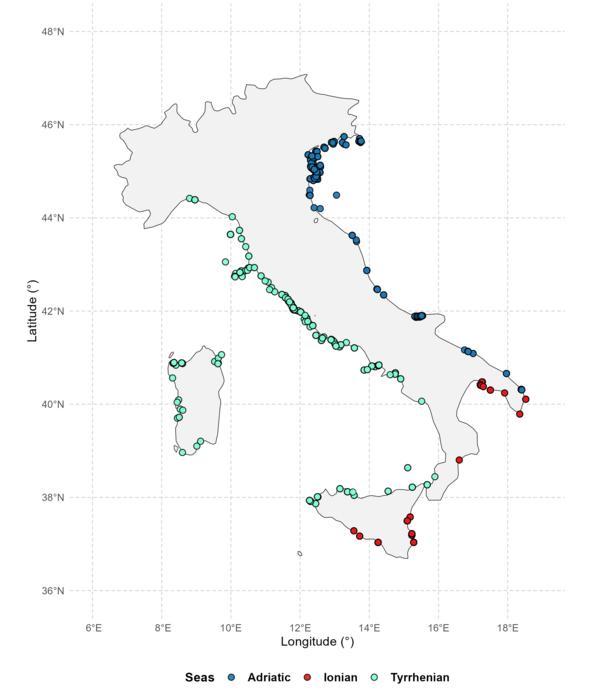
Europe alone has so much unpublished, un-catalogued biological data that it is challenging to take...

Why Antarctic Sea Ice Stopped Growing In 2015

Though numerical models and popular films like An Inconvenient Truth projected Arctic ice...

Wealth Correlated To Loneliness

You may have read that Asian cultures respect the elderly more than Europe but Asian senior citizens...

User picture.
News StaffRSS Feed of this column.

News Releases From All Over The World, Right To You... Read More »

Blogroll

For a lucky subset of vertebrates, losing an appendage is no big deal. As many an inquisitive child knows, salamanders can regenerate lost limbs or tails; and as lab investigators know, zebrafish can regrow lost fins. Of course, humans and other "higher" vertebrates must make do with repairing rather than regenerating damaged tissues. Though whole body generation (WBR) does occur, it’s typically restricted to a subset of morphologically less complex invertebrates, such as sponges, flatworms, and jellyfish.

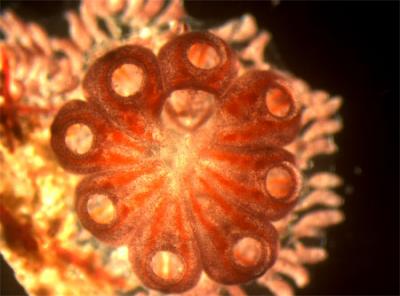
In a new study, Yuval Rinkevich et al. discovered an unusual mode of WBR in our closest invertebrate relative, the sea squirt Botrylloides leachi.

Superconductivity -- the conduction of electricity with zero resistance -- sometimes can, it seems, become stalled by a form of electronic "gridlock."

A possible explanation why is offered by new research at Cornell University.

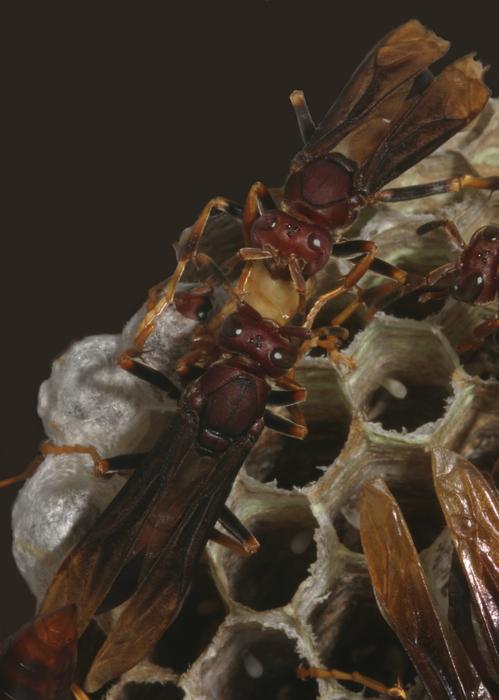
Why do some individuals sacrifice their own self-interest to help others? The evolution and maintenance of cooperative behavior is a classic puzzle in evolutionary biology. In some animal societies, cooperation occurs in close-knit family groups and kin selection explains apparently selfless behavior.

Not so for the lance-tailed manakin. Males of this little tropical bird cooperate in spectacular courtship displays with unrelated partners, and the benefits of lending a helping wing may only come years down the line. Instead of fighting over females, pairs of male lance-tailed manakins team up to court prospective mates.


Adult male lance-tailed manakin on a branch.

Using a modified ink-jet printer, a McGill University researcher is producing three-dimensional bioceramic “bones” that could one day change the way reconstructive surgery is performed.

McGill professor Jake Barralet, Canada Research Chair in Osteoinductive Biomaterials, Charles Doillon of Université Laval and Uwe Gbureck of the Department for Functional Materials in Medicine and Dentistry at the University of Würzburg, Bavaria, have taken advantage of the ink-jet printer’s ability to print layer upon layer to produce three-dimensional porous materials using the same building blocks as real bone.

Frog skin and human lungs hold secrets to developing new antibiotics, and a technique called solid-state NMR spectroscopy is a key to unlocking those secrets.

That's the view of University of Michigan researcher Ayyalusamy Ramamoorthy, who will discuss his group's progress toward that goal March 3 at the annual meeting of the Biophysical Society in Baltimore, Md.

Ramamoorthy's research group is using solid-state NMR to explore the germ-killing properties of natural antibiotics called antimicrobial peptides (AMPs), which are produced by virtually all animals, from insects to frogs to humans. AMPs are the immune system's early line of defense, battling microbes at the first places they try to penetrate: skin, mucous membranes and other surfaces.

TOKYO 02/03/2007

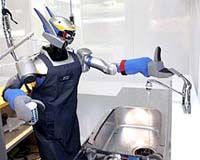
Japan's advanced humanoids can now serve tea and wash the cup afterwards, but they still need to learn from their mistakes if they are to become real household helpers.

A Tokyo University team this week showed their latest robots which can perform more complicated daily tasks, but the machines still have a learning curve.


Japan's advanced humanoids can now serve tea and wash the cup afterwards, but they still need to learn from their mistakes if they are to become real household helpers. © AFP,Ken Shimizu