Banner
How To Overcome Leadership Battles

In times of social rancor and strife, most will fight each other, but societies are saved by those...
Thousands Of Unpublished Studies Show Why Conservation Efforts Miss The Mark

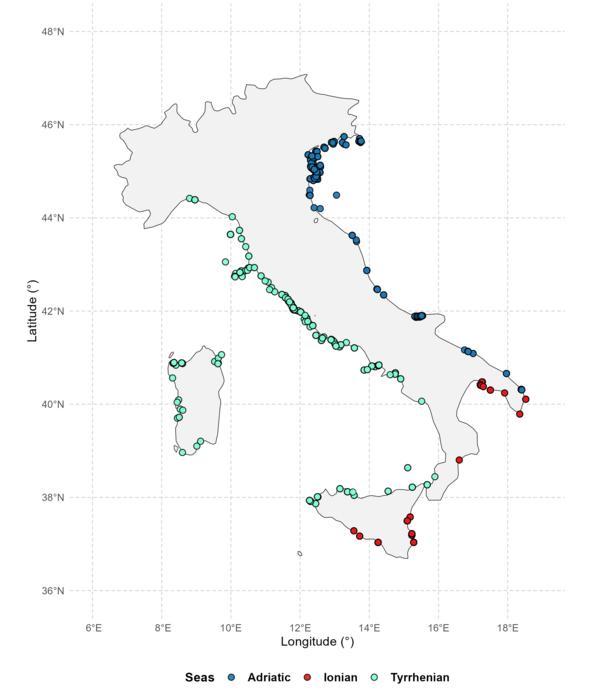
Europe alone has so much unpublished, un-catalogued biological data that it is challenging to take...

Why Antarctic Sea Ice Stopped Growing In 2015

Though numerical models and popular films like An Inconvenient Truth projected Arctic ice...
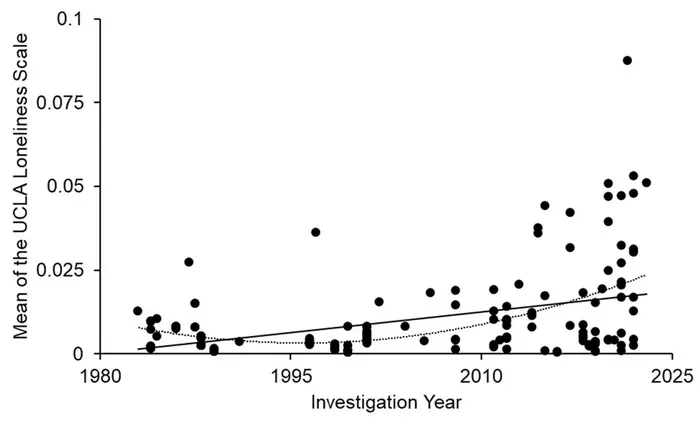
Wealth Correlated To Loneliness

You may have read that Asian cultures respect the elderly more than Europe but Asian senior citizens...

User picture.
News StaffRSS Feed of this column.

News Releases From All Over The World, Right To You... Read More »

Blogroll

Whether they're fighting postoperative soreness or relieving chronic discomfort from conditions such as cancer, morphine and other opioids are powerful weapons against pain. Now, in research published online in Nature Neuroscience, Brown University scientists give one reason why these painkillers work so well.

The secret: They act on a special form of N-type calcium channel, the cellular gatekeepers that help control pain messages passed between nerve cells. By blocking these channels, pain signals are inhibited. These findings not only shed important light on how the body controls pain, they could be a boon to drug development.

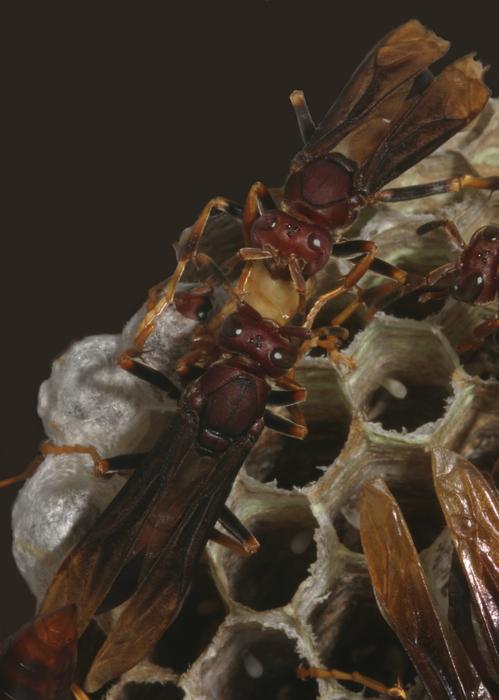
Fundamental theories in evolutionary biology have long proposed that biological kinship is the foundation of the family unit. It not only creates the sense of altruism that exists among genetically related family members, but also establishes boundaries regarding sexual relations within the nuclear family. Questions have persisted, however, regarding the means by which humans recognize family members -- particularly siblings -- as close genetic relatives.

A team of researchers at the University of California, Santa Barbara, has found evidence of a nonconscious mechanism in the human brain that identifies genetic siblings on the basis of cues that guided our hunter-gatherer ancestors. Their findings will be published in the February 15 issue of the science journal Nature.

Certain cancer risks can be passed down through families, the result of tiny changes in a family's genetic code. But not all genetic changes are deadly. To help medical counselors and physicians identify the mutations that pose the greatest health risks, researchers at four institutions, including Johns Hopkins, have developed and validated a new computer tool.

The system, described in the Feb. 16 issue of Public Library of Science Computational Biology, evaluates 16 "predictive features" to help answer a critical question: Is a particular mutation a harmless variation or a genetic glitch that could set the stage for cancer?

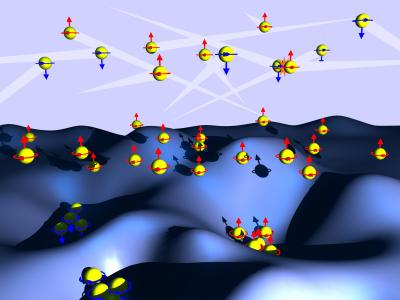
Physicists at JILA are using ultrashort pulses of laser light to reveal precisely why some electrons, like ballet dancers, hold their spin positions better than others—work that may help improve spintronic devices, which exploit the magnetism or "spin" of electrons in addition to or instead of their charge. One thing spinning electrons like, it turns out, is some disorder.

JILA is a joint venture of the National Institute of Standards and Technology (NIST) and the University of Colorado at Boulder.

Using the highest magnetic fields in the world, an international team of researchers has observed the quantum Hall effect – a much studied phenomenon of the quantum world – at room temperature.

The quantum Hall effect was previously believed to only be observable at temperatures close to absolute zero (equal to minus 459 degrees). But when scientists at the National High Magnetic Field Laboratory in the U.S. and at the High Field Magnet Laboratory in the Netherlands put a recently developed new form of carbon called graphene in very high magnetic fields, scientists were surprised by what they saw.


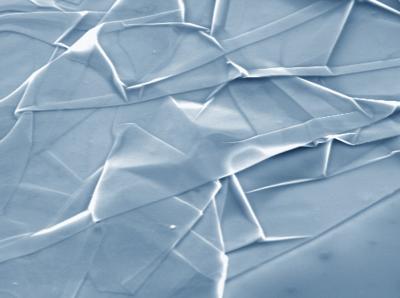
This image is a scanning electron microscope micrograph of a strongly crumpled graphene sheet on a silicon wafer.

A new report on climate over the world's southernmost continent shows that temperatures during the late 20th century did not climb as had been predicted by many global climate models.

This comes soon after the latest report by the Intergovernmental Panel on Climate Change that strongly supports the conclusion that the Earth's climate as a whole is warming, largely due to human activity.

It also follows a similar finding from last summer by the same research group that showed no increase in precipitation over Antarctica in the last 50 years. Most models predict that both precipitation and temperature will increase over Antarctica with a warming of the planet.