Banner
How To Overcome Leadership Battles

In times of social rancor and strife, most will fight each other, but societies are saved by those...

Thousands Of Unpublished Studies Show Why Conservation Efforts Miss The Mark

Europe alone has so much unpublished, un-catalogued biological data that it is challenging to take...

Why Antarctic Sea Ice Stopped Growing In 2015

Though numerical models and popular films like An Inconvenient Truth projected Arctic ice...

Wealth Correlated To Loneliness

You may have read that Asian cultures respect the elderly more than Europe but Asian senior citizens...

User picture.
News StaffRSS Feed of this column.

News Releases From All Over The World, Right To You... Read More »

Blogroll

The climate system, and in particular sea level, may be responding more quickly to rising carbon emissions than climate scientists have estimated with climate models.

An international team of climate scientists has cautioned against suggestions that the Intergovernmental Panel on Climate Change (IPCC) has previously overestimated the rate of climate change.

The team, from six institutions around the world, reviewed actual observations of carbon dioxide, temperature and sea level from 1990 to 2006 and compared them with projected changes for the same period.


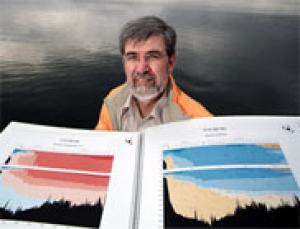
CSIRO Marine and Atmospheric Research and Antarctic Climate and Ecosystems CRC scientist, Dr. John Church.

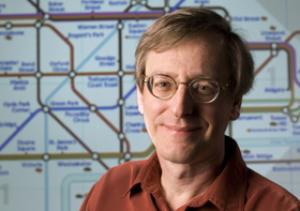
For Duke University theoretical chemist David Beratan, the results of his 15 years of studying how electrons make their way through some important protein molecules can be summed up with an analogy: how do big city dwellers get from here to there?

It's often swiftest to take the subway, Beratan notes, but riders may sometimes elect to alter their route by exiting the train for a short cab ride or a walk down the street. And they also may have to work around a route that is temporarily out of service.


David Beratan poses with subway route map. (Photo Credit: Megan Morr)

MORGANTOWN, W.Va., Feb. 5 (UPI) -- U.S. scientists are using a computer program to develop an objective method of determining when a boxing match should be stopped.

The researchers at West Virginia University say a computerized approach to counting punches at ringside identifies certain characteristics related to deaths in the ring.

"This approach could provide sufficient data to stop matches that might result in fatalities," said Drs. Vincent Miele and Julian Bailes of West Virginia University School of Medicine.

Miele and Bailes performed a computer-assisted video analysis to compare three groups of professional boxing matches.

Expectant parent' desire to see images of their unborn children has given rise to commercial companies offering keepsake ultrasound scans without medical supervision, often referred to as "boutique ultrasonography."

In a special report in this week's British Medical Journal, journalist Geoff Watts considers whether this non-medical use of the technique can be justified.

Improvements in ultrasound technology have transformed antenatal scans from two dimensional black and white images to 3D, 4D and even moving pictures of the unborn child.

The time is ripe for scientific organizations to adopt codes of ethics, according to a scientist and bioethicist from Wake Forest University School of Medicine in the current issue of Science and Engineering Ethics.

"Medical practice and human subject research is influenced by the Hippocratic tradition," said Nancy L. Jones, Ph.D., "but no similar code of ethics has been formalized for the life and biomedical sciences.