

Banner
How To Overcome Leadership Battles

In times of social rancor and strife, most will fight each other, but societies are saved by those...
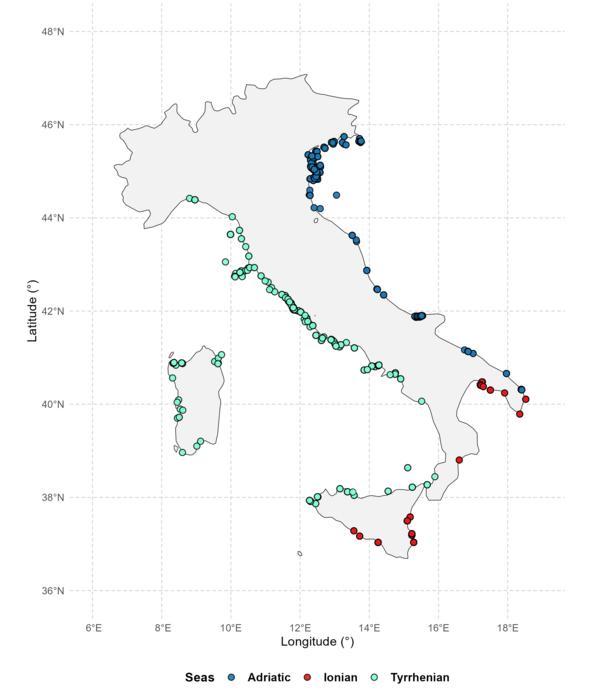
Thousands Of Unpublished Studies Show Why Conservation Efforts Miss The Mark

Europe alone has so much unpublished, un-catalogued biological data that it is challenging to take...

Why Antarctic Sea Ice Stopped Growing In 2015

Though numerical models and popular films like An Inconvenient Truth projected Arctic ice...
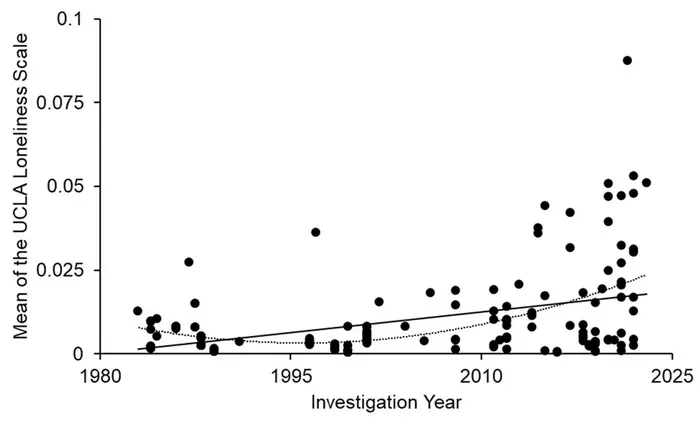
Wealth Correlated To Loneliness

You may have read that Asian cultures respect the elderly more than Europe but Asian senior citizens...

User picture.
News StaffRSS Feed of this column.

News Releases From All Over The World, Right To You... Read More »

Blogroll

The first national estimate of U.S. wild bees suggests they're disappearing in many of the country's most important farmlands--including California's Central Valley, the Midwest's corn belt, and the Mississippi River valley.

We can learn to empathize with strangers. Surprisingly positive experiences with people from another group trigger a learning effect in the brain, which increases empathy. As researchers from the University of Zurich reveal, only a handful of positive learning experiences already suffice for a person to be-come more empathic.

Conflicts between people from different nationalities and cultures often stem from a lack of empathy or compassion for 'the stranger'. More empathy for members of other groups could thus encourage peaceful coexistence. A study conducted by the University of Zurich examined whether empathy with strangers can be learned and how positive experiences with others influence empathic brain responses.

Surprising behavior influences learning

With holiday shopping season in full swing, everyone's looking for the perfect gift.  But will it make you happy, or just retailers?

Maybe both. A paper in Social Psychological and Personality Science says money can buy happiness, for people who like to shop. In a self-reported survey of happiness, material purchases, from sweaters to skateboards, provide more frequent happiness over time, whereas things like a trip to the zoo (experiential purchases) only provide happiness on individual occasions.

Perovskites are materials used in batteries, fuel cells, and electronic components, and occur in nature as minerals. Despite their important role in technology, little is known about the reactivity of their surfaces. How do water molecules behave when they attach to a perovskite surface? Normally only the outermost atoms at the surface influence this behavior, but on perovskites the deeper layers are important, too.

Professor Ulrike Diebold's team at TU Wien (Vienna) have answered this long-standing question using scanning tunneling microscopes and computer simulations. 

Scientists from Imperial College London have identified for the first time two clusters of genes linked to human intelligence.

Called M1 and M3, these so-called gene networks appear to influence cognitive function - which includes memory, attention, processing speed and reasoning.

Crucially, the scientists have discovered that these two networks - which each contain hundreds of genes - are likely to be under the control of master regulator switches. The researchers are now keen to identify these switches and explore whether it might be feasible to manipulate them. The research is at a very early stage, but the scientists would ultimately like to investigate whether it is possible to use this knowledge of gene networks to boost cognitive function.

At this time of year it is common to see food drives for the less fortunate - and then we see reports saying that low-income people are disproportionately obese and can't control themselves and need to be taxed more heavily in order to eat less.

How can it be both? Welcome to modern American food policy.

Academics writing in Marketing Science want poor people to spend more on food and analyzed six years of sales data from over 1,700 supermarkets across the U.S. to make the case that poor people will behave as elites want if the price of food is changed.



