Banner
How To Overcome Leadership Battles

In times of social rancor and strife, most will fight each other, but societies are saved by those...
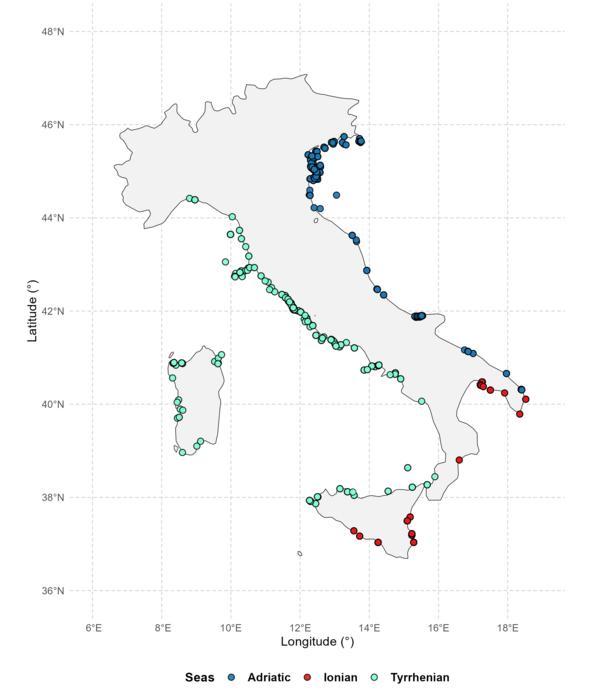
Thousands Of Unpublished Studies Show Why Conservation Efforts Miss The Mark

Europe alone has so much unpublished, un-catalogued biological data that it is challenging to take...

Why Antarctic Sea Ice Stopped Growing In 2015

Though numerical models and popular films like An Inconvenient Truth projected Arctic ice...
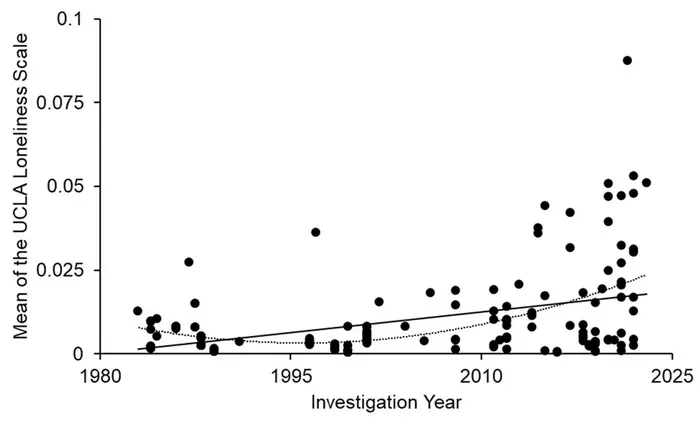
Wealth Correlated To Loneliness

You may have read that Asian cultures respect the elderly more than Europe but Asian senior citizens...

User picture.
News StaffRSS Feed of this column.

News Releases From All Over The World, Right To You... Read More »

Blogroll

An international team of scientists has discovered the first oceanic microplate in the Indian Ocean--helping identify when the initial collision between India and Eurasia occurred, leading to the birth of the Himalayas.

Although there are at least seven microplates known in the Pacific Ocean, this is the first ancient Indian Ocean microplate to be discovered. Radar beam images from an orbiting satellite have helped put together pieces of this plate tectonic jigsaw and pinpointed the age for the collision, whose precise date has divided scientists for decades.

Reported in Earth and Planetary Science Letters, the team of Australian and US scientists believe the collision occurred 47 million years ago when India and Eurasia initially smashed into each other.

New research shows how past abrupt climatic changes in the North Atlantic propagated globally. The study, led by researchers from Centre for Ice and Climate at the University of Copenhagen's Niels Bohr Institute, shows how interaction between heat transport in the ocean and the atmosphere caused the climatic changes to be expressed in different ways across the Southern Hemisphere. The results shows how forcing the climate system into a different state can trigger climate variations that spread globally and have very different impacts in different regions of Earth. This is important now, where rising atmospheric CO2 levels lead to global warming and may trigger abrupt climatic changes. The results have been published in the scientific journal Nature Geoscience.

RIVERSIDE, Calif. - Aerosols, tiny solid and liquid particles suspended in the atmosphere, impact the environment by affecting air quality and alter the Earth's radiative balance by either scattering or absorbing sunlight to varying degrees. What impact does climate change, induced by greenhouse gases (GHGs), have on the aerosol "burden"--the total mass of aerosols in a vertical column of air?

Genetic mutations in a gene called REST have been shown to cause Wilms tumour, a rare kidney cancer that occurs in children.

Wilms tumour affects about 1 in 10,000 children, but fortunately is curable in about 90% of them.

A study led by researchers at The Institute of Cancer Research, London, identified mutations in the REST gene in 16 children with Wilms tumour.

Nine of the children were the only members of the family to develop Wilms tumour, but in four families more than one child had developed the cancer.

It was the clustering of cases of this rare cancer that alerted the researchers that a hereditary genetic cause was likely. They estimate that REST mutations cause about 10% of familial Wilms tumour.

A new study from Sweden's Karolinska Institutet shows that the 'grammar' of the human genetic code is more complex than that of even the most intricately constructed spoken languages in the world. The findings, published in the journal Nature, explain why the human genome is so difficult to decipher -- and contribute to the further understanding of how genetic differences affect the risk of developing diseases on an individual level.

Sixty percent of Australians have been the target of online harassment and abuse, with women and young adults most likely to report being sexually harassed online. One in 10 adults said someone had shared a nude or semi-nude image of them without their consent.


The results reveal victims of online harassment and abuse are both male and female, with women twice as likely to be targeted by male offenders and men also twice as likely to be the perpetrators of digital abuse.

More than name calling or offensive remarks, digital abuse included sexual harassment, threats and cyber stalking.