Banner
Why Antarctic Sea Ice Stopped Growing In 2015

Though numerical models and popular films like An Inconvenient Truth projected Arctic ice...
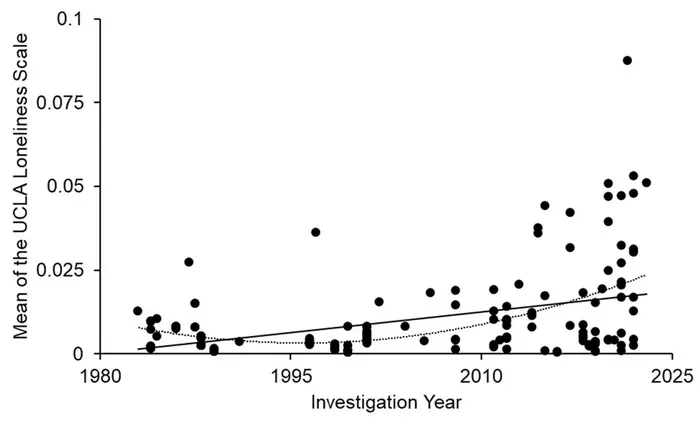
Wealth Correlated To Loneliness

You may have read that Asian cultures respect the elderly more than Europe but Asian senior citizens...

Ousiometrics Analysis Says All Human Language Is Biased

A new tool drawing on billions of uses of more than 20,000 words and diverse real-world texts claims...

Wavelengths Of Light Are Why CO2 Cools The Upper Atmosphere But Warms Earth

There are concerns about projected warming on the Earth’s surface and in the lower atmosphere...

User picture.
News StaffRSS Feed of this column.

News Releases From All Over The World, Right To You... Read More »

Blogroll
It's not a surprise that doctors may believe people obsessed with food - be they nocebos or migrating from fad to fad - have a psychological condition rather than a gastrointestinal one. The gluten obsession, where 75 percent of people without celiac disease claim they have a reaction to gluten but do not, is an example.
Another shooting, this time in a Charleston church, and another link to psychiatric drugs. Psychological disturbances caused by psychotropic drug treatment are a neglected problem, say therapists in a recent article. 

Up to 70% of patients with psychosis treated with antiserotoninergic second-generation antipsychotics (SGAs; clozapine, olanzapine and risperidone) develop secondary obsessive-compulsive symptoms (OCS) or secondary obsessive-compulsive disorder (s-OCD), they write. The experts suggest two pharmacological strategies to treat s-OCD: a combination of antiserotoninergic SGAs with either dopaminergic SGAs (amisulpride and aripiprazole) or mood stabilizers (valproate or lamotrigine), and augmentation of SGAs with a serotonin reuptake inhibitor (SRI).
Researchers at the Université libre de Bruxelles, ULB uncover a new mechanism that regulates tumour initiation and invasion in skin basal cell carcinoma.

Basal cell carcinoma (BCC) is the most common cancer found in human with several million of new patients affected every year around the world. The mechanisms that control BCC initiation and invasion are poorly known.

In a new study, researchers led by Pr. Cédric Blanpain, MD/PhD, professor and WELBIO investigator at the IRIBHM, Université libre de Bruxelles, Belgium, report that Sox9, directly controls skin cancer formation by regulating the expansion of tumor initiating cells and the invasive properties of cancer cells.
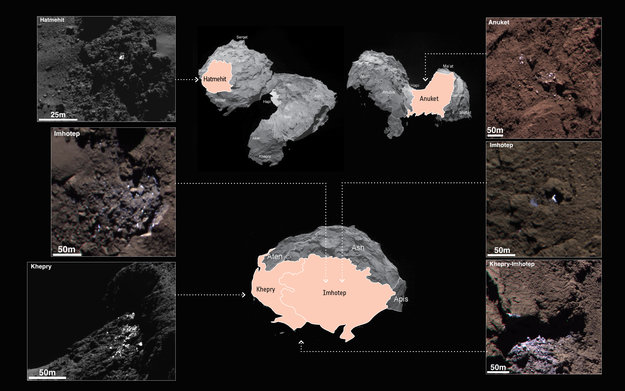
Using ESA’s Rosetta spacecraft, scientists have identified more than a hundred patches of water ice a few meters in size on the surface of Comet 67P/Churyumov-Gerasimenko. Rosetta arrived at the comet in August 2014 at a distance of about 100 kilometers and eventually orbited the comet at 10 kilometers or less, allowing high-resolution images of the surface to be acquired. 
A new paper discusses the current barriers which limit opportunities to own a pet among older adults, going into detail about physical and financial risks for older adult pet ownership and how it can be diminished.

Medical problems that arise with older adults, such as physical illness and emotional issues, have the potential to be mitigated by companionship of pets because it reduces social isolation and enhances physical activity. But illnesses that are often associated with aging, ranging from arthritis to diabetes, make it hard or impossible for older adults to provide routine care for their pets. Financial barriers are another issue that older pet owners face.

New research published in Liver Transplantation, a journal of the American Association for the Study of Liver Diseases and the International Liver Transplantation Society, reports that younger patients, those who are married, and those with Child-Pugh C disease—the most severe measure of liver disease—are more likely immigrants, divorced patients and those at the lowest income levels were less likely to have a potential live donor volunteer for liver donation.