Banner
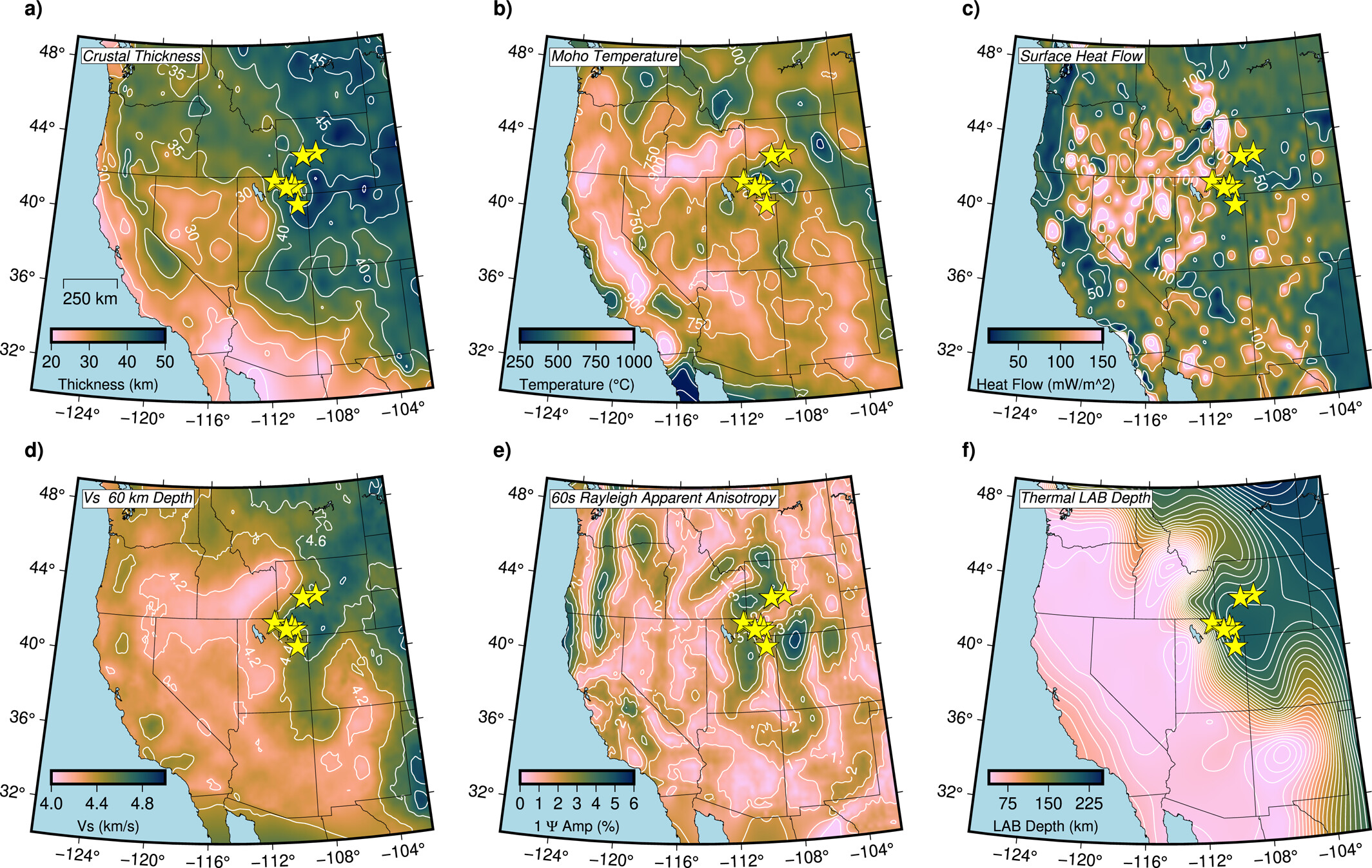
You Didn't Feel Continental Mantle Earthquakes, But They Happened. A Lot

A 1979 seismic event was a different kind of earthquake, and it is has intrigued scientists ever...
How To Overcome Leadership Battles

In times of social rancor and strife, most will fight each other, but societies are saved by those...
Thousands Of Unpublished Studies Show Why Conservation Efforts Miss The Mark

Europe alone has so much unpublished, un-catalogued biological data that it is challenging to take...

Why Antarctic Sea Ice Stopped Growing In 2015

Though numerical models and popular films like An Inconvenient Truth projected Arctic ice...

User picture.
News StaffRSS Feed of this column.

News Releases From All Over The World, Right To You... Read More »

Blogroll
Since 2012, there have been increased calls for fossil fuel "divestment" - getting money out of fossil fuel companies. Despite an effort that peaked in 2015, spurred on by paid protesters from groups run by activists like Bill McKibben, they haven't made much difference.

Some schools and companies say they have done it, but like "sustainability" divestment has so many subjective meanings it is meaningless. 
If you're a music lover, you've likely had that feeling where a favorite song floods your system with pleasurable emotions, joyful memories, makes your hair stand on edge, or even sends a shiver or "chill" down your spine.

About half of people report that they get such chills when listening to music. 
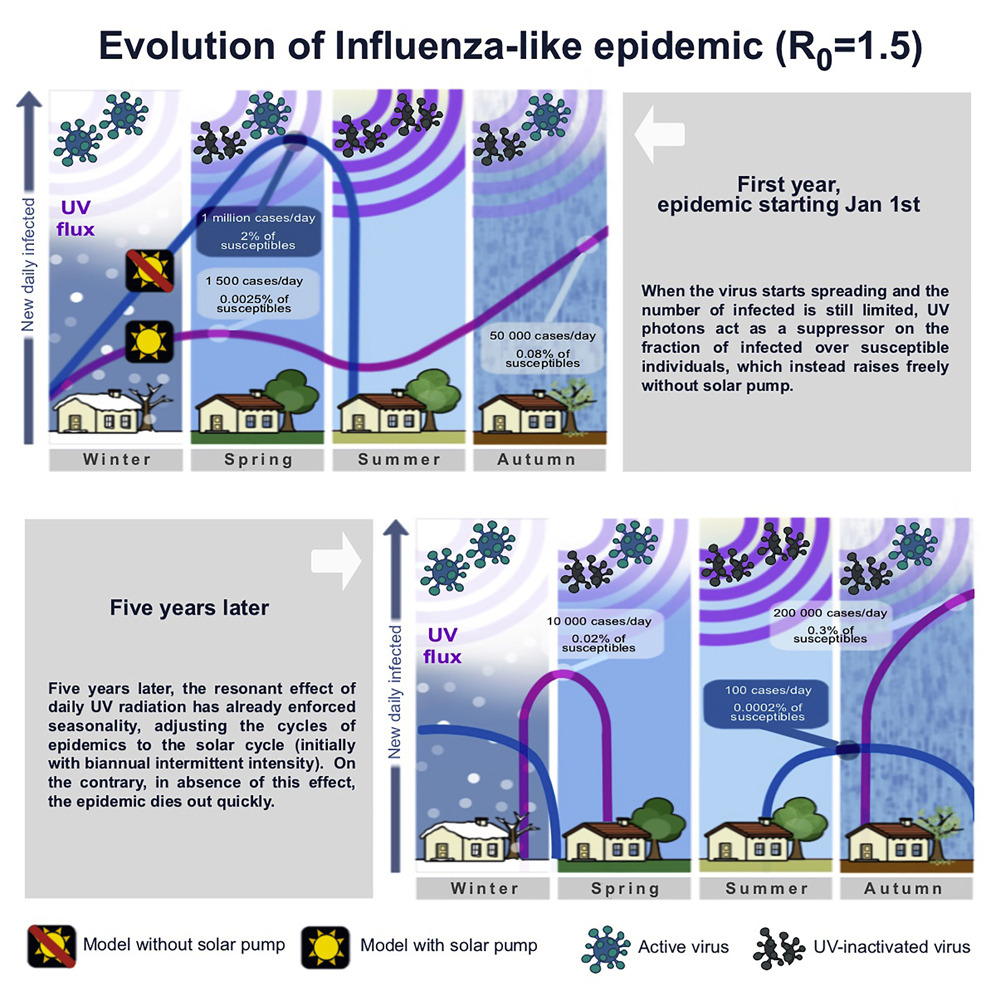
Viral respiratory epidemics like the flu spike cyclically during autumn and winter - but only in the temperate regions of the globe's northern and southern hemispheres.

In the equatorial belt, they happen all year round, at lower levels.

A new numerical model hopes to provide insight. The authors find that both the prevalence and evolution of epidemics are strongly correlated with the amount of daily solar irradiation that hits a given location on the Earth at a given time of the year. 
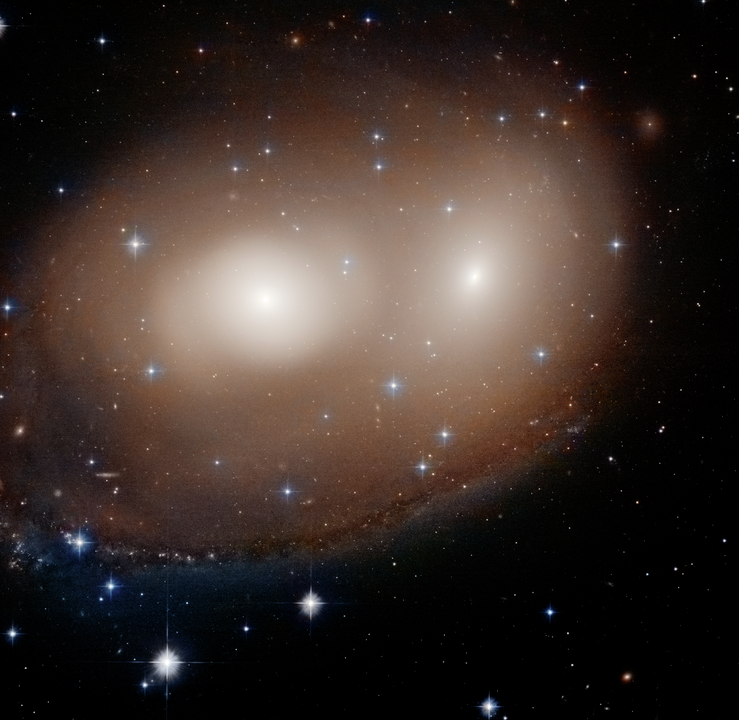
In a classic "Charlie Brown" Halloween tale, one character believes in the pumpkin equivalent of an Easter Bunny or Tooth Fairy, but NGC  2292 and NGC  2293 are real. At 109,000 light-years across, the diameter of our Milky Way, they don't just form a Great Pumpkin, they form the greatest pumpkin of all.

What looks like two glowing eyes and a crooked carved smile is a snapshot of the early stages of a collision between the two galaxies. The "pumpkin’s" glowing "eyes" are the bright, star-filled cores of each galaxy that contain supermassive black holes. 
In February of 2020 there was a lot of confusion about how to contain the spread of SARS-CoV-2, the 2019 form of coronavirus that erupted in Wuhan, China. Much of the confusion was caused by political operatives and allied journalists. The federal government said we needed to restrict travel and that was deemed xenophobic, even racist, and epidemiologists were trotted out claiming that it would not work.
After clinical trials showed the safety and efficacy of Veklury (remdesivir) in adult and pediatric patients 12 years of age and older, the U.S. Food and Drug Administration has approved the antiviral drug for the treatment of severe COVID-19 - requiring hospitalization.

Veklury is the first treatment for COVID-19 to receive such FDA approval but it did get an Emergency Use Authorization (EUA) on May 1, 2020.

The approval of Veklury was supported by the agency’s analysis of data from three randomized, controlled clinical trials that included patients hospitalized with mild-to-severe COVID-19.