Banner
You Didn't Feel Continental Mantle Earthquakes, But They Happened. A Lot

A 1979 seismic event was a different kind of earthquake, and it is has intrigued scientists ever...
How To Overcome Leadership Battles

In times of social rancor and strife, most will fight each other, but societies are saved by those...

Thousands Of Unpublished Studies Show Why Conservation Efforts Miss The Mark

Europe alone has so much unpublished, un-catalogued biological data that it is challenging to take...

Why Antarctic Sea Ice Stopped Growing In 2015

Though numerical models and popular films like An Inconvenient Truth projected Arctic ice...

User picture.
News StaffRSS Feed of this column.

News Releases From All Over The World, Right To You... Read More »

Blogroll
Every dog owner knows that personality changes over time, but these changes occur unevenly during the dogs' life, and each trait follows a distinct age trajectory, according to a new study

Human personality is characterized by a peculiar dualism: it is both stable and malleable, depending on the point of reference. If we compare ourselves to our peers, it is stable as our personality rankings relative to others remain consistent over time. However, personality changes became obvious if we compare ourselves across time, as people become more conscientious, more emotionally stable, and more agreeable as they get older.
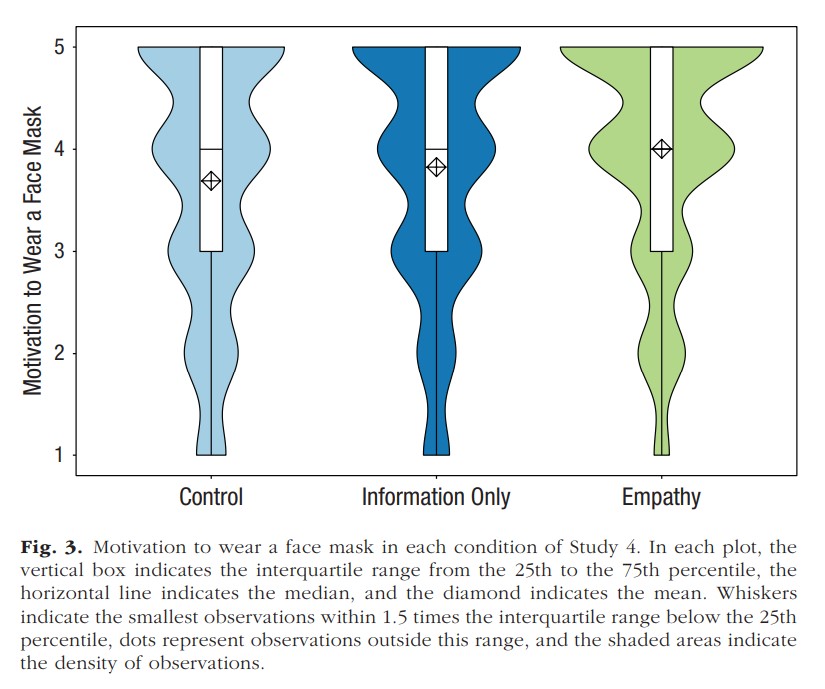
A new study finds that people are more motivated to use face masks and keep our distance not because experts or government bureaucrats say we should, but because we have empathy for vulnerable people.

In two surveys in the United States, the United Kingdom, and Germany, participants were asked on a scale from 1 to 5 how concerned they are about those who are most vulnerable to SARS-CoV2, the 2019 form of coronavirus that erupted in Wuhan, China and spread worldwide. Subsequently, they were asked about the extent to which they themselves avoid social contact due to the coronavirus. The relationship was clear. The higher the degree of empathy, the greater the focus on reducing social contact. 
It's no secret how dogs came to evolve. A wolf trusted a human, a human fed a wolf, and this happened enough times that hostile animals were killed off and friendlier ones were not and those traits were passed down.

A new study finds it does not take generations. Tame socialized grey wolves form individualized social bonds with their human handlers. And they don't like being separated any more than dogs do.
There are calls to ban vaping because it has pleasant flavors and an addictive component and that combination may lead to disease but while there are zero deaths attributable to nicotine so far, there is an actual socially acceptable carcinogen that also uses flavors to increase use - alcohol.

Yet the future looks bleak if recent survey results hold true. They find that compared to just a generation ago, college students - and alcohol, like smoking, is most often a pediatric condition - are drinking less alcohol.
The SARS-CoV-2 virus, the 2019 form of coronavirus that has caused the COVID-19 pandemic, has led to a rush of studies searching for a vaccine to prevent infection and testing existing drugs to see which one can reduce the amount of virus in infected people. 

Drug development usually starts on a computer, then moves to cells and then animals. Animals, of course, are not little people, despite what anti-science activists like to claim in their war on food and chemicals, so if a drug works in all the preceding steps it will go to human clinical trials where it must survive the real challenge.
Mosquitoes spread malaria but because wealthy nations wiped it out before declaring insecticides bad, it's easy to forget that insecticides are the only effective way to control the mosquitoes that spread a disease which still kills 400,000 each year in developing nations.

For poorer countries, there is good news. Scientists have created a new crystal form of the pyrethroid pesticide deltamethrin that is up to 12 times more effective against mosquitoes. Insecticides such as deltamethrin and DDT can prevent the spread of diseases carried by mosquitoes and are often sprayed indoors and on bed nets. Though DDT, for example, is banned in the United States for political reasons, our EPA writes the book on how to spray it indoors where malaria still exists.