Banner
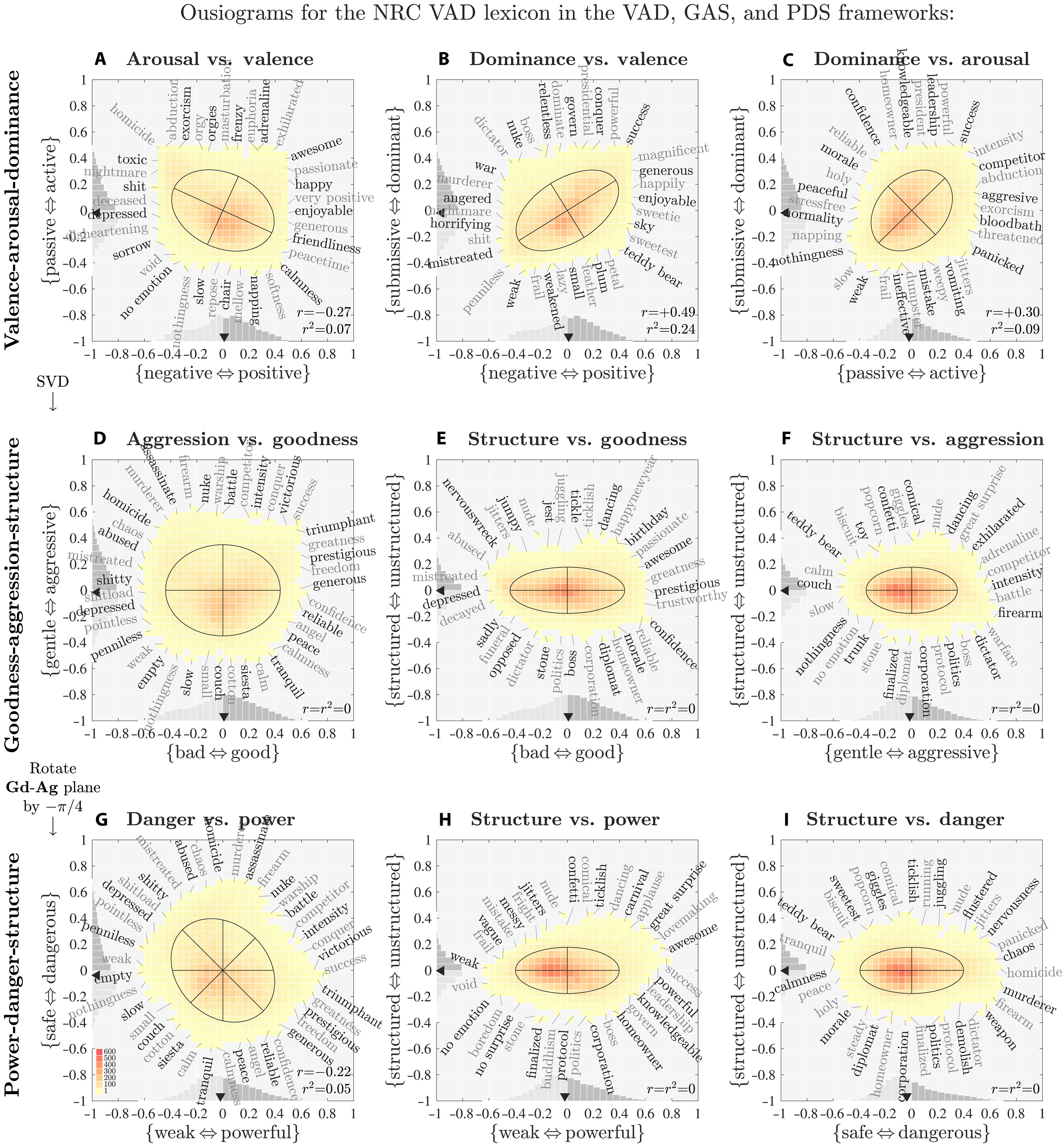
Ousiometrics Analysis Says All Human Language Is Biased

A new tool drawing on billions of uses of more than 20,000 words and diverse real-world texts claims...
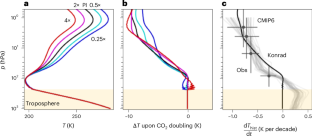
Wavelengths Of Light Are Why CO2 Cools The Upper Atmosphere But Warms Earth

There are concerns about projected warming on the Earth’s surface and in the lower atmosphere...

Here's Where Your Backyard Was 300 Million Years Ago

We may use terms like "grounded" and terra firma to mean stability and consistency but geology...

Convergent Evolution Cheat Sheet Now 120 Million Years Old

One tenet of natural selection is a random walk of genes but nature may be more predictable than...

User picture.
News StaffRSS Feed of this column.

News Releases From All Over The World, Right To You... Read More »

Blogroll

The precautionary principle says when it comes to health, you err on the side of caution, and a well-publicized effort to get annual screening for breast cancer paid off - but it hasn't lowered mortality rates in women aged 40-59. An annual physical examination does just fine, according to a 25-year study.

We may have too much plastic in the environment but creatures that lack a Mother Jones to tell them how awful things are adapt and overcome; two urban bee species have been caught making nests out of plastic waste.

Although lots of research has shown adverse impacts of the material on species and the ecosystem, few scientists have documented insects 'making lemonade out of lemons' and adapting to a plastic-rich environment. It's an important discovery because it shows bees' resourcefulness and flexibility in adapting to a human-dominated world, says lead author Scott MacIvor, a doctoral student at York University. 

When is a smoker not a smoker?

When they live in California and simply choose to self-identify as a non-smoker. Who are we to criticize the self-identify of people in a state where boys can just declare they are female and use a girl's restroom?

Smoking has plummeted in the last few decades- health statistics, rampant sin taxes and billions of dollars in anti-smoking campaigns will do that - but University of California, San Diego School of Medicine scholars wonder about people who say they use cigarettes but didn't consider themselves to be "smokers" in  the 2011 California Longitudinal Smokers Survey.

People who gravitate toward the latest technology regard themselves as progressives mavericks on the cutting edge - and then they stand in a line outside the Apple store.

Apple products don't look good, and they aren't particularly original - having to jailbreak your phone to use it the way you want and being told you can only use their power supply is more Soviet gulag than 21st century technological freedom but a lot of people still consider them cool. And perception matters most. If a product appears to be losing its coolness, it's over, Friendster.

Who better to know what cool is than a big university academic? Like with business, they can create trends from past data even if they can't create a product themselves.

The Great Recession of 2009 deepened income inequality - except for the government, a lot more people were out of work and scholars have correlated that to county-by-county rates of child maltreatment, from sexual, physical and emotional abuse to traumatic brain injuries and death.

The income inequality-child maltreatment correlation came using all 3,142 American counties from 2005-09, and the authors say it is one of the most comprehensive of its kind and the first to target child abuse in places with the greatest gap between rich and poor.  Nearly 3 million children younger than 18 are physically abused, sexually abused, physically neglected or emotionally abused each year in the United States, the authors noted. That is about 4 percent of the youth population. 

Though the evidence shows that people are not really different during a full moon, like homeopathy or organic food benefits happen just often enough that people are convinced by the placebo/nocebo effect to believe there must be something to it.

And science has its moon quirks too. Why, for example, would signals bouncing off the moon be so faint on full moon evenings?

The answer is in an eclipse, which has had its own share of superstitious attributions.

Researchers have aimed laser beams at suitcase-sized reflectors placed on the moon by Apollo astronauts and unmanned Soviet rovers. By precisely timing the light's return to Earth, they can measure the distance from here to the moon with millimeter precision.