Banner
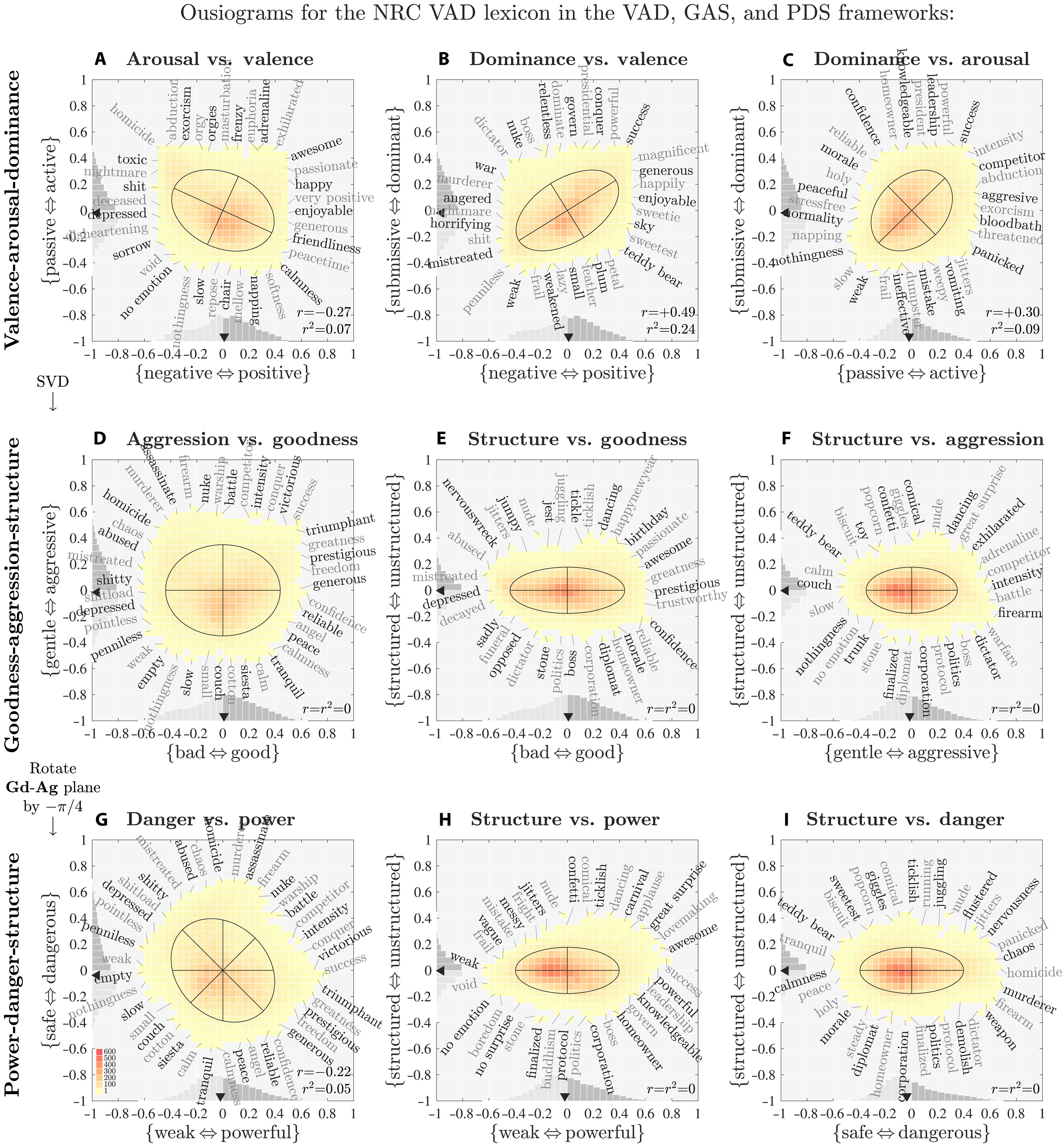
Ousiometrics Analysis Says All Human Language Is Biased

A new tool drawing on billions of uses of more than 20,000 words and diverse real-world texts claims...

Wavelengths Of Light Are Why CO2 Cools The Upper Atmosphere But Warms Earth

There are concerns about projected warming on the Earth’s surface and in the lower atmosphere...

Here's Where Your Backyard Was 300 Million Years Ago

We may use terms like "grounded" and terra firma to mean stability and consistency but geology...

Convergent Evolution Cheat Sheet Now 120 Million Years Old

One tenet of natural selection is a random walk of genes but nature may be more predictable than...

User picture.
News StaffRSS Feed of this column.

News Releases From All Over The World, Right To You... Read More »

Blogroll

In the aftermath of Japan's earthquake and tsunami in March 2011, the Fukushima Daiichi nuclear plant was initially driven into shutdown by the magnitude 9.0 quake; its emergency generators then failed because they were inundated by the tsunami.

If you don't sleep well during a full moon, it is not because you have epigenetically become a werewolf after watching "Twilight" too many times, lunar cycles and human sleep behavior are connected, according to results of a study on endogenous rhythms of circalunar periodicity.

Prof. Christian Cajochen of the Psychiatric Hospital of the University of Basel and colleagues analyzed the sleep of over 30 volunteers in two age groups in the lab. While they were sleeping, the scientists monitored their brain patterns, eye movements and measured their hormone secretions.

Astronomers have long assumed a kind of cosmic equilibrium: when a galaxy produces too many stars too quickly, it greatly reduces its capacity for producing stars in the future.

A group of astronomers were able to obtain the first detailed images of this type of self-limiting galactic behavior: an outflow of molecular gas, the raw material needed for star formation that is coming from star-forming regions in the Sculptor Galaxy, NGC 253. The observations were made with the newly commissioned telescope array ALMA in Chile.

Removing ovaries during hysterectomies protects against future risk of ovarian cancer but the ovaries and the hormones they produce may have advantages for preventing heart disease, hip fracture, sexual dysfunction, and cognitive decline. Outside cancer risk, the most important factor that should determine ovarian conservation vs. removal is her age- whether she is older or younger than 50 - according to a review article published in Journal of Women's Health.

Last year, Julie Stitt offered to donate a kidney to her husband, Chuck, who was in kidney failure.

Julie wasn't a match for Chuck but they entered the Paired Kidney Exchange (PKE) program at the University of Maryland Medical Center, which would move Chuck higher up on the transplant list and enable him to get a kidney from a matching living donor; in return, Julie would donate her kidney to a stranger that she matched.

Chuck got his kidney transplant courtesy of an unknown donor in December of 2012. Julie, had just started a new job as a 2nd grade teacher so asked to wait until the summer break in 2013 to have her kidney donation surgery for a stranger.

Perceived weight discrimination, or the real kind, may increase risk for obesity, according to survey results published by Dr. Angelina Sutin of the Department of Medical Humanities&Social Sciences, and Professor Antonio Terracciano, Department of Geriatrics researcher who focuses on how psychological traits and genetic factors contribute to physical and mental health, both from the Florida State University College of Medicine in Tallahassee.