Banner
Ousiometrics Analysis Says All Human Language Is Biased

A new tool drawing on billions of uses of more than 20,000 words and diverse real-world texts claims...

Wavelengths Of Light Are Why CO2 Cools The Upper Atmosphere But Warms Earth

There are concerns about projected warming on the Earth’s surface and in the lower atmosphere...

Here's Where Your Backyard Was 300 Million Years Ago

We may use terms like "grounded" and terra firma to mean stability and consistency but geology...

Convergent Evolution Cheat Sheet Now 120 Million Years Old

One tenet of natural selection is a random walk of genes but nature may be more predictable than...

User picture.
News StaffRSS Feed of this column.

News Releases From All Over The World, Right To You... Read More »

Blogroll

Researchers say their more reliable projections of global warming estimates at 2100 have narrowed the predicted range of global warming.

Hikers in New Hampshire's White Mountain National Forest often hit the trail less prepared than they should be, according to a survey that gaged readiness by how many of 10 essential items the hikers brought along. Which means hikers everywhere probably lack the same things, though experience obviously changes that.

Young and inexperienced hikers were most likely to lack multiple items recommended by the State of New Hampshire's HikeSafe program, according to a paper Wilderness&Environmental Medicine. Each year, scores of imperiled hikers require search and rescue missions in the state, but little quantitative research exists on how and why they end up in trouble.

Dr. Ian Marcus, recent Ph.D. from the U.C. Riverside Bourns College of Engineering, wanted to better understand how bacteria impact the environment . So he spent nearly a year building a system that replicates a human colon, septic tank and groundwater and "fed" the colon three times a day during week-long experiments to simulate human eating.

scientists typically study bacteria in an isolated environment under ideal growing conditions. That presents a problem because bacteria typically proliferate in microbial communities with other microorganisms such as archaea, fungi and protozoa.

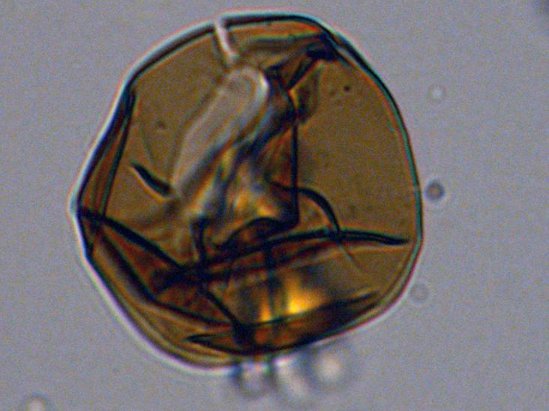
Before the Oligocene epoch some 33.6 million years ago, the Earth was a warm place with a tropical climate. In this region, plankton diversity was high until glaciation - the Antarctic continental ice cap - reduced the populations leaving only those capable of surviving in the new climate.

Since that time, we have had seasonal primary productivity of plankton communities. This ice-cap is associated with the ice-pack, the frozen part that disappears and reappears as a function of seasonal climate changes. This phenomenon, still active today, influences global food webs, according to a paper in Science which used information contained in ice sediments from different depths.
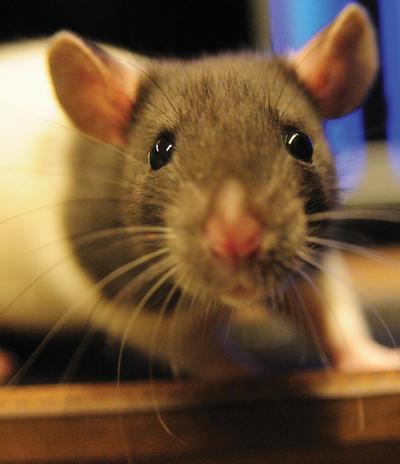
Rats move their eyes in opposite directions in both the horizontal and the vertical plane when running around. Each eye moves in a different direction, depending on the change in the animal’s head position,  according to a behavioral tracking study that used miniaturized high-speed cameras.

Like many mammals, rats have their eyes on the sides of their heads. This gives them a very wide visual field, useful for detection of predators. However, three-dimensional vision requires overlap of the visual fields of the two eyes. Thus, the visual system of these animals needs to meet two conflicting demands at the same time; on the one hand maximum surveillance and on the other hand detailed binocular vision.

Modern human mothers wean their babies earlier than our closest primate relatives - well, not all human mothers. As a TIME magazine cover made famous, some mothers never stop. 

But what about our extinct relatives, the Neanderthals? Teeth tell the tale.