Banner
Ousiometrics Analysis Says All Human Language Is Biased

A new tool drawing on billions of uses of more than 20,000 words and diverse real-world texts claims...

Wavelengths Of Light Are Why CO2 Cools The Upper Atmosphere But Warms Earth

There are concerns about projected warming on the Earth’s surface and in the lower atmosphere...

Here's Where Your Backyard Was 300 Million Years Ago

We may use terms like "grounded" and terra firma to mean stability and consistency but geology...

Convergent Evolution Cheat Sheet Now 120 Million Years Old

One tenet of natural selection is a random walk of genes but nature may be more predictable than...

User picture.
News StaffRSS Feed of this column.

News Releases From All Over The World, Right To You... Read More »

Blogroll

Astronomers using new data from the Nuclear Spectroscopic Telescope Array - NuSTAR - and the European Space Agency's XMM-Newton X-ray satellites have measured  the supermassive black hole at the center of the spiral galaxy NGC 1365, more than 2 million miles across, and discover it is spinning so fast that its surface is traveling at nearly the speed of light.

A black hole's gravity is so strong that, as the black hole spins, it drags the surrounding space along. The edge of this spinning hole is called the event horizon. Any material crossing the event horizon is pulled into the black hole. Inspiraling matter collects into an accretion disk, where friction heats it and causes it to emit X-rays.

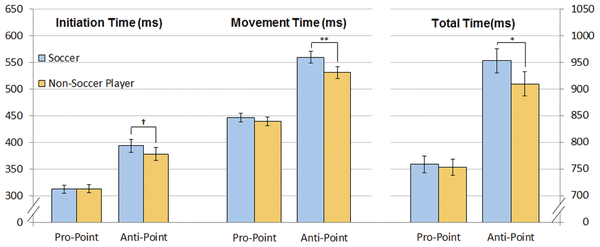
America leads the world in science and Nobel prizes but we may never compete in men's soccer. The reason may be because men are too smart to hit things with their heads. A paper on the effects of young women who hit things with their heads is why.

The ongoing effects of a boxer hitting you in the head (bad) or Ronda Rousey arm-barring you into unconsciousness (kind of awesome - once, anyway) would seem obvious but a new paper says even less forceful actions, like 'heading' a soccer ball, can lead to changes in performance on certain cognitive tasks. It may be the American academia is out to kill sports. With science saying hockey and football are also bad for brains, and psychologists claiming competition hurts psyches, our future looks bleak.

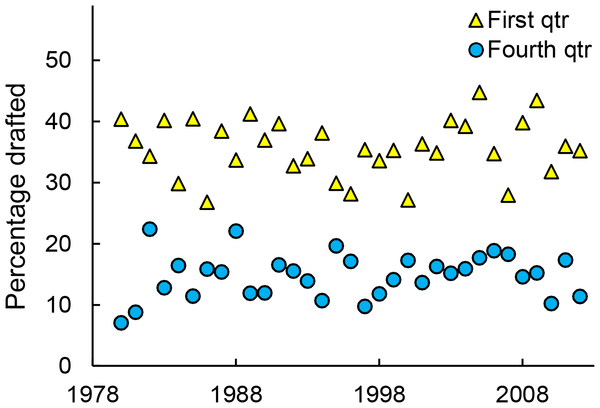
A new paper says a hockey player's birthday strongly biases how professional teams assess his talent. 

The authors found that, on average, National Hockey League (NHL) draftees born between July and December are much more likely than those born in the first three months of the year to have successful careers. In particular, 34 percent of draftees were born in the last six months of the year, but these individuals played 42 percent of the games and scored 44 percent of the points accumulated by those in the study. By contrast, those born in the first three months of the year constituted 36 percent of draftees but only played 28 percent of the games and only scored 25 percent of the points.

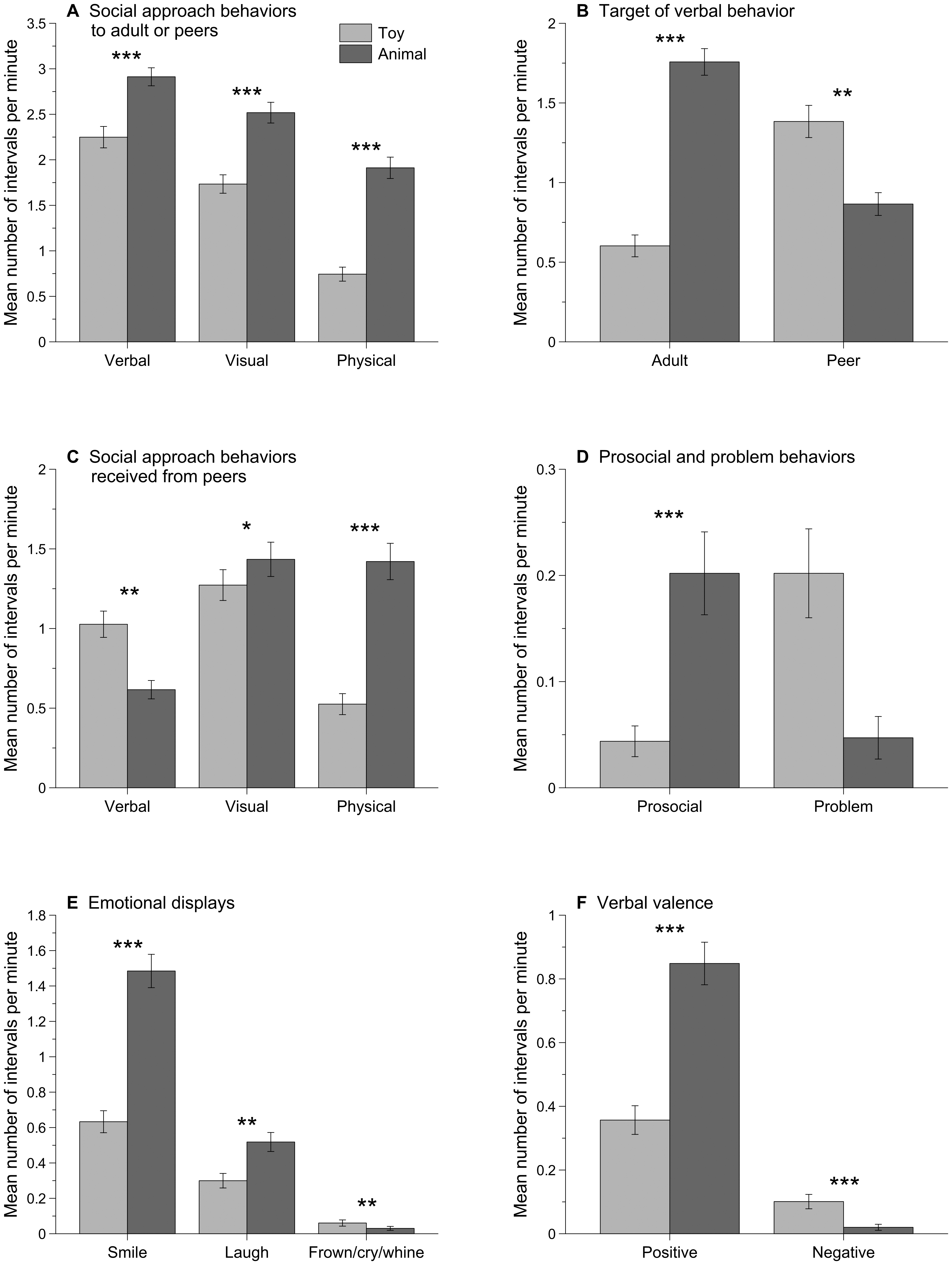
The presence of an animal can significantly increase positive social behaviors in children with autism spectrum disorders (ASD), according to a new paper.

Obesity rates across Canada are at alarming levels and continuing to climb, according to a new paper in the Canadian Journal of Public Health, which provides the first comprehensive look at adult obesity rates across Canada since 1998 - complete with "obesity maps."

If you liked FoxTrax, that glowing hockey puck shooting around the ice during NHL games, you will love what engineers from Carnegie Mellon University and the University of Electro-Communications (UEC) in Tokyo have done: they put a camera inside a football.

The camera is embedded in the side of a rubber-sheathed plastic foam football can record video while the ball is in flight. Want a ball's-eye view of the playing field? Now you have it. But because a football can spin at 600 rpm, the raw video is an unwatchable blur so the researchers also developed a computer algorithm that converts the raw video into a stable, wide-angle view.