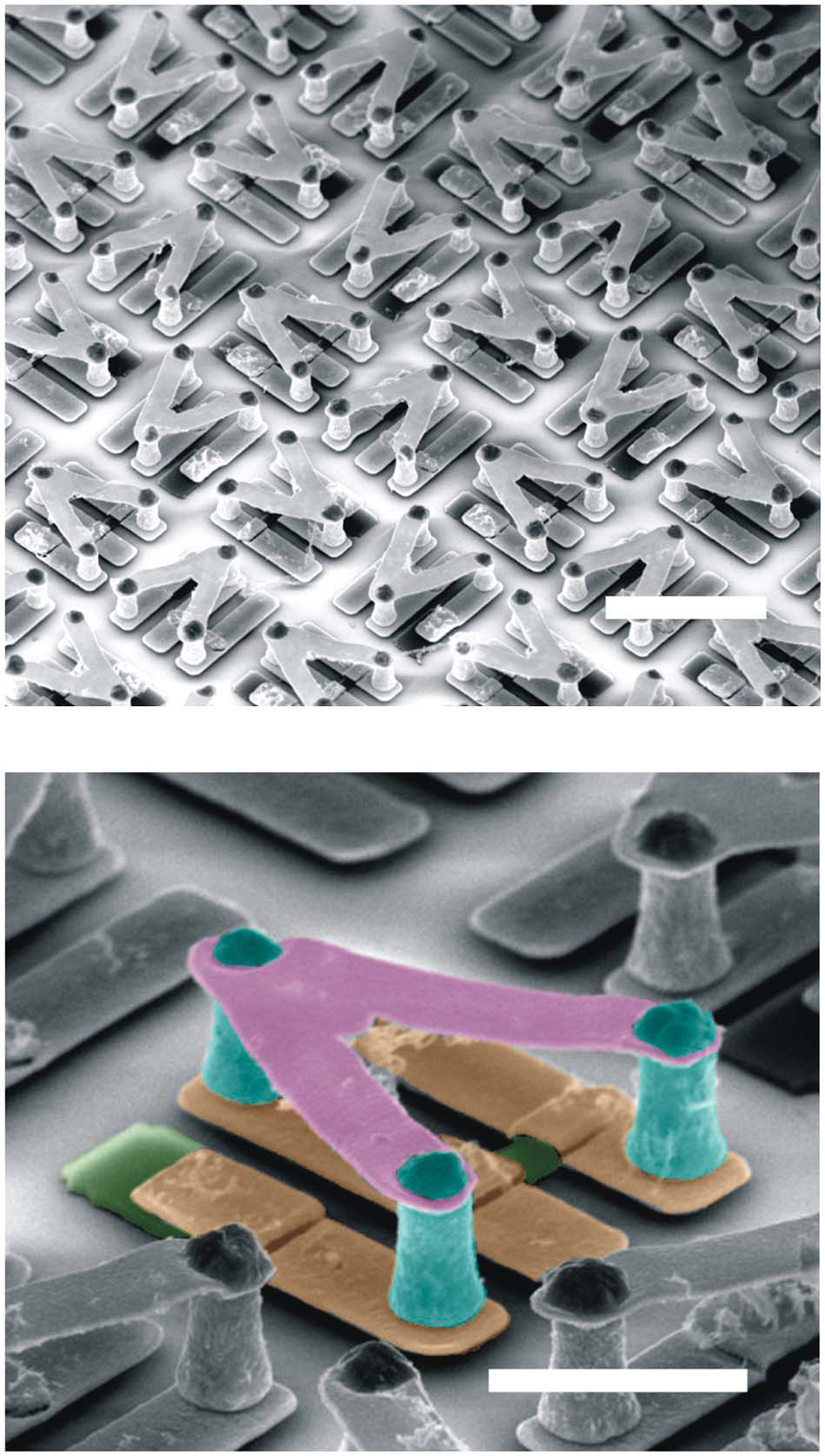
Researchers have created the first artificial molecules whose chirality can be rapidly switched from a right-handed to a left-handed orientation with a beam of light.
Chirality is the distinct left/right orientation or “handedness” of some types of molecules, meaning the molecule can take one of two mirror image forms. The right-handed and left-handed forms of such molecule are called “enantiomers” and can exhibit strikingly different properties. One enantiomer of the chiral molecule limonene smells of lemon, the other smells of orange. The ability to observe or even switch the chirality of molecules using terahertz (trillion-cycles-per-second) electromagnetic radiation is a much coveted asset in the world of high technology.
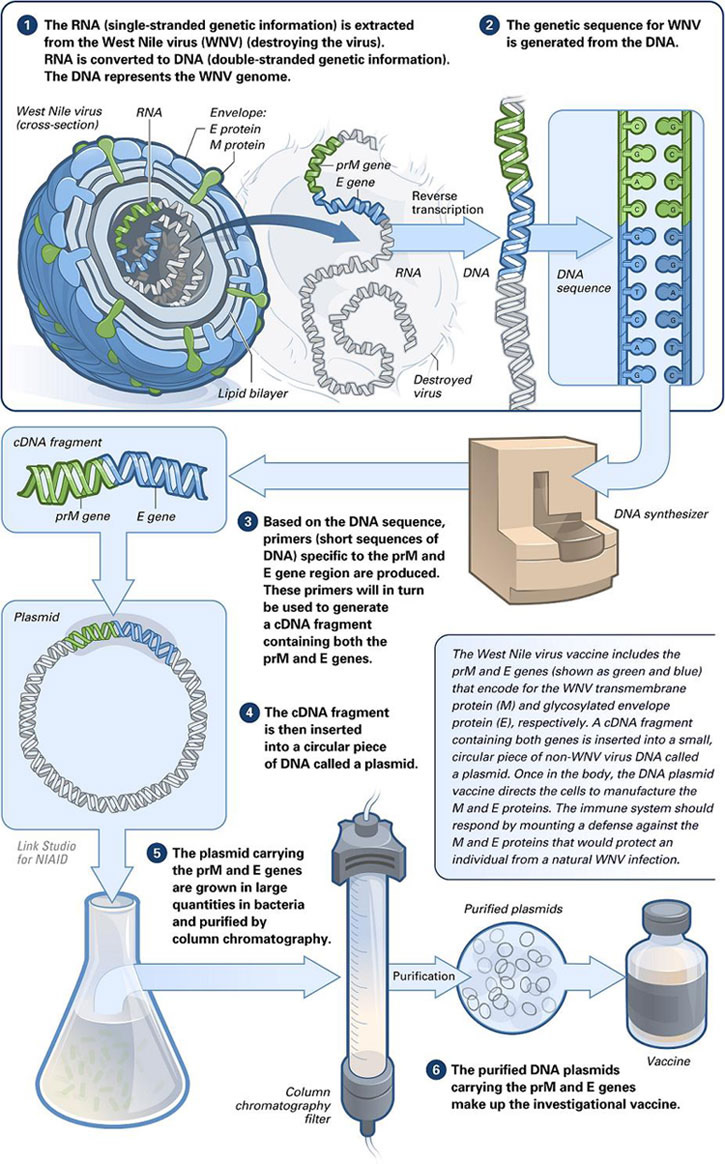
Right now, we protect people and animals against diseases by inoculating them with vaccines based on real infectious agents - but that brings risk of reinfection and the expense of cultivating and handling deadly viruses and bacteria.
The future may mean DNA vaccines, basically cutting out the biological middleman.
Sulfur has been portrayed as a secondary factor in regulating atmospheric oxygen - carbon gets all the press - but new findings suggest that sulfur’s role may have been underestimated.
As sulfur cycles through the land, the atmosphere and the oceans, it undergoes chemical changes that are often coupled to changes in other such elements as carbon and oxygen. This affects the concentration of free oxygen.
Methicillin-resistant Staphylococcus aureus (MRSA) infections doubled at U.S. academic medical centers between 2003 and 2008, according to a new report published in Infection Control and Hospital Epidemiology.
MRSA infections, which cannot be treated with antibiotics related to penicillin, have become common since the late 1990s. These infections can affect any part of the body, including the skin, blood stream, joints, bones, and lungs. The findings run counter to a recent CDC study that found MRSA cases in hospitals were declining. The CDC study looked only at cases of invasive MRSA—infections found in the blood, spinal fluid, or deep tissue. It excluded infections of the skin, which the new study includes.
The horns of creatures as different as elk and rhinoceros beetles - along with other decorative, mate-attracting structures - are sensitive to changes in nutrition. They aren’t diabetic, but they are insulin-dependent; if they want to grow big horns and therefore attract mates.
Is there a 'biological clock' that women recognize innately, and act on accordingly? New research casts some doubt on that.


 Here's Where Your Backyard Was 300 Million Years Ago
 Convergent Evolution Cheat Sheet Now 120 Million Years Old
 Synchrotron Could Shed Light On Exotic Dark Photons
 The Pain Scale Is Broken But This May Fix It




 mitosis explains increasing oocyte depth with age.png "Oocytes: Maybe That Biological Clock No Longer Ticks")

