Banner
Here's Where Your Backyard Was 300 Million Years Ago

We may use terms like "grounded" and terra firma to mean stability and consistency but geology...

Convergent Evolution Cheat Sheet Now 120 Million Years Old

One tenet of natural selection is a random walk of genes but nature may be more predictable than...

Synchrotron Could Shed Light On Exotic Dark Photons

There are many hypothetical particles proposed to explain dark matter and one idea to explore how...

The Pain Scale Is Broken But This May Fix It

Chronic pain is reported by over 20 percent of the global population but there is no scientific...

User picture.
News StaffRSS Feed of this column.

News Releases From All Over The World, Right To You... Read More »

Blogroll
In a development that would be bad for the U.S. Department of Energy but good for solar power worldwide, a new process developed by scientists at the University of Cambridge has the potential to drive down the cost of manufacturing solar-grade silicon and boost use of photovoltaic devices.
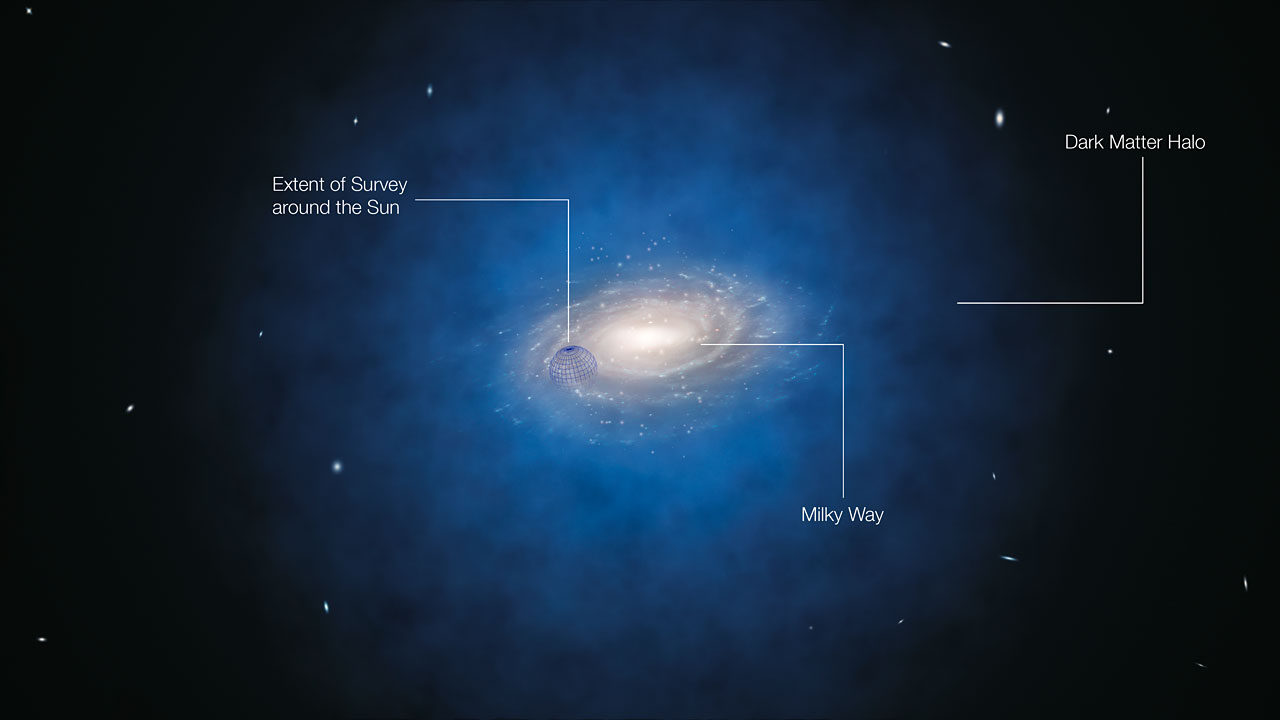
Widely accepted theories of dark matter,  a mysterious invisible substance that can only be detected indirectly by the gravitational force it exerts, expect the solar neighborhood to be filled with the stuff - but it isn't, at least as far as can be detected.

Don't get too excited but 200 activists are going to jump off Mt. Kilimanjaro in Tanzania.

These aren't the usual pesky environmentalists, these are hang-gliding global activists, which really sounds like just an excuse to go hang-gliding but get permits to do it in cool places but it's still going to raise money for a worthy cause.

Billions of stars in our galaxy have acquired released planets that once roamed interstellar space. Those free agent worlds left the star systems in which they formed, and found a new home with a different sun.

If it sounds a lot like baseball, that's because it is, said Hagai Perets of the Harvard-Smithsonian Center for Astrophysics, making the most incongruent cosmological metaphor of April 17th, 2012.
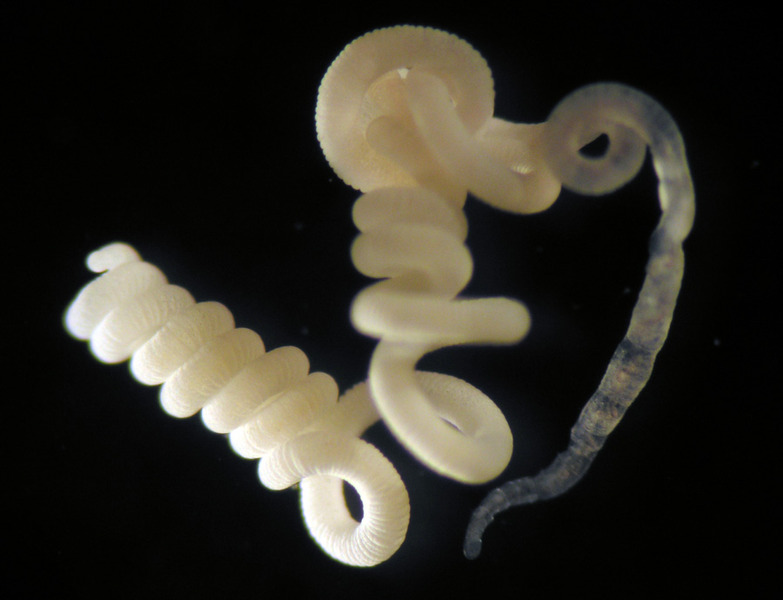
A small marine worm, Olavius algarvensis, is faced with a scarce food supply in the sandy sediments it lives in off the coast of Elba, so it must deal with a highly poisonous menu: it lives on carbon monoxide and hydrogen sulfide.

O. algarvensis can thrive on these poisons thanks to millions of symbiotic bacteria that live under its skin. The bacteria use the energy from carbon monoxide and hydrogen sulphide to produce food for the worm, just like plants do by fixing carbon dioxide into carbohydrates - but instead of using light energy from the sun, the symbionts use the energy from chemical compounds like carbon monoxide.
Dye-sensitized solar cells (DSC) are easier to manufacture than silicon-based solid-state photovoltaic cells but not as efficient. Some new research may make carbon nanotubes a more efficient alternative for platinum electrodes in dye-sensitized solar cells, making them more viable overall.