A mathematical model could guide treatment decisions for advanced prostate cancer, in part by helping doctors predict how individual patients will respond to therapy based on the biology of their tumors.
These decisions would apply to treatment of cancer that has already spread beyond the prostate gland or that has recurred after initial treatments, such as surgery or radiation. Patients with this more advanced prostate cancer receive a therapy called androgen ablation, which inhibits production of testosterone – the culprit that allows a tumor to keep growing.
The climate change effect of CO2 released from peat may be far greater than assumed.
Drought causes peat to release far more carbon dioxide into the atmosphere than has previously been realized, according to new research.
Before human embryonic stem cells can be examined for therapeutic potential it must be determined whether or not transplanted cells can functionally integrate into target organs or tissues.
Human embryonic stem cells (hESC), and induced pluripotent stem cells(iPS Cells), can give rise to all of the 220 types of tissues in the human body, and have been directed in the lab to become many types of cells, including brain cells.
Glow-in-the-dark stickers are nothing new; they emit visible light after being exposed to sunlight. A paper just published in Nature Materials emits a long-lasting, near-infrared glow after a single minute of exposure to sunlight.
Why is that good? It has the potential to revolutionize medical diagnostics, give the military and law enforcement agencies a 'secret' source of illumination - because the near-infrared range can only be seen with the aid of night vision devices - and maybe even provide a foundation for solar cells that aren't complete rubbish.
Premature infants suffer a life-threatening destruction of intestinal tissue called necrotizing enterocolitis (NEC) have gotten a new data point for researchers to examine: Preemies with the AB blood type who develop NEC are nearly three times as likely to die from it as preemies with other blood types.
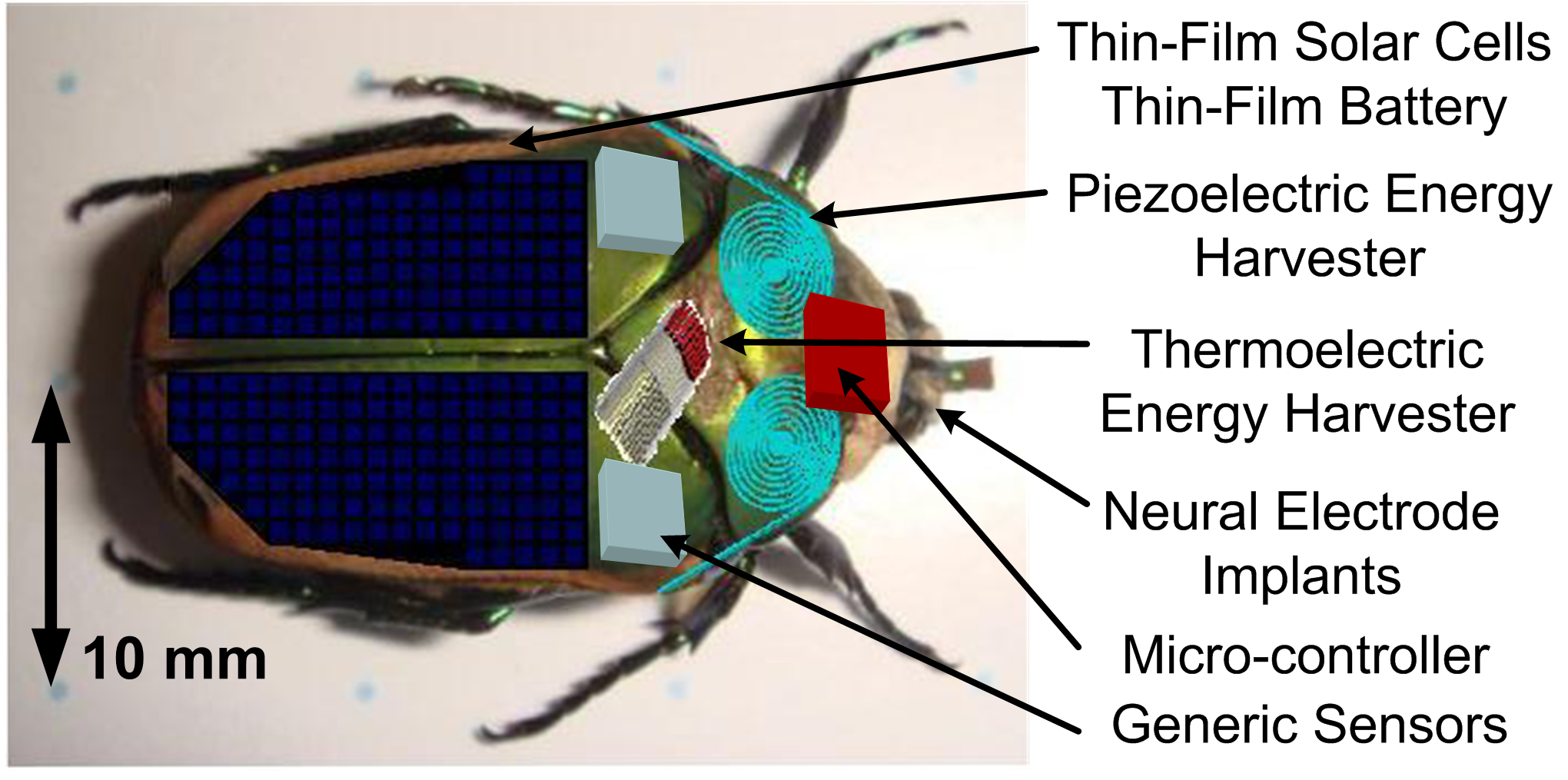
Energy harvested from insects may take the utility of miniature cyborgs to the next level.
Researchers say they can now harvest the insect's biological energy from either its body heat or movements, and the device converts the kinetic energy from wing movements of the insect into electricity, thus prolonging the battery life. The battery can be used to power small sensors implanted on the insect, such as a small camera, a microphone or a gas sensor in order to gather vital information from hazardous environments.


 Here's Where Your Backyard Was 300 Million Years Ago
 Convergent Evolution Cheat Sheet Now 120 Million Years Old
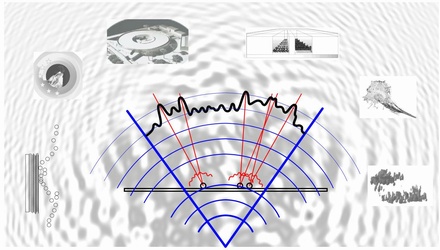
 Synchrotron Could Shed Light On Exotic Dark Photons
 The Pain Scale Is Broken But This May Fix It