Banner
Here's Where Your Backyard Was 300 Million Years Ago

We may use terms like "grounded" and terra firma to mean stability and consistency but geology...

Convergent Evolution Cheat Sheet Now 120 Million Years Old

One tenet of natural selection is a random walk of genes but nature may be more predictable than...

Synchrotron Could Shed Light On Exotic Dark Photons

There are many hypothetical particles proposed to explain dark matter and one idea to explore how...

The Pain Scale Is Broken But This May Fix It

Chronic pain is reported by over 20 percent of the global population but there is no scientific...

User picture.
News StaffRSS Feed of this column.

News Releases From All Over The World, Right To You... Read More »

Blogroll

New research in Nature has a surprising conclusion; the impact of deforestation on global warming varies with latitude, which at least explains a frustrating lack of warming in the U.S. even though global warming has been measured higher overall.

The researchers calculated that north of Minnesota, or above 45 degrees latitude, deforestation was associated with an average temperature decrease of 1.5 degrees Fahrenheit. On the other hand, deforestation south of North Carolina, or below 35 degrees latitude, appeared to cause warming. Statistically insignificant cooling occurred between these two latitudes.

Sheesh, it isn't even Thanksgiving but companies are already advertising Top Ten Lists?  When will it end? 

There are still 37 shopping days until Christmas but The Sunday Times already has its top ten gadgets of 2011 list up. Compiled by their technology panel, the results will also be featured in the inaugural Tech List supplement within the main newspaper this weekend. To coincide with the launch, consumer research was conducted looking at gadget and technology trends together with spending plans this Christmas. 

A group of researchers has created a model they say can identify and predict how multiple relationships form in social networks. The nuance, they say, is that multiple, distinct types of relationships often occur among users of the same network and existing models that explain how relationships form in a network don't account for these variations.

As an example, they note that when people connect with each other through networks, they connect via multiple relationships. Two Facebook users may be "friends" but may not regularly communicate with each other directly and a user commenting on another's profile or otherwise actively communicating represents a different type of relationship in the network.

Why do flies like beer?  It's sweeter than you think.  Entomologists say the flies sense glycerol, the sweet-tasting compound that yeasts make during fermentation.

The researchers examined the feeding preference of the common fruit fly for beer and other products of yeast fermentation, and found that a receptor - a protein that serves as a gatekeeper - called Gr64e is associated with neurons located in the fly's mouth is instrumental in signaling a good taste for beer.

Once a fly has settled on beer, Gr64e detects glycerol and transmits this information to the fly's neurons, which then influences the fly's behavioral response. Flies use other receptors in their sensory organs to find food from a distance.

Researchers are saying that the perception of nude bodies is boosted at an early stage of visual processing. 

So it may be an overlap with the culturally forbidden nature of scantily clad or nude figures as the driving force behind its appeal in areas as diverse as sexual arousal, art and advertising.  Brain imaging studies have localized areas in the brain which are specialized in detecting human bodies in the environment, but it was unknown whether the brain processes nude and clothed bodies in different ways. 

Researchers at the University of Tampere and the Aalto University, Finland, have now shown that the perception of nude bodies is boosted at an early stage of visual processing.
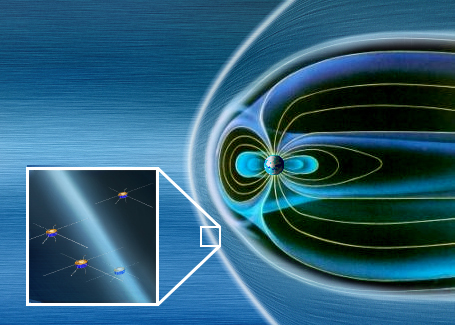
Cosmic particle accelerators may be more efficient than previously thought, according to a discovery which has revealed the initial stages of acceleration for the first time.

In space, large magnetic fields guide cosmic rays across the Universe at almost the speed of light, but they don't start them moving in the first place.  And you need some way to begin the acceleration process. The Large Hadron Collider at CERN uses a series of small accelerators to get its particles up to speed before injecting them into the main 27 km-circumference ring for further acceleration.