Banner
Here's Where Your Backyard Was 300 Million Years Ago

We may use terms like "grounded" and terra firma to mean stability and consistency but geology...

Convergent Evolution Cheat Sheet Now 120 Million Years Old

One tenet of natural selection is a random walk of genes but nature may be more predictable than...

Synchrotron Could Shed Light On Exotic Dark Photons

There are many hypothetical particles proposed to explain dark matter and one idea to explore how...

The Pain Scale Is Broken But This May Fix It

Chronic pain is reported by over 20 percent of the global population but there is no scientific...

User picture.
News StaffRSS Feed of this column.

News Releases From All Over The World, Right To You... Read More »

Blogroll

An underwater ridge may be the only thing holding back the retreat of Antarctica's fast-flowing Thwaites Glacier, which drains into west Antarctica's Amundsen Sea, and it could speed up within 20 years, says a new study in Geophysical Research Letters.

Thwaites Glacier is being closely watched for its potential to raise global sea levels as the planet warms but neighboring glaciers in the Amundsen region are also thinning rapidly, including Pine Island Glacier and the much larger Getz Ice Shelf. The study highlights the importance of seafloor topography in predicting how these glaciers will behave in the near future.

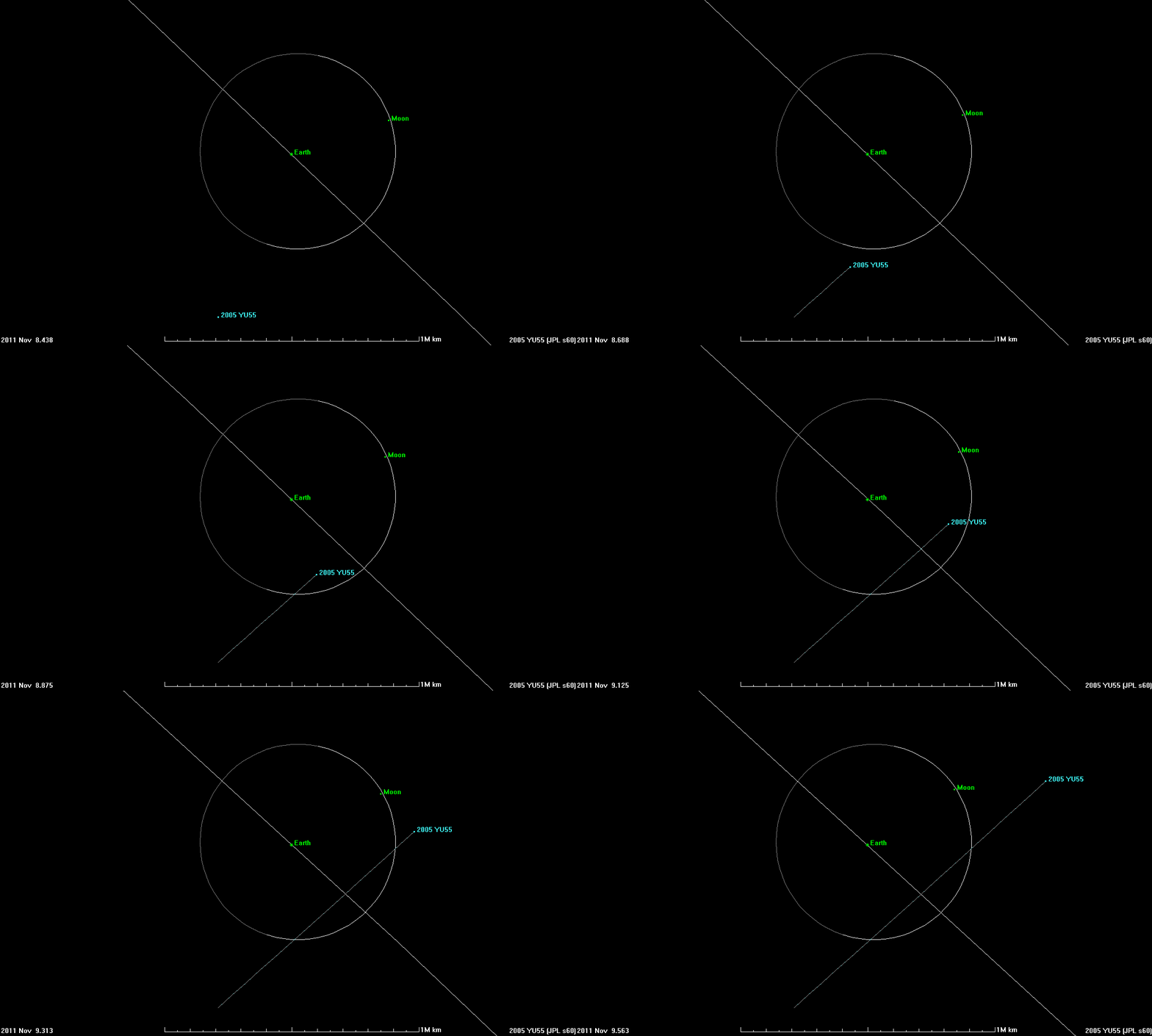
 A 400 meter, C-type asteroid will pass within 0.85 lunar distances from the Earth on November 8, 2011.  The attached animated illustration shows the Earth and moon flyby geometry for November 8th and 9th when the object will reach a visual brightness of 11th magnitude and should be easily visible to observers in the northern and southern hemispheres. The closest approach to Earth and the Moon will be respectively 0.00217 AU and 0.00160 AU on 2011 November 8 at 23:28 and November 9 at 07:13 UT.

'Lucid' dreamers are people who claim they are aware that they are dreaming and can deliberately control their actions in dreams. When people dream that they are performing a particular action, a portion of the brain involved in the planning and execution of movement lights up with activity. 

This learned skill presents an opportunity for researchers who are studying the neural underpinnings of our dreams and their findings in Current Biology, made by scanning the brains of lucid dreamers while they slept, give us a glimpse into non-waking consciousness and perhaps create a waypoint toward true "dream reading." 

Higher levels of testosterone have been associated with reduced lean muscle mass loss in older men, especially in those who were losing weight. In thoese men, higher testosterone levels were also associated with less loss of lower body strength.

Loss of muscle mass and strength contribute to frailty and are associated with falls, mobility limitations and fractures. Men also lose more muscle mass and strength than women as they age, suggesting that sex steroids, and testosterone in particular, may contribute to body composition and physical function changes.

Experiments have recently supported a longstanding hypothesis that explains how males can survive with only one copy of the X chromosome, a hotly debated topic in science.

Women have two X chromosomes, while men have one X and one Y. The lack of a 'back up' copy of the X chromosome in males contributes to many disorders that have long been observed to occur more often in males, such as hemophilia, Duchene muscular dystrophy and certain types of color blindness. Having only one copy of X and two copies of every other chromosome also creates a more fundamental problem; with any other chromosome, the gene number imbalance resulting from having only one copy would be lethal.

How can males survive with only one X?

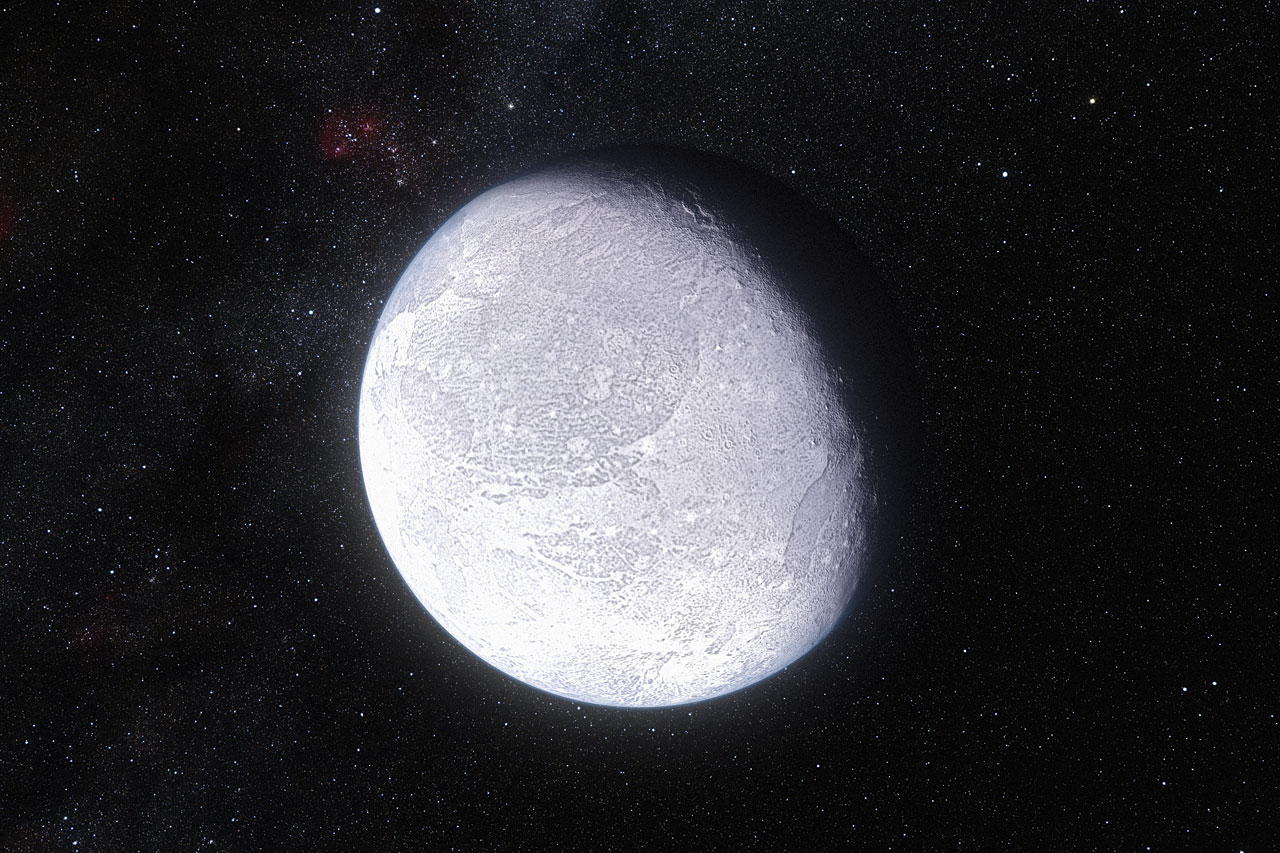
In November 2010, the distant dwarf planet Eris passed in front of a faint background star, an event called an occultation. Occultations provide the most accurate, and often the only, way to measure the shape and size of a distant Solar System body like Eris.

Eris was identified as a large object in the outer Solar System in 2005. Its discovery was one of the factors that led to the creation of a new class of objects called dwarf planets by the IAU and the demotion of Pluto from planet to dwarf planet in 2006. Eris is currently three times further from the Sun than Pluto.